-
Shop
- Advanced Technologies
- AI Skills for Creators & Freelancers
- AI Client Management
- AI Ethics
- AI Mindset
- AI Tools & Prompts
- AI Writing & Content Creation
- Audio, Voice & Music
- Design & Visual Creation
- Email, Messaging & Communication
- Freelancing & Business
- Marketing, Ads & Conversion
- Productivity, Workflow & Automation
- SEO & Search Optimization
- Social Media Content & Growth
- Strategy, Planning & Analytics
- Video Creation & Editing
- AI Skills Mastery 2026 Collection
- Bathroom
- Best-Sellers
- Car Accessories
- Confidence
- Dating & Social Skills
- Digital Resources
- Easter Products
- Education & Learning
- Family & Parenting
- Fashion
- Fashion Accessories
- Furniture
- Gadgets
- Health & Beauty
- Health & Wellness
- Home & Garden
- Home Electronics
- Home Supplies
- Jewelry
- Kids & Babies
- Kitchen
- Lighting
- Patio, Lawn & Garden
- Personal Growth
- Pet Care
- Pet Supplies
- Pets
- Shoes
- Smart Home Living Guides
- Sport & Outdoors
- Stress Relief & Relaxation
- Super Deals
- TikTok Growth & Monetization Mastery
- Travel
- Travel & Adventure
- Wealth
- Wellness
Battery or Alternator? Simple No-Start Tests at Home
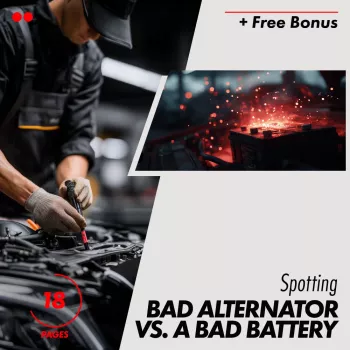
How can I test whether my car won’t start because of the battery or the alternator?
Start with the simplest clue: what happened right before the no-start. A weak battery often shows up as slow cranking, dim lights, or a series of quick clicks. An alternator problem more often follows a drive, then the car dies or won’t restart, sometimes with a battery/charging warning light earlier.
1) Check the battery first (quick visual + voltage)
Pop the hood and look for loose or corroded battery terminals (white/green crust). A bad connection can mimic a dead battery. If you have a multimeter, measure voltage with the car off: about 12.6V is healthy, ~12.2V is low, and under 12.0V is likely too weak to start. If the battery is very low, charge it or jump-start before judging the alternator.
2) Jump-start test: what happens after it starts?
If the car starts with a jump, remove the jumper cables and let it idle. If it immediately stalls or runs rough and the dash lights flicker, the alternator may not be supplying power. If it keeps running normally, the alternator may be okay, but you still need a charging-voltage check to confirm.
3) Charging-system voltage test (best at-home indicator)
With the engine idling, measure voltage at the battery terminals. A properly charging system usually reads around 13.8–14.6V. If it’s still around 12V (or dropping), the alternator, belt, or wiring is suspect. Turn on headlights and the blower; if voltage drops sharply and keeps falling, that points even more toward alternator output problems.
4) Consider battery age and recent symptoms
Most car batteries last about 3–5 years. If yours is older, was recently slow to crank, or needed frequent jumps, the battery is the prime suspect even if the alternator is borderline.
For a deeper breakdown of symptoms, tests, and what to fix first, see the full guide: bad alternator vs. bad battery signs, tests, and fix order.
FAQ
What are common signs of a failing starter motor?
A failing starter often causes a single loud click, intermittent no-crank, or cranking that stops abruptly even with a good battery. You may also notice the engine won’t turn over but the dash lights stay bright.
Recommended for you


Was this article helpful?
Yes
No









Leave a comment