-
Shop
- Advanced Technologies
- AI Skills for Creators & Freelancers
- AI Client Management
- AI Ethics
- AI Mindset
- AI Tools & Prompts
- AI Writing & Content Creation
- Audio, Voice & Music
- Design & Visual Creation
- Email, Messaging & Communication
- Freelancing & Business
- Marketing, Ads & Conversion
- Productivity, Workflow & Automation
- SEO & Search Optimization
- Social Media Content & Growth
- Strategy, Planning & Analytics
- Video Creation & Editing
- AI Skills Mastery 2026 Collection
- Bathroom
- Best-Sellers
- Car Accessories
- Confidence
- Dating & Social Skills
- Digital Resources
- Easter Products
- Education & Learning
- Family & Parenting
- Fashion
- Fashion Accessories
- Furniture
- Gadgets
- Health & Beauty
- Health & Wellness
- Home & Garden
- Home Electronics
- Home Supplies
- Jewelry
- Kids & Babies
- Kitchen
- Lighting
- Patio, Lawn & Garden
- Personal Growth
- Pet Care
- Pet Supplies
- Pets
- Shoes
- Smart Home Living Guides
- Sport & Outdoors
- Stress Relief & Relaxation
- Super Deals
- TikTok Growth & Monetization Mastery
- Travel
- Travel & Adventure
- Wealth
- Wellness
Carry Sheet Goods Safely: 200 lb Panel Carrier (0–1 in)

Heavy-Duty Panel Carrying Made Simple: 200 lbs Carrier with Adjustable Grip for 0–1 in Boards
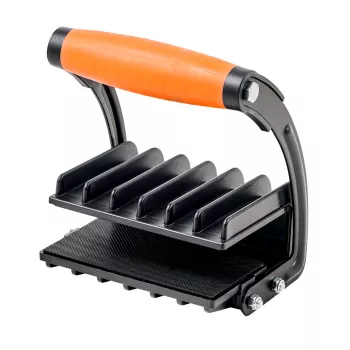
Moving sheet goods and wide panels is one of those tasks that looks easy until the edge digs into your hand, the board starts to flex, or a doorway suddenly feels too narrow. Our heavy-duty panel carrier is built to make carrying safer, steadier, and less tiring—using an adjustable grip that clamps onto 0–1 in thick boards and supports loads up to 200 lbs.
What This Panel Carrier Solves on the Job and at Home
Panels are awkward because they’re wide, often flexible, and hard to hold without squeezing your fingers against a sharp edge. A clamp-and-handle carrier changes how you manage the load.
- Reduces hand strain by giving you a dedicated handle instead of pinching a sharp or rough edge.
- Improves control when walking through tight spots like door frames, stairwells, and hallways.
- Helps keep panels more upright and balanced, which can reduce accidental corner dings and wall scuffs.
- Makes solo carrying more practical for many common panel sizes and materials (within rated capacity and thickness range).
Designed for 0–1 in Boards, Rated Up to 200 lbs
The carrier’s adjustable grip is made to accommodate material thicknesses from 0 to 1 inch—covering many common sheet goods and flat stock. Combined with a 200 lb load rating, it’s suited to demanding carries when the piece is within the tool’s limit and you can maintain safe control from start to finish.
- Adjustable grip accommodates material thicknesses from 0 to 1 inch, covering many common sheet goods and panels.
- Heavy-duty 200 lb capacity supports demanding carries such as thicker plywood, MDF panels, worktops, and solid boards—when the piece is within the tool’s rating and can be safely controlled.
- Clamp-style carrying shifts the load to a handle position that’s easier to hold for longer walks from truck to cut station or from store to garage.
At-a-Glance Fit and Use Guide
| Feature | What it means for your carry |
|---|---|
| Load rating: 200 lbs | Built for heavier panels; always stay within the rated limit and carry only what can be safely managed. |
| Adjustable grip: 0–1 in | Fits many common board and panel thicknesses, including thin sheet goods through 1 in stock. |
| Single-hand carry handle | More comfortable grip than pinching the panel edge; helps with longer carries and frequent loading/unloading. |
| Best for | Plywood, drywall, MDF, doors, and similar flat panels that fit the thickness range. |
Where It Helps Most: Common Carry Scenarios
Whether you’re moving one sheet for a weekend project or making repeated trips on a jobsite, a carrier is most valuable when the path is long, cluttered, or tight.
- From vehicle to workshop: reduce fatigue during repeated trips when stocking materials.
- In-store pickup to parking lot: keep panels steady while navigating carts, curbs, and narrow aisles.
- Jobsite repositioning: carry a panel from cut area to install point with less finger pinch and better control.
- Tight turns: handle-based control can help prevent the panel edge from clipping corners or door jambs.
How to Use a Panel Carrier for a More Stable, Safer Carry
Our team recommends treating panel carrying like any other material-handling task: you’ll get the best result by setting up the carry before you lift.
- Check the panel thickness before clamping; confirm it sits within the 0–1 in grip range.
- Position the clamp so the panel hangs balanced—usually near the panel’s center of gravity for steadier walking.
- Keep the panel close to your body and walk slowly through doorways and around obstacles.
- Plan the route first: clear tripping hazards, confirm door widths, and identify where you will set the panel down.
- Use team lifting when the panel is oversized, awkward, or exceeds what can be safely controlled—even if it is under the weight rating.
For general lifting and handling practices, OSHA and NIOSH offer helpful references on safer carrying mechanics and risk factors: OSHA – Materials Handling and NIOSH – Revised NIOSH Lifting Equation overview.
Comfort, Control, and Protection: Small Details That Matter
A carrier isn’t just about lifting heavier; it’s about carrying better. The difference shows up in comfort after a long walk, and in how well you can “steer” the panel through narrow spaces.
Who This Tool Fits Best
A Quick Checklist Before Every Carry
In-Stock Picks from Our Store
- Heavy-Duty 200 lbs Panel Carrier with Adjustable Grip for 0–1 in Boards — our go-to for turning awkward sheet carries into a controlled, handle-based lift.
- Armani Exchange Men’s Sneakers — stable footing matters when you’re guiding a wide panel through tight spaces.
- Universal Car Steering Wheel Phone Mount for Safe Navigation — useful when you’re coordinating pickups and want hands-free directions before you start unloading.
FAQ
Will it work with drywall and plywood sheets?
Yes, as long as the material you’re carrying is within the 0–1 in thickness range and the total load stays within 200 lbs. Even under the rating, you should only carry what you can safely control for the entire route.
How do I choose the best clamping position on the panel?
Aim for the panel’s center of gravity so it hangs balanced and doesn’t try to rotate as you walk. Before moving, do a brief test lift and adjust until the panel feels steady and stays close to your body.
Is this a one-person solution for heavy or oversized panels?
It can make many carries easier, but oversized, awkward, or hard-to-control panels may still require team lifting. If you’re dealing with stairs, tight turns, or any situation where control feels uncertain, bring help even if the weight is under 200 lbs.
Recommended for you
Was this article helpful?
Yes
No









Leave a comment