-
Shop
- Advanced Technologies
- AI Skills for Creators & Freelancers
- AI Client Management
- AI Ethics
- AI Mindset
- AI Tools & Prompts
- AI Writing & Content Creation
- Audio, Voice & Music
- Design & Visual Creation
- Email, Messaging & Communication
- Freelancing & Business
- Marketing, Ads & Conversion
- Productivity, Workflow & Automation
- SEO & Search Optimization
- Social Media Content & Growth
- Strategy, Planning & Analytics
- Video Creation & Editing
- AI Skills Mastery 2026 Collection
- Bathroom
- Best-Sellers
- Car Accessories
- Confidence
- Dating & Social Skills
- Digital Resources
- Easter Products
- Education & Learning
- Family & Parenting
- Fashion
- Fashion Accessories
- Furniture
- Gadgets
- Health & Beauty
- Health & Wellness
- Home & Garden
- Home Electronics
- Home Supplies
- Jewelry
- Kids & Babies
- Kitchen
- Lighting
- Patio, Lawn & Garden
- Personal Growth
- Pet Care
- Pet Supplies
- Pets
- Shoes
- Smart Home Living Guides
- Sport & Outdoors
- Stress Relief & Relaxation
- Super Deals
- TikTok Growth & Monetization Mastery
- Travel
- Travel & Adventure
- Wealth
- Wellness
Teach Your Dog to Sit: Simple Step-by-Step Plan
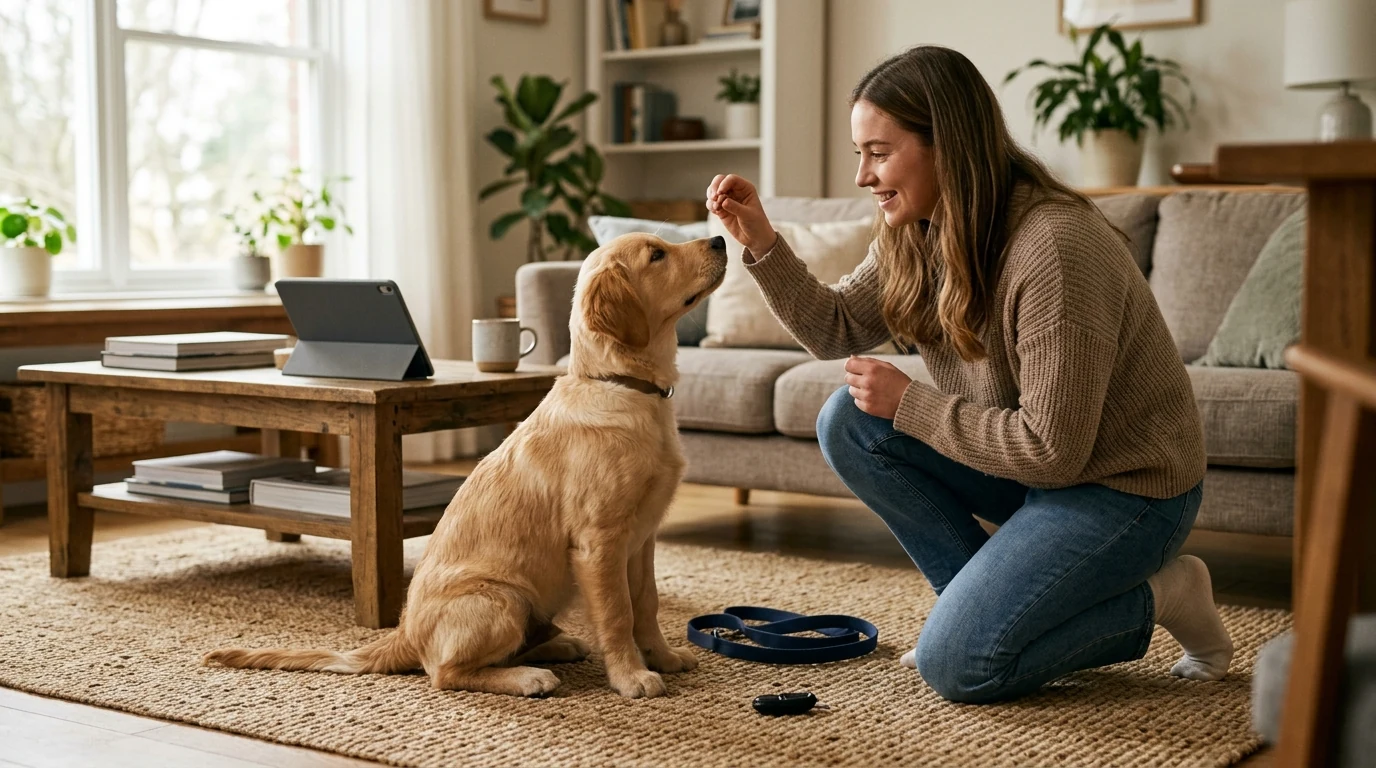
Teaching Your Dog to Sit: A Beginner-Friendly Training Plan
“Sit” is one of the most useful skills to teach a puppy or adult dog because it builds focus, helps with impulse control, and creates a calm default behavior for everyday moments like greetings, doorways, and leash clipping. The steps below use clear cues, timely rewards, and short sessions to help the behavior become reliable at home and in distracting places.
Why “Sit” Works So Well as a First Command
- Naturally easy: most dogs sit frequently on their own, making it simple to reward and capture.
- Creates calm: a sitting dog is less likely to jump, dart through doors, or grab at hands.
- Builds communication: teaches the pattern of cue → behavior → reward.
- Foundation for other skills: stays, waits, polite greetings, and leash manners become easier.
For a training philosophy grounded in reward-based methods, resources like the American Kennel Club’s sit guide and the ASPCA training basics align well with the approach below.
What to Prepare Before Training
- Rewards: pea-sized soft treats; use kibble for easy dogs and higher-value treats for distractible dogs.
- Marker: a clicker or a consistent word like “Yes” to pinpoint the exact moment the dog sits.
- Leash (optional): helpful for excitable dogs so they don’t bounce away between repetitions.
- Quiet space: start in a low-distraction room, then move to the yard/front walkway later.
- Session plan: 3–5 minutes, 1–3 times daily, ending before your dog loses interest.
Three Ways to Teach “Sit” (Choose the Best Fit)
- Lure: guide your dog’s nose up and back with a treat so the rear naturally drops; then mark and reward.
- Capture: wait for an offered sit during calm moments; mark and reward immediately, then add the cue later.
- Shaping: reward tiny steps toward the sit (head tilt, weight shift, partial bend) for dogs that dislike lures.
Quick comparison: sit-training methods
| Method | Best for | Watch-outs | When to add the cue |
|---|---|---|---|
| Lure | Most puppies and beginners | Avoid pushing the hips; fade the hand motion quickly | After 5–10 successful reps |
| Capture | Calm dogs or homes with lots of natural sits | Progress can feel slower at first | After the dog is frequently offering sits |
| Shaping | Sensitive dogs, dogs that jump for food, advanced trainers | Requires good timing; keep criteria easy | When the dog can predictably complete the full sit |
Step-by-Step: Lure the Sit (Most Common Approach)
- Start with your dog standing in front of you; hold a treat at nose level.
- Move the treat slowly up and slightly back toward your dog’s forehead; let the head follow.
- The moment the rear touches the floor, mark (“Yes”/click) and deliver the treat.
- Reset by tossing a treat a step away so your dog stands again; repeat 5–8 times.
- Add the cue “Sit” only when your dog is consistently sitting from the hand motion: say “Sit,” pause half a beat, then lure.
- Fade the lure: make the same motion with an empty hand, reward from the other hand after the sit.
Keep your mechanics clean: one cue, one chance, then help your dog succeed. Repeating “Sit, sit, sit” teaches your dog that the first cue doesn’t matter.
Make “Sit” Reliable: Duration, Distance, and Distractions
- Duration: reward for staying seated for 1 second, then 2, then 3. Use a consistent release word like “Free” so your dog learns when the rep is over.
- Distance: after the sit, take a half-step back, return to reward, and gradually increase space.
- Distractions: practice in new rooms, then the yard, then calm public areas. Lower expectations when the environment gets harder.
- Reinforcement plan: once the sit is strong, switch from treat-every-time to intermittent rewards while still praising often.
A helpful rhythm is “easy-win reps” at the start (to warm up), then one small challenge (duration or distance), then finish with another easy rep before stopping.
Common Problems and Simple Fixes
- Your dog backs up instead of sitting: lure more slowly and closer to the nose; practice next to a wall to reduce backward steps.
- Your dog jumps for the treat: start with the treat lower and closer; reward only when four paws are grounded; consider shaping instead of luring.
- Your dog “sits” crooked or slumps: reward the best-positioned sits; keep sessions short; avoid asking for long sits before your dog is ready.
- Your dog won’t sit on slick floors: move to carpet/rug or use a yoga mat for traction.
- Your dog seems stubborn: raise reward value, reduce distractions, and ensure the cue isn’t repeated multiple times.
Using Sit in Daily Life (Without Turning Everything Into a Drill)
Beginner-Friendly Tools and Downloads
- Teaching Your Dog the Sit Command (instant digital PDF) — a straightforward, step-by-step guide you can reference during short sessions.
- Armani Exchange Men’s Sneakers — supportive shoes can make quick yard sessions and leash-practice reps more comfortable.
- Universal Car Steering Wheel Phone Mount for Safe Navigation — useful for hands-free directions when you’re heading to a new low-distraction training spot.
FAQ
How long does it take to teach a puppy to sit?
Many puppies learn the basic motion in a few short sessions, but reliability in new places can take days to weeks. Keep practices short, reward generously at first, and increase distractions gradually.
Should the dog sit before or after saying the word “sit”?
Say the cue right before your dog is about to perform the behavior. If your dog sits on their own, reward it, but save the spoken cue for reps where you’re prompting the sit.
What if my dog refuses to sit?
Check for slippery flooring or discomfort, lower distractions, increase reward value, and try capture or shaping instead of luring. If you suspect pain or stiffness, consult a veterinarian.
Recommended for you

Was this article helpful?
Yes
No









Leave a comment