-
Shop
- Advanced Technologies
- AI Skills for Creators & Freelancers
- AI Client Management
- AI Ethics
- AI Mindset
- AI Tools & Prompts
- AI Writing & Content Creation
- Audio, Voice & Music
- Design & Visual Creation
- Email, Messaging & Communication
- Freelancing & Business
- Marketing, Ads & Conversion
- Productivity, Workflow & Automation
- SEO & Search Optimization
- Social Media Content & Growth
- Strategy, Planning & Analytics
- Video Creation & Editing
- AI Skills Mastery 2026 Collection
- Bathroom
- Best-Sellers
- Car Accessories
- Confidence
- Dating & Social Skills
- Digital Resources
- Easter Products
- Education & Learning
- Family & Parenting
- Fashion
- Fashion Accessories
- Furniture
- Gadgets
- Health & Beauty
- Health & Wellness
- Home & Garden
- Home Electronics
- Home Supplies
- Jewelry
- Kids & Babies
- Kitchen
- Lighting
- Patio, Lawn & Garden
- Personal Growth
- Pet Care
- Pet Supplies
- Pets
- Shoes
- Smart Home Living Guides
- Sport & Outdoors
- Stress Relief & Relaxation
- Super Deals
- TikTok Growth & Monetization Mastery
- Travel
- Travel & Adventure
- Wealth
- Wellness
Stubby Flex-Head Ratcheting Wrench Set: Tight-Space Guide
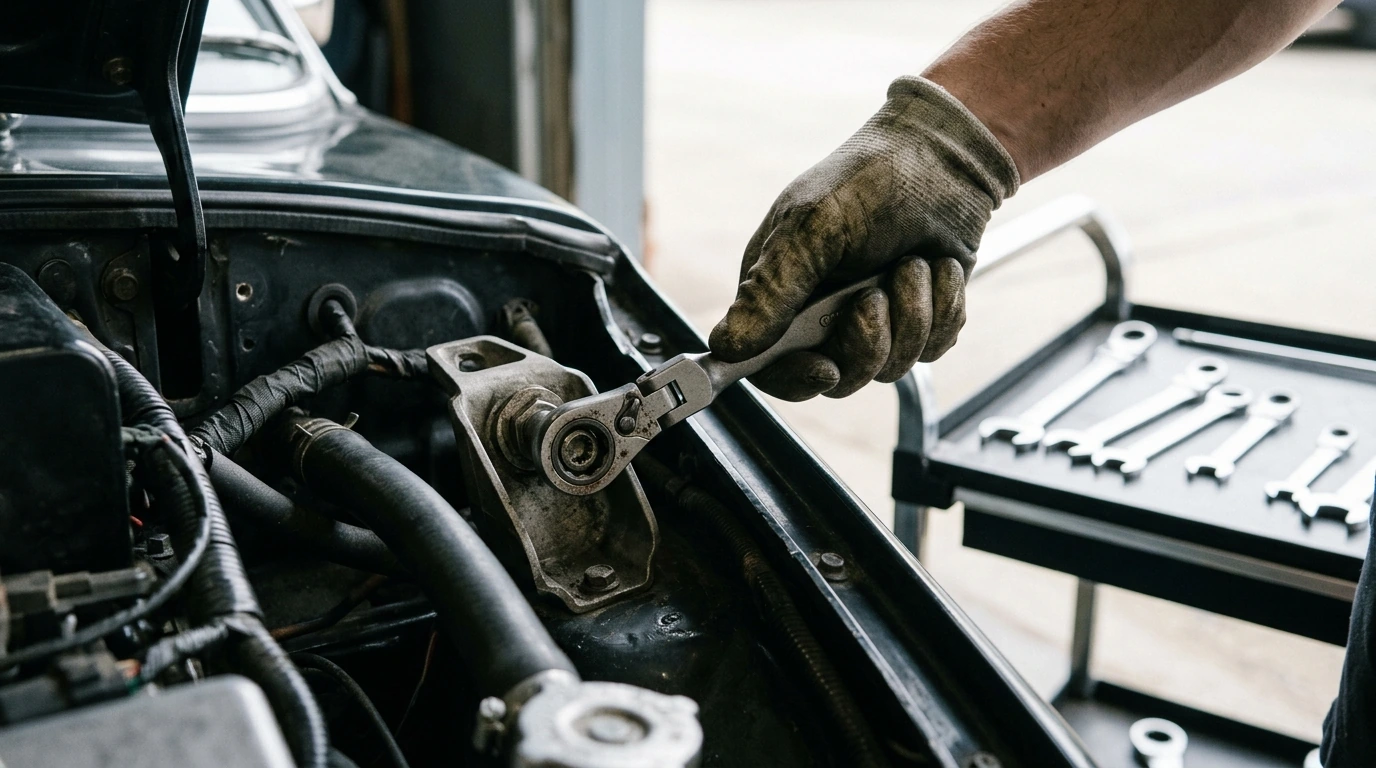
8pcs Flex Head Stubby Ratcheting Wrench Set (SAE/Metric, 72-Tooth, 5/16–3/4 in): What It’s For and How to Use It Well
A flex head stubby ratcheting wrench is built for fast turning in cramped spaces where a standard-length wrench can’t swing. This 8-piece set combines a compact stubby body with a pivoting box end and a fine-tooth ratcheting mechanism, making it a practical pick for engine bays, motorcycle work, HVAC installs, furniture hardware, and tight fasteners around brackets and frames.
What makes a flex head stubby ratcheting wrench different
Compared with a traditional combination wrench, a stubby flex-head ratcheting wrench is engineered around access and momentum. The shorter handle reduces handle travel conflicts with nearby parts, and the pivoting head helps the wrench approach fasteners that sit behind hoses, under lips, or between brackets.
- Stubby length: Fits between obstructions (hoses, body panels, brackets) and minimizes “swing-arc” problems.
- Flex head: Lets the ratcheting end pivot to meet awkward approach angles, improving contact on recessed or partially blocked fasteners.
- Ratcheting box end: Speeds up removal/installation by eliminating constant repositioning after each short turn.
- SAE/Metric coverage: Helps with mixed hardware found on vehicles, equipment, and imported components.
Set overview: sizes, range, and typical use cases
An 8-piece assortment spanning 5/16–3/4 in covers many common inch fasteners used in automotive and general maintenance. The stubby layout is especially useful when a socket and ratchet can’t fit due to depth restrictions or poor side clearance—like when a fastener sits close to a firewall, frame rail, or dense wiring path.
Flex heads shine when the “best” approach angle isn’t available. If you can’t get your hand directly in line, you can pivot the head to create a workable path while still keeping the wrench as square as possible to the fastener.
Common size range and where it’s often used
| Wrench size (in) | Often seen on | Notes for tight spaces |
|---|---|---|
| 5/16 | Small clamps, brackets, light hardware | Use steady pressure to avoid rounding small fasteners |
| 3/8 | Accessories, small engine-bay fasteners | Flex head helps clear nearby wiring looms |
| 7/16 | Body hardware, older automotive fasteners | Keep the head aligned to maintain full contact |
| 1/2 | General automotive and equipment bolts | Great size for stubby work in crowded bays |
| 9/16 | Suspension/frames on some platforms | Break loose carefully; consider penetrating oil first |
| 5/8 | Equipment mounts, heavier brackets | Short handle limits leverage; use controlled force |
| 11/16 | Larger chassis bolts on some vehicles | Ensure the ratcheting end fully seats before pulling |
| 3/4 | Heavier-duty fasteners on equipment | If stuck, switch to a breaker bar/socket first |
72-tooth ratcheting: what it changes in real work
A 72-tooth mechanism typically needs only a small swing arc to re-engage, which matters when you can move the handle just a few degrees before hitting a hose, radiator support, or body panel. That “short-stroke” advantage is the reason fine-tooth ratcheting wrenches are so effective for repetitive loosening and tightening in confined spaces.
- Better in tight clearances: Smaller swing arc keeps the fastener turning when you can’t get a full sweep.
- Smoother short strokes: Fine teeth tend to feel more consistent during small movements.
- Smarter workflow: If access allows, use the open end for break-loose torque, then switch to the ratcheting end for speed.
- Respect torque limits: Avoid “cheater bars” on stubby ratcheting wrenches; for seized bolts, start with a breaker tool.
For general hand-tool safety basics—especially around pinch points and tool condition—refer to OSHA’s guidance on hand and power tools. If you like standards-based detail on hand tool design and performance expectations, ASME B107 hand tool standards are a helpful reference point.
How to get better access with the flex head (without stripping fasteners)
The flex joint is an access feature, not a license to crank at extreme angles. The goal is to keep as much surface contact as possible between the wrench and the fastener while creating a workable handle path.
- Choose a moderate angle: Set the head so the wrench stays as close to straight-on as possible; severe angles can reduce contact area.
- Pull in a clean line: Push or pull with controlled force; side loading increases the chance of rounding corners.
- Break loose first: When possible, break the fastener free with the open end or a non-ratcheting tool before ratcheting.
- Know when to stop: If the fastener head is shallow or damaged, switch to a snug 6-point socket or a dedicated extractor.
Best-fit jobs for a stubby ratcheting set
Care, storage, and longevity tips
When to choose a different tool
Product options in stock
- 8pcs Flex Head Stubby Ratcheting Wrench Set, SAE/Metric 72-Tooth, 5/16-3/4 in ($44.51) — a compact set for crowded assemblies where a pivoting head reduces repositioning.
- Universal Car Steering Wheel Phone Mount for Safe Navigation ($1.80) — a handy add-on for roadside fixes when directions and lighting coordination matter.
FAQ
Is a 72-tooth ratcheting wrench better for tight spaces?
Yes—more teeth usually means the wrench needs a smaller swing arc to re-engage, so you can keep turning when movement is limited. Just make sure the box end is fully seated on the fastener to reduce slip and wear.
Can a stubby ratcheting wrench replace a breaker bar?
No. Stubby ratcheting wrenches are designed for access and faster turning, not maximum break-loose torque. For seized fasteners, use penetrating oil and a breaker bar or a sturdy non-ratcheting tool first.
How should the flex head be positioned to avoid rounding bolts?
Keep the wrench as square to the fastener as possible and avoid extreme head angles that reduce surface contact. Apply force in a controlled line (not sideways) and stop if the fastener starts to deform.
Recommended for you


Was this article helpful?
Yes
No









Leave a comment