-
Shop
- Advanced Technologies
- AI Skills for Creators & Freelancers
- AI Client Management
- AI Ethics
- AI Mindset
- AI Tools & Prompts
- AI Writing & Content Creation
- Audio, Voice & Music
- Design & Visual Creation
- Email, Messaging & Communication
- Freelancing & Business
- Marketing, Ads & Conversion
- Productivity, Workflow & Automation
- SEO & Search Optimization
- Social Media Content & Growth
- Strategy, Planning & Analytics
- Video Creation & Editing
- AI Skills Mastery 2026 Collection
- Bathroom
- Best-Sellers
- Car Accessories
- Confidence
- Dating & Social Skills
- Digital Resources
- Easter Products
- Education & Learning
- Family & Parenting
- Fashion
- Fashion Accessories
- Furniture
- Gadgets
- Health & Beauty
- Health & Wellness
- Home & Garden
- Home Electronics
- Home Supplies
- Jewelry
- Kids & Babies
- Kitchen
- Lighting
- Patio, Lawn & Garden
- Personal Growth
- Pet Care
- Pet Supplies
- Pets
- Shoes
- Smart Home Living Guides
- Sport & Outdoors
- Stress Relief & Relaxation
- Super Deals
- TikTok Growth & Monetization Mastery
- Travel
- Travel & Adventure
- Wealth
- Wellness
Stress at Night? 90-Second Reset + Sleep Routine
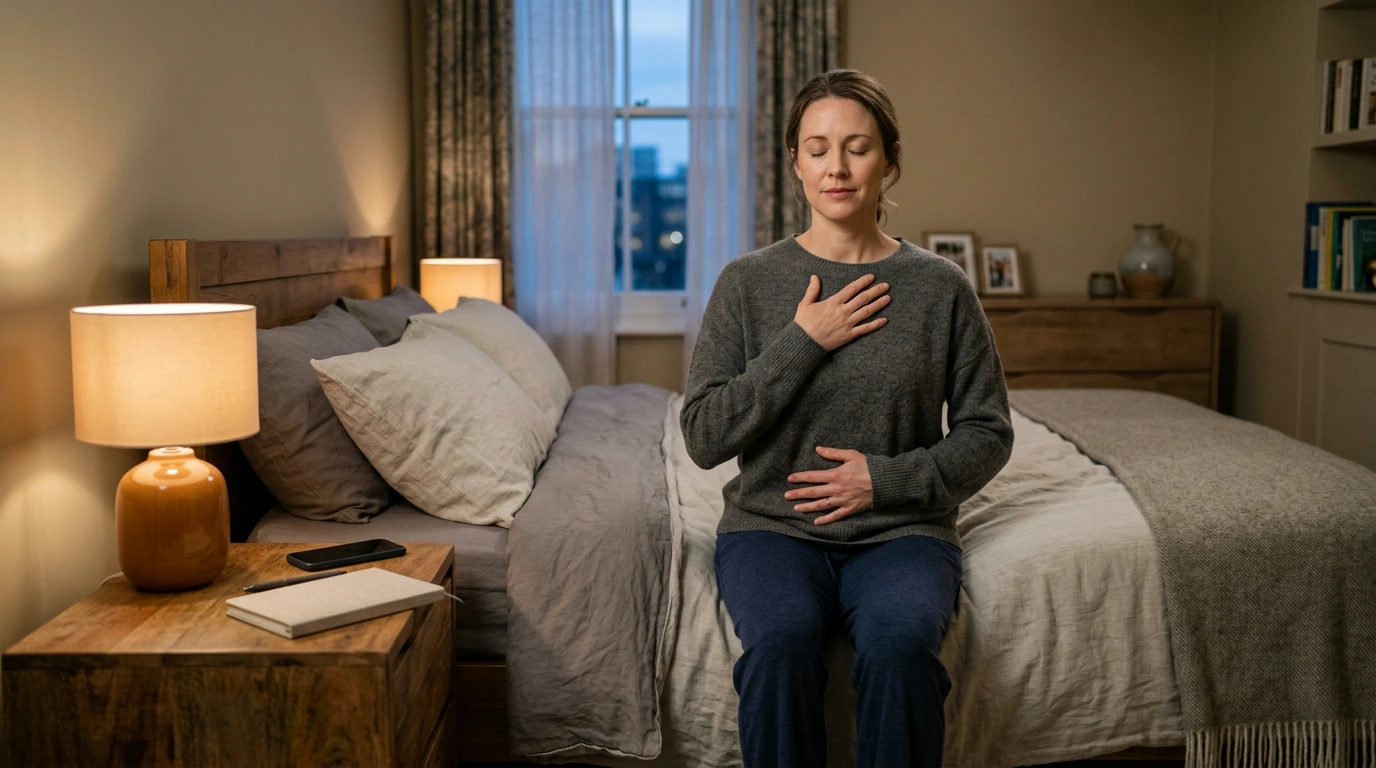
Racing thoughts, a tight chest, and a “tired but wired” body can turn bedtime into another stress event. The good news: you don’t have to force sleep to get better sleep. Small, repeatable actions that calm the nervous system, reduce nighttime rumination, and create consistent cues can make sleep feel accessible again—even on high-pressure days.
Why stress shows up the moment the lights go out
Stress doesn’t always end when the day ends. Your nervous system may still be running in “solve problems” mode, which can keep your heart rate elevated and your mind scanning for threats or unfinished tasks.
- Stress chemistry lingers: adrenaline and cortisol can stay elevated into the evening, making it harder to downshift.
- Silence amplifies worries: when the day gets quiet, unresolved concerns can become louder, kicking off rumination and the loop of “trying to sleep.”
- Conditioning effect: if your bed has become a place for scrolling, work, or anxious thinking, your brain starts treating it as a cue for wakefulness.
- Helpful reframe: the goal isn’t to force sleep—it’s to create the conditions where sleep can happen naturally.
For foundational sleep guidance, the NHLBI’s Healthy Sleep resources are a solid reference point on why sleep matters and what supports it.
A simple 3-part framework: Body, Mind, Environment
If nighttime stress makes you feel scattered, use a three-bucket approach. It keeps things simple: choose one tool per bucket and repeat it nightly until it feels automatic.
- Body: lower physiological arousal (breathing cadence, muscle release, temperature, light).
- Mind: reduce cognitive load (worry containers, gentle attention anchors, thought labeling).
- Environment: build cues of safety and consistency (routine timing, device boundaries, bedroom setup).
This “one from each” method prevents overwhelm and creates a dependable pattern your nervous system learns to recognize as a runway into sleep.
90-second stress reset for nights that feel too activated
When you’re revved up, long routines can feel impossible. Start with a quick reset designed to shift you out of high alert.
1) Physiological sigh (fast downshift)
Inhale through your nose, then take a second small inhale to “top off,” followed by a long slow exhale. Repeat 3–5 times. Many people notice a rapid softening in chest tightness or urgency.
2) Extended-exhale breathing (2–4 minutes)
Inhale for 4 seconds, exhale for 6–8 seconds. Keep it gentle—no straining. Longer exhales encourage parasympathetic activity, helping your body interpret the moment as safe enough to rest.
3) Progressive muscle release “scan”
Relax your jaw, drop your shoulders, unclench your hands, and soften your belly. Move top to bottom. Think “release,” not “stretch.”
4) If panic-like sensations appear: orienting for safety
Name 5 things you see, 4 things you feel, and 3 things you hear. This gently pulls you out of threat-focused thinking and back into the present.
Stop the worry spiral: quick cognitive offloading
Stress at night often isn’t about one big problem—it’s about too many open loops. The goal is to offload mental clutter so your brain stops insisting you “handle it now.” For broader stress-management context, the American Psychological Association’s stress resources can help you understand how stress affects the body and behavior.
Two-list method (5 minutes)
On paper, write:
Worry window (daytime containment)
Thought labeling (low-friction mental defusion)
Gentle attention anchors
A wind-down routine that fits real life (15–45 minutes)
Sample stress-busting wind-down menu
| Time window | Body tool | Mind tool | Environment cue |
|---|---|---|---|
| 45–30 min before bed | Light stretch or warm shower | Two-list method (5 minutes) | Dim lights; silence nonessential notifications |
| 30–15 min before bed | Extended exhale breathing (4 in / 6–8 out) | Thought labeling + return to breath | Screen-free zone or blue-light limits |
| 15–0 min before bed | Progressive muscle release scan | Gentle attention anchor (count exhales) | Cool, dark room; consistent bedtime cue |
For more on sleep-friendly habits, Sleep Foundation’s sleep hygiene overview is a helpful checklist-style companion.
What to do when you can’t fall asleep (without making it worse)
Digital download guide: a structured plan to practice, not just read
If you do best with prompts and a clear order of operations—especially during demanding weeks—use a structured guide that turns techniques into a repeatable routine. Sleep Tight: Stress-Busting Techniques for Restful Nights (Digital Download eBook Guide) organizes calming tools into simple nightly sequences, so you spend less time deciding what to do and more time doing what works.
Two simple add-ons that support a calmer nighttime routine
- Triple-Sided Ultra-Fine Soft Bristle Toothbrush for Enhanced Oral Health — a low-effort way to make your wash-up routine more consistent (a reliable “start cue” for winding down).
- Armani Exchange Men’s Sneakers — daytime movement can reduce baseline stress; a comfortable walk earlier in the day often makes evening downshifting easier.
FAQ
What’s the fastest technique to calm down before sleep?
Do 3–5 rounds of the physiological sigh (two inhales through the nose, one long exhale), then switch to extended-exhale breathing for 2–4 minutes (inhale 4 seconds, exhale 6–8 seconds). Stop once your chest feels less tight and your breathing naturally slows.
How long does it take for stress-reducing sleep routines to work?
Some people feel immediate relief the first night, but more stable changes typically show up after 1–3 weeks of consistent practice. Look for trends—like fewer nights of intense rumination or shorter time to settle—rather than perfect nights.
What should be avoided at night if stress keeps disrupting sleep?
Avoid late caffeine and alcohol, intense screens or suspenseful content, doing work problem-solving in bed, and repeated clock-checking. Swap in a brief wind-down routine, keep your bed for sleep-only cues, and use a paper “two-list” to offload worries before you lie down.
Recommended for you


Was this article helpful?
Yes
No









Leave a comment