-
Shop
- Advanced Technologies
- AI Skills for Creators & Freelancers
- AI Client Management
- AI Ethics
- AI Mindset
- AI Tools & Prompts
- AI Writing & Content Creation
- Audio, Voice & Music
- Design & Visual Creation
- Email, Messaging & Communication
- Freelancing & Business
- Marketing, Ads & Conversion
- Productivity, Workflow & Automation
- SEO & Search Optimization
- Social Media Content & Growth
- Strategy, Planning & Analytics
- Video Creation & Editing
- AI Skills Mastery 2026 Collection
- Bathroom
- Best-Sellers
- Car Accessories
- Confidence
- Dating & Social Skills
- Digital Resources
- Easter Products
- Education & Learning
- Family & Parenting
- Fashion
- Fashion Accessories
- Furniture
- Gadgets
- Health & Beauty
- Health & Wellness
- Home & Garden
- Home Electronics
- Home Supplies
- Jewelry
- Kids & Babies
- Kitchen
- Lighting
- Patio, Lawn & Garden
- Personal Growth
- Pet Care
- Pet Supplies
- Pets
- Shoes
- Smart Home Living Guides
- Sport & Outdoors
- Stress Relief & Relaxation
- Super Deals
- TikTok Growth & Monetization Mastery
- Travel
- Travel & Adventure
- Wealth
- Wellness
Streak-Free Mirror Cleaning Checklist (Printable Guide)
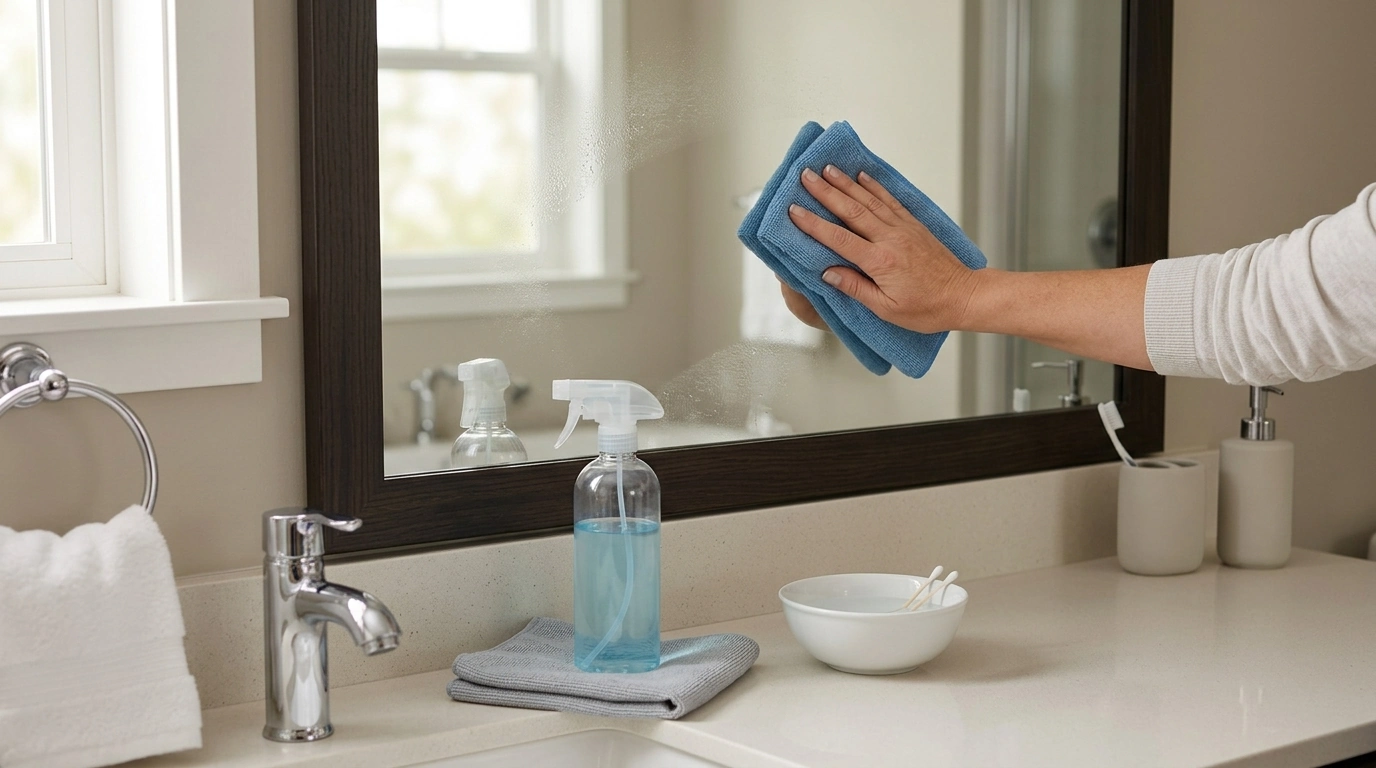
The Ultimate Checklist for Cleaning Mirrors Perfectly (Printable Digital Guide)
Streaks, haze, lint, and smudges usually come down to a few repeatable issues: the wrong cloth, too much product, cleaning in direct sun, or skipping the frame and edges where grime redistributes. This checklist-style guide simplifies mirror cleaning into a fast routine you can print or keep on your phone, so bathroom, bedroom, and entryway mirrors stay clear with less effort.
What causes streaks and cloudy mirror finish
- Too much cleaner: excess liquid dries unevenly and leaves residue.
- Dirty or fabric-softener-coated cloths: softener and lint create haze.
- Cleaning in heat or direct sunlight: rapid evaporation causes streaking before wiping is complete.
- Not dusting first: dry particles drag across the surface and smear oils.
- Overspray at edges: cleaner seeps behind frames and reappears as drip marks.
Mirror cleaning toolkit (simple, low-mess setup)
A streak-free mirror doesn’t require a cabinet full of sprays. The goal is controlled moisture, the right cloths, and a few small tools for edges and corners.
- Two microfiber cloths: one for the first pass, one for the final buff
- Spray bottle (optional): helps control how much solution hits the glass
- Cotton swabs or soft detailing brush: for corners, frame seams, and hardware
- Small bowl of warm water: for pre-wiping heavy toothpaste or hairspray spots
- Gloves for sensitive skin and a step stool for tall mirrors
Tools and what they solve
| Tool | Best for | Common mistake to avoid |
|---|---|---|
| Microfiber cloth (clean, dry) | Final buff for a clear finish | Using one that was washed with fabric softener |
| Microfiber cloth (slightly damp) | First pass to lift grime and oils | Soaking it until it drips |
| Isopropyl alcohol (diluted) | Stubborn smudges and oily fingerprints | Spraying directly onto framed edges |
| Mild dish soap + warm water | Toothpaste specks and hairspray build-up | Leaving soap film—always follow with a clean-water wipe |
| Cotton swabs | Corners and edge build-up | Pressing too hard and fraying fibers onto glass |
Pre-clean checklist (30 seconds that prevents streaks)
- Turn off overhead fan or vents temporarily to reduce dust swirl.
- Move toiletries, candles, and decor away from the mirror base.
- Dry dust the mirror and frame first using a clean cloth.
- Spot-check for stuck-on debris (toothpaste, hairspray, makeup) and pre-soften with warm water.
- Avoid cleaning in direct sunlight or right after a hot shower if possible.
If you’re using any disinfecting products in a bathroom, follow safe handling basics (good ventilation, proper dilution, and keeping products away from eyes and skin). Helpful references include the CDC guidance on cleaning and disinfectants and the EPA Safer Choice program for choosing safer cleaning products.
The streak-free method (step-by-step checklist)
- Step 1: Wipe edges and corners first to prevent dragging grime into the center.
- Step 2: Use a lightly damp microfiber for the first pass (water or a mild solution); wipe in an “S” pattern from top to bottom.
- Step 3: For fingerprints and oily marks, apply a small amount of diluted isopropyl alcohol to the cloth (not the mirror) and spot-treat.
- Step 4: Immediately follow with a second, dry microfiber cloth to buff the surface until it squeaks lightly.
- Step 5: Inspect from two angles: straight-on and from the side to catch haze and missed spots.
- Step 6: Finish by wiping the frame and ledge so dust doesn’t fall back onto clean glass.
Tip for framed mirrors: keep liquids away from seams. Even “gentle” cleaners can creep behind frames, loosen backing, or leave recurring edge drips that look like mysterious streaks the next day.
Quick fixes for common mirror messes
- Toothpaste dots: soften with warm water first, then wipe; buff dry immediately.
- Hairspray film: use a tiny amount of dish soap in warm water, then a clean-water wipe, then dry buff.
- Makeup smears: dab with diluted alcohol on the cloth, not directly on the mirror.
- Water spots: wipe with a barely damp cloth, then dry buff; avoid over-wetting.
- Persistent haze: rewash microfiber cloths without softener and repeat with less product.
Habits that keep mirrors clean longer
- Use a towel to blot splashes right after they happen (especially near sinks).
- Ventilate bathrooms well to reduce residue from humidity and aerosols.
- Store microfiber cloths clean and dry; keep one dedicated to glass only.
- Do a fast weekly buff and a deeper clean only when needed.
- Keep sprays aimed at cloths to protect frames, sealants, and nearby finishes.
Printable digital checklist: download and use
Printable mirror cleaning checklist (digital download) keeps the whole routine in one place so you can move fast and still get a clear, squeak-clean finish.
Small add-ons that help keep mirrors (and sinks) cleaner
- Triple-Sided Ultra-Fine Soft Bristle Toothbrush for Enhanced Oral Health can help create a more controlled brushing routine, which may mean fewer toothpaste dots on the mirror and faucet area.
- The Ultimate Checklist: How to Clean Mirrors Perfectly (Printable Digital Guide) is an easy reference to keep on your phone for quick touch-ups before guests or during weekly resets.
FAQ
Why do mirrors still streak even after using glass cleaner?
Most streaks come from using too much product, wiping with a linty or softener-coated cloth, or letting the cleaner dry before you buff. Use a two-cloth method (damp clean, then dry buff) and avoid cleaning in direct sun or heat.
Should cleaner be sprayed on the mirror or on the cloth?
Spraying onto the cloth gives better moisture control and helps prevent seepage behind frames and along edges. For large frameless mirrors, a very light mist can work, but keep it minimal and buff immediately.
What’s the best cloth for a streak-free shine?
A clean microfiber cloth dedicated to glass is the most reliable option for a clear, lint-free finish. Avoid paper towels that shed fibers, and don’t launder microfiber with fabric softener because it leaves a haze-causing coating.
Recommended for you



Was this article helpful?
Yes
No









Leave a comment