-
Shop
- Advanced Technologies
- AI Skills for Creators & Freelancers
- AI Client Management
- AI Ethics
- AI Mindset
- AI Tools & Prompts
- AI Writing & Content Creation
- Audio, Voice & Music
- Design & Visual Creation
- Email, Messaging & Communication
- Freelancing & Business
- Marketing, Ads & Conversion
- Productivity, Workflow & Automation
- SEO & Search Optimization
- Social Media Content & Growth
- Strategy, Planning & Analytics
- Video Creation & Editing
- AI Skills Mastery 2026 Collection
- Bathroom
- Best-Sellers
- Car Accessories
- Confidence
- Dating & Social Skills
- Digital Resources
- Easter Products
- Education & Learning
- Family & Parenting
- Fashion
- Fashion Accessories
- Furniture
- Gadgets
- Health & Beauty
- Health & Wellness
- Home & Garden
- Home Electronics
- Home Supplies
- Jewelry
- Kids & Babies
- Kitchen
- Lighting
- Patio, Lawn & Garden
- Personal Growth
- Pet Care
- Pet Supplies
- Pets
- Shoes
- Smart Home Living Guides
- Sport & Outdoors
- Stress Relief & Relaxation
- Super Deals
- TikTok Growth & Monetization Mastery
- Travel
- Travel & Adventure
- Wealth
- Wellness
Stop Catalytic Converter Theft: Security Tips + Checklist
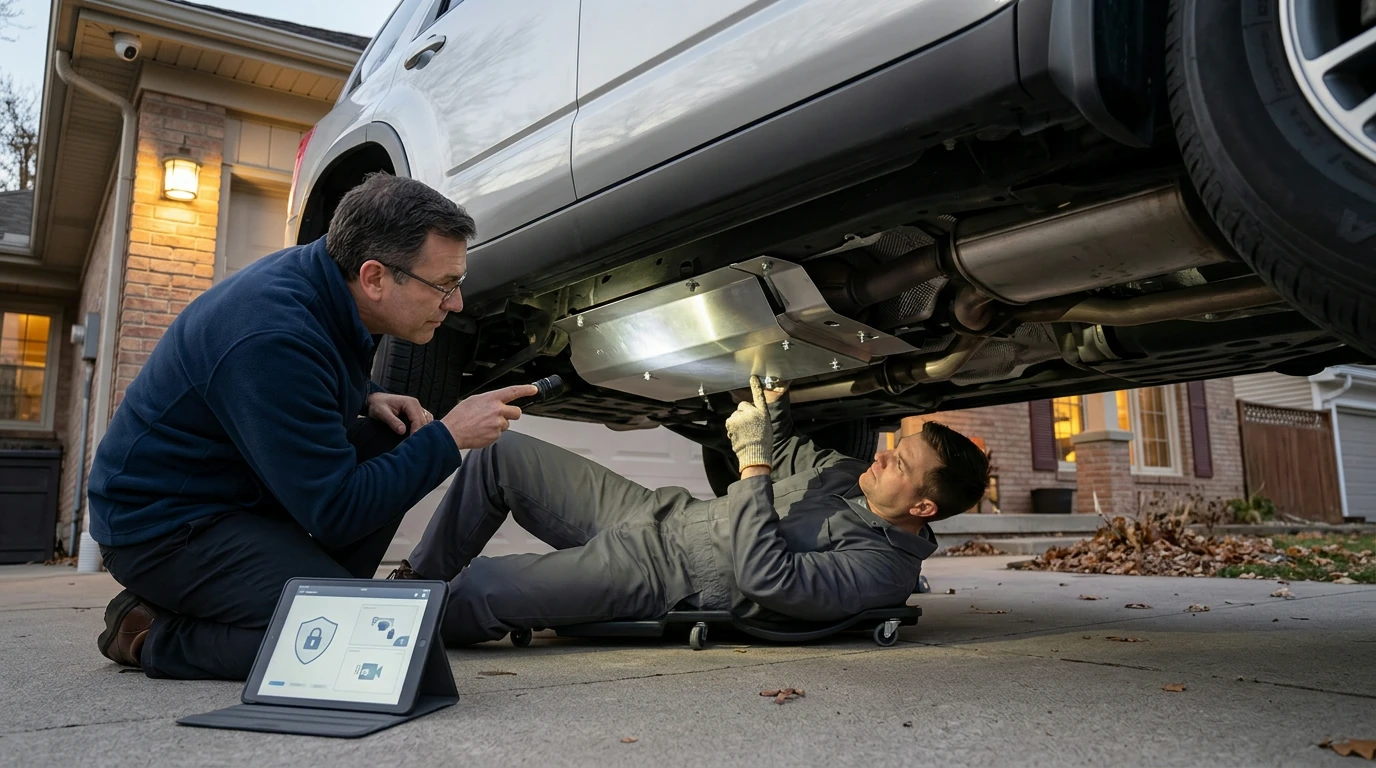
Protect Your Catalytic Converter from Theft: Smart Security Tips and a Practical Prevention Checklist
Catalytic converter theft can happen in minutes, leaving a loud vehicle, a costly repair, and time-consuming insurance or police reports. The most effective protection usually combines where the car is parked, visible deterrents, and a few physical upgrades that make the converter harder to access or remove. Use the steps below to assess risk, apply layered security, and follow a simple checklist that fits daily routines.
Why catalytic converters are targeted
Catalytic converters attract thieves for one main reason: profit. Inside the unit are precious metals—platinum, palladium, and rhodium—that can be resold through illicit channels. The theft itself is often fast because a portable reciprocating saw can cut through sections of exhaust quickly, especially when there’s plenty of space under the vehicle.
Hybrids are common targets because some models contain higher amounts of these metals. SUVs, trucks, and vans are also frequently hit because higher ground clearance gives thieves better access. Just as important as vehicle type is routine: repeated overnight street parking, long hours in unattended lots, or predictable schedules make it easier for thieves to plan a quick grab-and-go.
Fast risk check: is this vehicle a likely target?
A quick risk scan helps decide how much protection to add. Higher-clearance vehicles are generally more vulnerable because thieves can work underneath without lifting the car. But location matters just as much: some neighborhoods and parking lots become repeat hot spots even for smaller sedans.
Consider how often the vehicle sits in one place for long stretches (commuter lots, hospital lots, apartment street parking) and whether the exhaust routing is visible and easy to reach. Also factor in replacement cost—some converters are expensive because of strict emissions rules and limited availability.
Risk factors and practical countermeasures
| Risk factor | Why it increases theft | Practical countermeasure |
|---|---|---|
| High ground clearance | More working space underneath | Park close to walls/curbs; add a shield or cage |
| Overnight street parking | Long, low-visibility window | Use a well-lit area; add motion lighting; consider a camera |
| Repeated unattended parking | Predictable schedules and locations | Vary parking spots; use monitored lots when possible |
| Known hot-spot area | Higher thief activity and networks | Layer deterrents: shield + alarm + markings |
| Hybrid or frequently targeted model | Higher scrap value for thieves | Prioritize physical barriers and anti-tamper hardware |
Layer 1: parking and visibility tactics that reduce opportunity
Start with the easiest wins: reduce concealment and increase perceived risk. Thieves prefer darkness and privacy, so well-lit, high-traffic areas are safer than isolated corners. In public lots, park near entrances, attendants, or visible security cameras rather than at the far edges.
At home, motion-activated exterior lighting can be a strong deterrent because it removes the cover of darkness and draws attention. If using a driveway, position the vehicle to make the exhaust side harder to access (for example, closer to a wall or fence when feasible). When alternatives exist, avoid leaving the vehicle in the same secluded spot at the same time every day.
Layer 2: physical deterrents that slow down cutting and removal
Physical barriers don’t make theft impossible, but they can make it harder, louder, and slower—often enough for a thief to move on. A vehicle-specific catalytic converter shield or skid plate is one of the most practical upgrades because it blocks direct access and can force awkward cutting angles.
If a shield isn’t available for your model, a cage or clamp-style device may work, but it must be compatible with heat and exhaust clearances. Ask an installer about anti-tamper fasteners where applicable, since specialty hardware can increase the tools needed. In some cases, welding vulnerable joints or adding reinforcement points may be possible (feasibility varies by vehicle and local repair standards).
Also consider marking the converter with high-temperature paint and an etched ID (VIN or traceable code). Marking can reduce resale appeal and can help identification if the part is recovered.
Layer 3: alarms, sensors, and simple monitoring
Electronics can add a second kind of pressure: noise and evidence. Tilt sensors can trigger an alarm if a vehicle is lifted, and vibration sensors can react to cutting activity. These work best when paired with good lighting and visible signage stating the vehicle is protected.
A practical prevention checklist for daily and weekly habits
Daily
Weekly
When traveling
If theft happens: steps to take immediately
A guided option for building a layered plan
For a step-by-step approach that’s easy to follow, a dedicated guide can help combine parking strategy, physical protection, and simple monitoring into a repeatable routine. Consider Protect Your Catalytic Converter from Theft | Practical eBook Guide for a practical prevention checklist and clear action steps.
For day-to-day driving safety and less distraction while navigating parking areas, a secure phone mount can also help keep attention where it belongs. The Universal Car Steering Wheel Phone Mount for Safe Navigation is a simple add-on for hands-free viewing when parked or stopped.
Learn more from authoritative sources
For broader trends and theft-prevention guidance, consult resources such as the National Insurance Crime Bureau (NICB) and the National Highway Traffic Safety Administration (NHTSA).
FAQ
How long does it take to steal a catalytic converter?
Often just a few minutes with a portable saw, especially on high-clearance vehicles. Layered deterrents aim to add time, noise, and risk so the thief is more likely to leave.
Do catalytic converter shields actually work?
They can be effective because they make removal more time-consuming and awkward. Results are strongest when combined with smart parking, lighting, and an alarm or camera.
What is the best place to park to reduce catalytic converter theft risk?
Pick well-lit, high-visibility spots near entrances, foot traffic, or monitored cameras. Avoid isolated corners and long unattended parking when possible.
Recommended for you



Was this article helpful?
Yes
No









Leave a comment