-
Shop
- Advanced Technologies
- AI Skills for Creators & Freelancers
- AI Client Management
- AI Ethics
- AI Mindset
- AI Tools & Prompts
- AI Writing & Content Creation
- Audio, Voice & Music
- Design & Visual Creation
- Email, Messaging & Communication
- Freelancing & Business
- Marketing, Ads & Conversion
- Productivity, Workflow & Automation
- SEO & Search Optimization
- Social Media Content & Growth
- Strategy, Planning & Analytics
- Video Creation & Editing
- AI Skills Mastery 2026 Collection
- Bathroom
- Best-Sellers
- Car Accessories
- Confidence
- Dating & Social Skills
- Digital Resources
- Easter Products
- Education & Learning
- Family & Parenting
- Fashion
- Fashion Accessories
- Furniture
- Gadgets
- Health & Beauty
- Health & Wellness
- Home & Garden
- Home Electronics
- Home Supplies
- Jewelry
- Kids & Babies
- Kitchen
- Lighting
- Patio, Lawn & Garden
- Personal Growth
- Pet Care
- Pet Supplies
- Pets
- Shoes
- Smart Home Living Guides
- Sport & Outdoors
- Stress Relief & Relaxation
- Super Deals
- TikTok Growth & Monetization Mastery
- Travel
- Travel & Adventure
- Wealth
- Wellness
Steady Self-Discipline: Tiny Habits for Daily Momentum

Steady Sparks of Self-Discipline: Practices for Consistent Habits, Motivation, and Everyday Productivity
Self-discipline gets easier when it’s built from small, repeatable actions rather than big bursts of willpower. When the “start” is simple, the days stack up—and consistency becomes less of a personality trait and more of a practical setup. Below are routines that reduce decision fatigue, keep motivation steadier, and turn follow-through into an everyday default, plus a workbook-style digital download designed for real life.
What self-discipline looks like in daily life
In practice, self-discipline is less about forcing yourself and more about building a system that makes the next step obvious. That means removing friction (fewer steps to begin), adding cues (clear triggers), and keeping choices limited (so you don’t negotiate with yourself every time).
Consistency beats intensity because small daily actions create momentum. Motivation can spike and crash, but momentum is more reliable: once a routine is already in motion, continuing takes less effort than restarting. Common hidden drains include unclear priorities, too many options, and all-or-nothing planning that collapses when life gets messy.
The core loop: cue, routine, reward
Most durable habits follow a simple loop: a cue you can predict, a routine you can complete even on a low-energy day, and a reward that makes the brain want to repeat it. The best cues are events that already happen (coffee, commuting, lunch, shutting down a laptop). Start with a tiny routine—2 to 5 minutes—so “showing up” becomes automatic. Then add an immediate reward such as crossing off a checklist, a 30-second stretch, or a short reset ritual.
Keep tracking lightweight: one metric (days completed, minutes done, or a “did it/didn’t” check). Finally, use environment design: put tools where the habit happens and hide distractions where they don’t. If willpower is limited, design does the heavy lifting. For a deeper breakdown of how small changes compound, see James Clear’s habit fundamentals.
Examples of small discipline loops (pick one to start)
| Goal | Cue | 2–5 minute routine | Quick reward |
|---|---|---|---|
| Better focus | Sit at desk | Write the next single task on paper | Checkmark + 30-second stretch |
| Healthier eating | Finish lunch | Prep tomorrow’s snack (wash fruit / portion nuts) | Put it in a visible spot in the fridge |
| Consistent workouts | Change into comfy clothes | Do 1 set (push-ups/squats) or 5-minute walk | Mark the day on a calendar |
| Tidier home | Start kettle/coffee | Clear one surface (counter/desk) | Light a candle / play one song |
| Less phone time | Plug in phone | Set a 25-minute timer + place phone across the room | Enjoy a favorite playlist while working |
Steady practices that build consistent habits
Define a “minimum viable day.” Decide the smallest version of success that still counts (one page, one set, two minutes, one surface). This keeps the habit alive during travel, stress, or low sleep.
Use if–then planning. A simple script like “If it’s 7:30, then I open the plan and do the first step” removes hesitation and reduces decision fatigue.
Try habit stacking. Attach the new behavior to something stable: after brushing teeth, after starting coffee, after closing your laptop. When the anchor is reliable, the habit becomes easier to remember.
Motivation dips: what to do instead of “trying harder”
Motivation is helpful, but it’s not a stable strategy. For a practical overview of willpower limits and self-control, the American Psychological Association’s guidance on willpower is a useful reference.
Everyday productivity that doesn’t burn out
How to use the Steady Sparks digital download
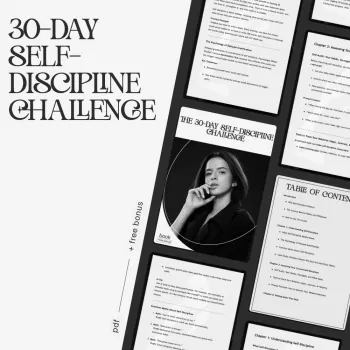
Steady Sparks of Self-Discipline (digital download) is built to be used, not admired: structured prompts, repeatable routines, and space to track what actually happens in real weeks.
Who this approach fits best
Simple add-ons that reinforce discipline (optional)
Use a physical cue tool. A timer, sticky note, or checklist makes the next step harder to ignore. If commuting is your trigger, a small setup like a Universal car steering wheel phone mount can support distraction-free navigation so you arrive with more mental bandwidth for your routine.
Keep rewards clean and fast. Small rewards that don’t sabotage the habit work best: a short walk, a favorite song, a hot shower, or a simple self-care upgrade. A tiny daily anchor like brushing can be easier to keep consistent with tools that streamline the routine, such as the Triple-sided ultra-fine soft bristle toothbrush.
Get the digital guide
If “someday” habits keep slipping, the fix is often a simpler start, a clearer cue, and a repeatable structure. Steady Sparks of Self-Discipline is designed to help consistency show up without relying on constant motivation—one small loop at a time. Habit timelines vary, but research suggests repetition over weeks to months is common depending on complexity; the goal is to make the habit easy to repeat and hard to forget (see University College London’s overview of habit formation research).
FAQ
How fast can consistent self-discipline habits form?
It depends on the person and the complexity of the habit, but consistency typically builds over weeks to months. The fastest progress comes from making the habit easy to start, repeating it daily, and tracking a simple “did it/didn’t” streak.
What should be done after missing a day?
Use a restart plan: do the smallest version as soon as possible, remove friction for tomorrow, and return to the routine without “making up for it” by doubling intensity. A single miss is a data point—adjust the system and keep going.
Is the Steady Sparks guide printable or usable on a tablet?
It’s a digital download you can print (all pages or just the ones you’ll use most), or fill out on a tablet with an annotation app. Keeping it accessible at your habit’s trigger location makes follow-through easier.
Recommended for you


Was this article helpful?
Yes
No









Leave a comment