-
Shop
- Advanced Technologies
- AI Skills for Creators & Freelancers
- AI Client Management
- AI Ethics
- AI Mindset
- AI Tools & Prompts
- AI Writing & Content Creation
- Audio, Voice & Music
- Design & Visual Creation
- Email, Messaging & Communication
- Freelancing & Business
- Marketing, Ads & Conversion
- Productivity, Workflow & Automation
- SEO & Search Optimization
- Social Media Content & Growth
- Strategy, Planning & Analytics
- Video Creation & Editing
- AI Skills Mastery 2026 Collection
- Bathroom
- Best-Sellers
- Car Accessories
- Confidence
- Dating & Social Skills
- Digital Resources
- Easter Products
- Education & Learning
- Family & Parenting
- Fashion
- Fashion Accessories
- Furniture
- Gadgets
- Health & Beauty
- Health & Wellness
- Home & Garden
- Home Electronics
- Home Supplies
- Jewelry
- Kids & Babies
- Kitchen
- Lighting
- Patio, Lawn & Garden
- Personal Growth
- Pet Care
- Pet Supplies
- Pets
- Shoes
- Smart Home Living Guides
- Sport & Outdoors
- Stress Relief & Relaxation
- Super Deals
- TikTok Growth & Monetization Mastery
- Travel
- Travel & Adventure
- Wealth
- Wellness
6 Sneaky Daily Habits That Make Aging Feel Sudden
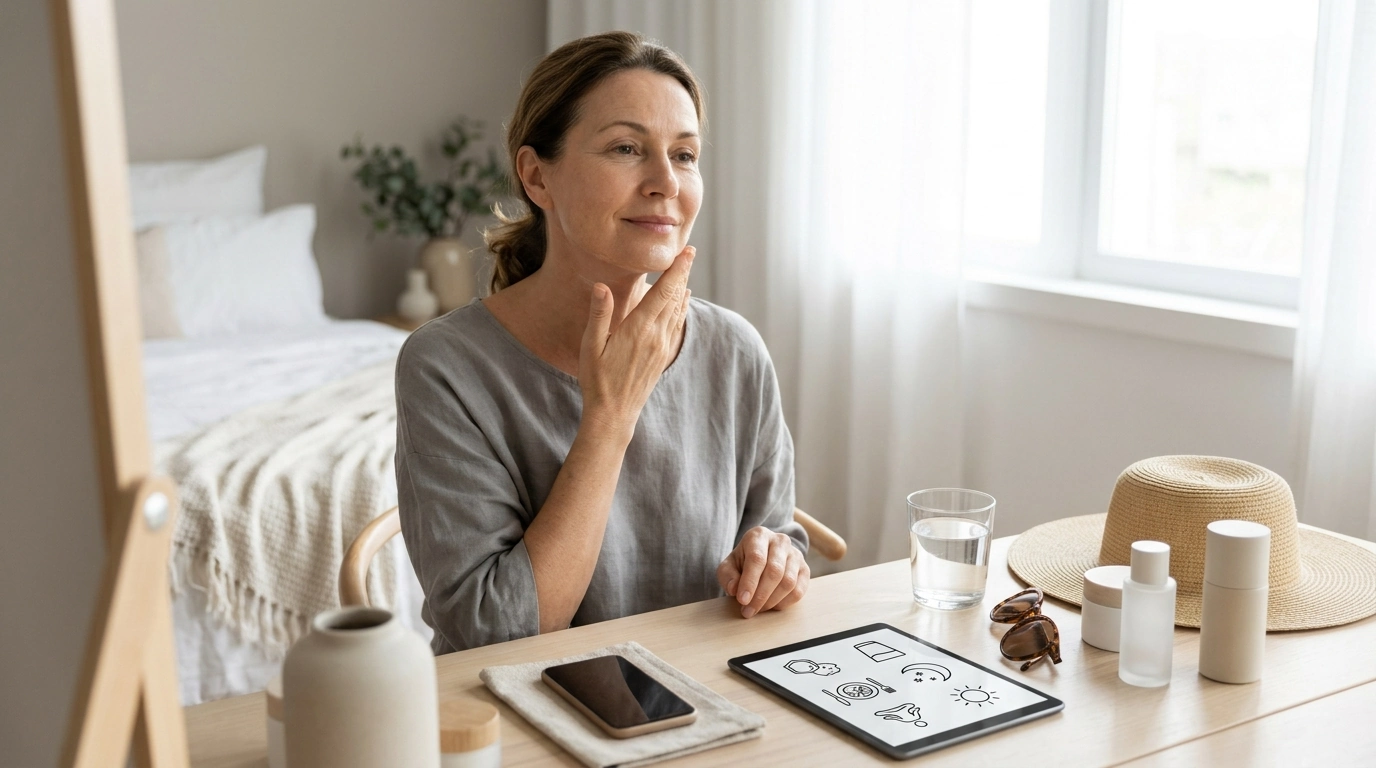
Small “Everyday” Habits That Make Aging Feel Sudden
Most visible aging doesn’t show up overnight—it builds quietly. Small daily choices can speed up how quickly skin looks tired, uneven, or less firm, until one day it feels like it all appeared at once. The good news: the same “stacking” effect works in your favor when you put a few supportive habits on autopilot.
Why “everyday aging” feels sudden
Skin changes often feel abrupt because the inputs are cumulative. Sun exposure, sleep loss, dehydration, and low-grade inflammation can add up for months before they show up as rough texture, fine lines, and uneven tone.
Your skin also reflects lifestyle more than any single “miracle” step. Barrier strength, recovery time, and collagen support are influenced by what happens daily—especially sleep quality, stress level, and consistent sun protection.
That’s why consistency beats intensity. A few changes you can repeat every day usually outperform big overhauls that last a week and disappear.
Sneaky habit #1: Unprotected daily sun exposure (even on “non-sunny” days)
UVA rays can reach your skin through clouds and windows and are strongly tied to visible photoaging. That means a quick drive, a desk near a bright window, or “just running errands” can still add up over time.
Create a non-negotiable baseline: apply a broad-spectrum SPF as the last step of your morning routine on your face, neck, ears, and hands. Reapply when you’ll be outdoors for extended periods, sweating, or wiping your face.
Supportive moves help without adding complexity: sunglasses, hats, seeking shade, and considering window protection in the car if you spend a lot of time driving. For practical sunscreen guidance, see the American Academy of Dermatology Association’s sunscreen FAQs.
| Sneaky trigger | Aging impact | Simple fix |
|---|---|---|
| Skipping sunscreen for errands | Accelerated spots and fine lines | Use broad-spectrum SPF daily as part of morning routine |
| Driving without protection | Uneven tone on the side facing the window | Apply SPF to hands/neck; consider UV-protective sunglasses |
| Relying on makeup SPF only | Under-application is common | Use a dedicated sunscreen first, makeup second |
Sneaky habit #2: Screen-heavy days without skin and eye care boundaries
Late-night scrolling is a double hit: it pushes bedtime later and can reduce sleep quality—exactly when repair processes (including barrier recovery) are most active. If you’re waking up looking dull or puffy, your screen schedule may be part of the story.
Screen time can also reinforce facial tension. Squinting at small text, leaning forward, or clenching your jaw during focused work can set “default” expressions that show up as lines over time.
Practical boundaries that don’t require perfection: use night mode, keep brightness lower in the evening, take scheduled breaks (even 60 seconds helps), and set a consistent “devices off” window before bed.
If you want an easy physical cue to reduce neck strain while navigating or taking calls in the car, a simple mount can keep the screen at a safer, more eye-level position: Universal Car Steering Wheel Phone Mount for Safe Navigation.
Sneaky habit #3: Under-sleeping and irregular sleep timing
Chronic sleep restriction is associated with poorer skin barrier recovery, more visible dullness, and slower bounce-back after stress. A steady wake time is often the anchor that makes sleep more consistent—even if bedtime isn’t perfect every night.
Protect a pre-sleep routine: dim lights, cool the room, and move caffeine earlier in the day. If mornings are puffy, hydration plus a gentle, lymph-friendly face massage can help, as can cutting back on late sodium and alcohol.
For a clear baseline on how much sleep most adults need, check the CDC’s sleep recommendations.
Sneaky habit #4: “Invisible” dehydration and barrier damage
Dehydrated-looking skin isn’t always about drinking water. Over-cleansing, hot showers, harsh scrubs, and skipping moisturizer can weaken your barrier, making fine lines look deeper and texture feel rougher.
Daily basics do the heavy lifting: a gentle cleanser, a moisturizer that matches your skin type, and sunscreen. If you add targeted actives, introduce them slowly and use them consistently rather than stacking everything at once.
Sneaky habit #5: Sugar spikes, ultra-processed patterns, and low protein days
For context on added sugar and health, see Harvard Health Publishing’s overview.
| Checkpoint | Aim for | Example |
|---|---|---|
| Protein anchor | A serving at each meal | Eggs/Greek yogurt; tofu; chicken; beans + rice |
| Color target | 2–3 colors per meal | Berries + spinach; peppers + carrots; mixed salad |
| Snack upgrade | Protein + fiber | Nuts + fruit; hummus + veggies; cottage cheese |
Sneaky habit #6: Chronic stress and “stuck” posture
The youthful skin & lifestyle checklist (repeatable routine)
Digital guide download: make the changes stick
Download: Sneaky Habits That Age You Faster – Digital Anti-Aging Guide (Download).
Bonus “quiet win” for daily routine: oral care is another small habit that pays off long-term. If you’re upgrading basics, consider Triple-Sided Ultra-Fine Soft Bristle Toothbrush for Enhanced Oral Health for a gentler, more thorough clean.
FAQ
What are the fastest habits to stop if skin looks older than it used to?
Start with daily broad-spectrum SPF, stop late-night screen use that cuts sleep, and avoid harsh cleansing or over-exfoliating that damages the skin barrier. Those three changes often improve tone, comfort, and “tired” appearance quickly.
How long does it take to see changes from better habits?
Barrier comfort and hydration can improve within days. Tone and texture often look better in 4–8 weeks, while firmness and sun-related spots typically take months of consistent sun protection and routine.
Is a checklist really helpful for anti-aging habits?
Yes—tracking reduces decision fatigue and helps keep core steps consistent, especially during busy weeks. It also makes it easier to notice which habits actually improve sleep, stress, and skin comfort.
Recommended for you

Was this article helpful?
Yes
No









Leave a comment