-
Shop
- Advanced Technologies
- AI Skills for Creators & Freelancers
- AI Client Management
- AI Ethics
- AI Mindset
- AI Tools & Prompts
- AI Writing & Content Creation
- Audio, Voice & Music
- Design & Visual Creation
- Email, Messaging & Communication
- Freelancing & Business
- Marketing, Ads & Conversion
- Productivity, Workflow & Automation
- SEO & Search Optimization
- Social Media Content & Growth
- Strategy, Planning & Analytics
- Video Creation & Editing
- AI Skills Mastery 2026 Collection
- Bathroom
- Best-Sellers
- Car Accessories
- Confidence
- Dating & Social Skills
- Digital Resources
- Easter Products
- Education & Learning
- Family & Parenting
- Fashion
- Fashion Accessories
- Furniture
- Gadgets
- Health & Beauty
- Health & Wellness
- Home & Garden
- Home Electronics
- Home Supplies
- Jewelry
- Kids & Babies
- Kitchen
- Lighting
- Patio, Lawn & Garden
- Personal Growth
- Pet Care
- Pet Supplies
- Pets
- Shoes
- Smart Home Living Guides
- Sport & Outdoors
- Stress Relief & Relaxation
- Super Deals
- TikTok Growth & Monetization Mastery
- Travel
- Travel & Adventure
- Wealth
- Wellness
Small Bedroom Decluttering Checklist for More Space & Calm
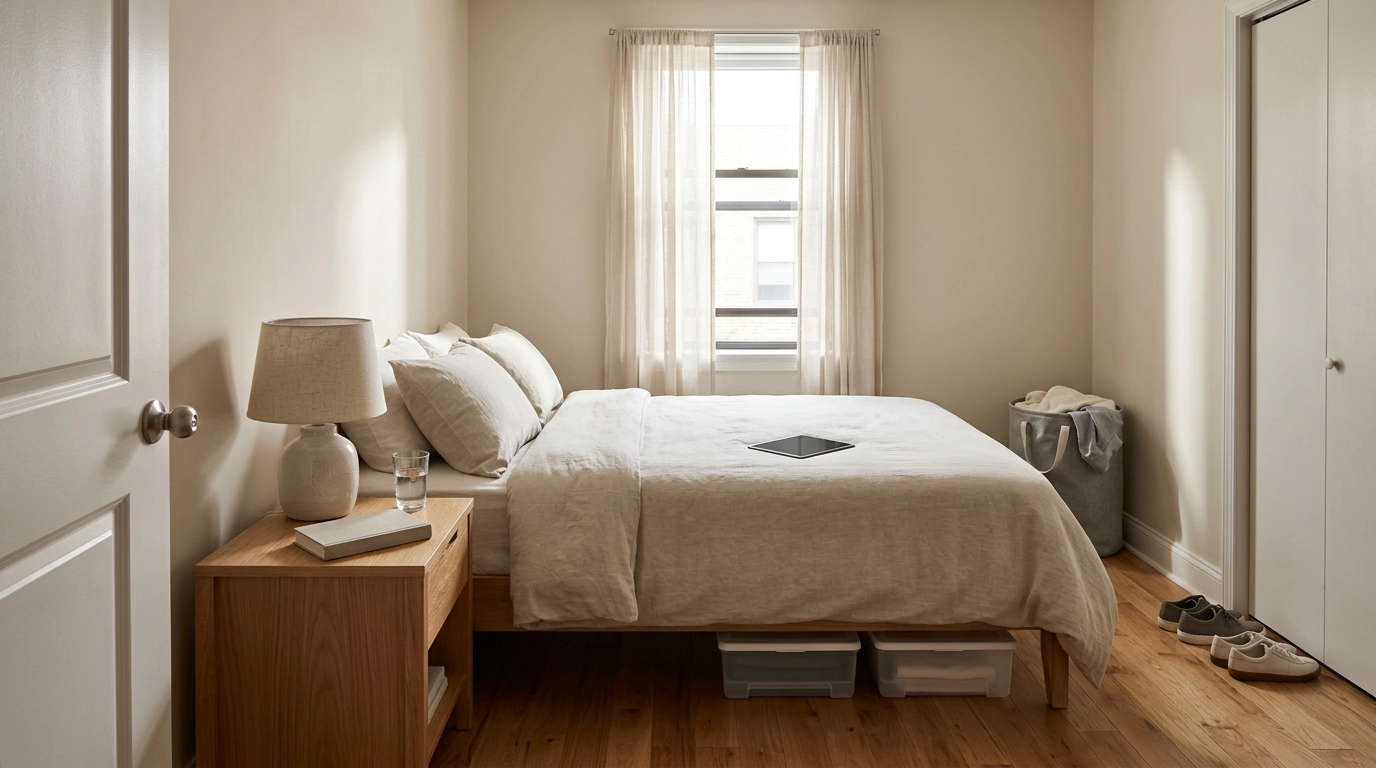
Bedroom Bliss: Maximize Space & Style With a Simple Decluttering Checklist
A calmer bedroom starts with fewer decisions and smarter storage. A short, repeatable routine beats an all-day purge—especially in small bedrooms where one “sort pile” can take over fast. The goal is simple: reduce visual noise, keep daily essentials easy to reach, and create storage that matches real habits so the room stays open, comfortable, and sleep-friendly (a key part of healthy sleep hygiene).
Start With a 20-Minute Reset (Before Any Big Declutter)
- Clear the bed and one flat surface (nightstand or dresser top). An immediate visual win builds momentum and makes the rest feel lighter.
- Set up three containers: Keep Here, Relocate, Donate/Recycle. Skip a “maybe” pile until the end—indecision multiplies clutter.
- Do a fast floor sweep: laundry into the hamper, shoes into one spot, trash out. No sorting yet; just regain the floor.
- Improve visibility: open a window or switch to brighter lighting so clutter hotspots are easier to spot and clean.
If you want a structured flow you can reuse, a simple digital checklist can keep decisions consistent from one reset to the next. Try Bedroom Bliss: Maximize Space & Style (digital checklist) for a room-ordered sequence you can repeat weekly.
Declutter by Zones (So the Room Doesn’t Explode)
Work in small zones so nothing spills into the next area. Finish one zone completely—put items away, wipe the surface, then move on.
Nightstand zone
- Keep only nightly essentials: lamp, water, one book/reader, charger.
- Everything else leaves the nightstand—no “storage by default.”
Dresser zone
- Remove duplicates (extra lotions, random cords) and anything you don’t use weekly.
- Limit the top to one tray or one décor item to prevent future pileups.
Closet zone
- Pull the obvious “no” items first: damaged, never-worn, wrong size.
- Only after that, refine what stays by season and frequency.
Under-bed zone
- Store only low-frequency items in flat, closed bins.
- Avoid loose bags and open baskets that collect dust and become a forgotten catch-all.
Door/entry zone
- Create one landing spot for keys and a bag.
- Remove extra hooks that encourage overflow (“temporary” piles that become permanent).
Zone-by-zone decisions that free space fast
| Zone | Keep | Move Out | Let Go |
|---|---|---|---|
| Nightstand | Charger + one book/reader + water | Receipts, extra pens, random cosmetics | Old cables, expired products |
| Dresser Top | One tray for daily items | Loose jewelry, mail, coins | Broken accessories, duplicates |
| Closet | Current-season favorites | Off-season to bins, special-occasion to garment bag | Unworn 12+ months (unless needed for work) |
| Under Bed | Spare bedding, off-season shoes (boxed) | Daily-use items (relocate to closet) | Anything you forgot you owned |
| Floor Corners | Nothing (aim for clear) | Laundry to hamper, shoes to rack | Worn-out slippers, single socks |
Minimalist Keep Rules That Prevent Re-Clutter
- One-in, one-out for sleepwear, hangers, and decorative pillows. If something new comes in, something leaves.
- Store by frequency: daily-use at arm’s reach, weekly-use in a bin, rare-use in labeled storage.
- Match storage to behavior: open baskets for easy toss-in items (like lounge layers), lidded bins for seasonal pieces.
- Protect flat surfaces: “mostly empty” surfaces reduce visual stress and make quick cleaning realistic.
- Limit bedroom categories to sleep, dress, relax. Move paperwork, office supplies, and shipping materials out of the room.
Quick hygiene matters too—less clutter means fewer dusty surfaces, and easier wipe-downs support healthier routines. For daily care that’s easy to keep by the sink (not on the nightstand), consider the Triple-Sided Ultra-Fine Soft Bristle Toothbrush for Enhanced Oral Health.
Small Bedroom Layout Tweaks That Create Breathing Room
- Clear a path from the door to the bed. If furniture blocks the walkway, rotate it or remove one extra piece (often a spare chair or bulky hamper).
- Go vertical. One wall-mounted hook rail or slim shelf usually outperforms a floor organizer that steals walking space.
- Unify visual lines. Matching hangers and consistent bin styles make storage feel calmer and intentionally “built-in.”
- Right-size bedside storage. A narrow nightstand or floating shelf can replace a wider table without losing function.
- Use lighting to free surfaces. A wall sconce or clip lamp can replace a bedside lamp and open up the nightstand top.
A Simple Weekly Maintenance Routine (10 Minutes)
For cleaning touchpoints (like dresser tops and nightstands), follow common-sense disinfecting guidance for high-touch surfaces from the CDC’s cleaning and disinfecting recommendations, especially during illness or allergy seasons.
Printable Checklist Option for a Faster, More Consistent Reset
If you prefer a ready-made option, Bedroom Bliss: Maximize Space & Style (digital checklist) is an easy way to keep the same zone-by-zone rhythm every time you reset.
FAQ
How long does it take to declutter a small bedroom?
A quick reset often takes 30–90 minutes. A fuller pass—especially if you include the closet and under-bed storage—usually takes 2–4 hours, or split it into zones across two days to avoid burnout.
What should never be stored under the bed?
Avoid loose clothing, paper stacks, and open fabric items that trap dust or need airflow. Use sealed, low-profile containers for linens or seasonal items so the space stays clean and easy to maintain.
How can clutter stay away after the first clean?
Use simple guardrails: one-in/one-out for key categories, one landing spot by the door, and a 10-minute weekly reset. Keeping flat surfaces limited to a tray system also prevents “just set it here” piles from returning.
Recommended for you



Was this article helpful?
Yes
No









Leave a comment