-
Shop
- Advanced Technologies
- AI Skills for Creators & Freelancers
- AI Client Management
- AI Ethics
- AI Mindset
- AI Tools & Prompts
- AI Writing & Content Creation
- Audio, Voice & Music
- Design & Visual Creation
- Email, Messaging & Communication
- Freelancing & Business
- Marketing, Ads & Conversion
- Productivity, Workflow & Automation
- SEO & Search Optimization
- Social Media Content & Growth
- Strategy, Planning & Analytics
- Video Creation & Editing
- AI Skills Mastery 2026 Collection
- Bathroom
- Best-Sellers
- Car Accessories
- Confidence
- Dating & Social Skills
- Digital Resources
- Easter Products
- Education & Learning
- Family & Parenting
- Fashion
- Fashion Accessories
- Furniture
- Gadgets
- Health & Beauty
- Health & Wellness
- Home & Garden
- Home Electronics
- Home Supplies
- Jewelry
- Kids & Babies
- Kitchen
- Lighting
- Patio, Lawn & Garden
- Personal Growth
- Pet Care
- Pet Supplies
- Pets
- Shoes
- Smart Home Living Guides
- Sport & Outdoors
- Stress Relief & Relaxation
- Super Deals
- TikTok Growth & Monetization Mastery
- Travel
- Travel & Adventure
- Wealth
- Wellness
Sketchbook Journaling for Beginners: Easy 10-Min Pages

Sketchbook Journaling for Beginners: Start a Creative Drawing & Reflection Practice
Sketchbook journaling blends simple drawing, written notes, and everyday observations into a flexible practice that builds creativity and self-reflection without needing “artistic” results. A few basic supplies, a small routine, and a handful of go-to ideas are enough to begin filling pages with quick sketches, color, words, and memory-keeping—one relaxed spread at a time.
What Sketchbook Journaling Is (and What It Isn’t)
A sketchbook journal is a personal space for mixing quick drawings, handwriting, scraps, and color—more like a creative log than a polished portfolio. The goal is noticing and processing: moments, moods, places, and ideas captured in a visual way.
Perfection isn’t required; messy pages and unfinished sketches are normal and often more useful for learning. Drawing skill can grow naturally through repetition, but the practice works even with stick figures, symbols, and simple shapes. It can be private, shared, or selectively shared—boundaries are part of the process.
| Practice | Best for | Typical materials | When it feels easiest |
|---|---|---|---|
| Sketchbook journaling | Creative reflection + visual memory | Sketchbook, pen/pencil, optional color | When you want to mix words and images freely |
| Traditional written journaling | Processing thoughts with language | Notebook, pen | When words come faster than images |
| Sketching practice (study pages) | Skill-building and technique drills | Sketchbook, drawing tools | When you want structured improvement |
| Scrapbooking | Keepsakes and polished layouts | Albums, photos, adhesives, decorations | When you enjoy planning and finishing pages |
Supplies That Keep It Simple
The best setup is the one you’ll actually use. Choose a sketchbook size that matches real life: A5 or pocket sizes are easy to carry and quick to fill, while larger books can feel special but intimidating. Medium-weight paper handles pen and light watercolor better, but any paper works if you enjoy it.
Start with core tools only: one pencil, one waterproof fineliner, and one eraser. If you want color, keep it limited—a small watercolor set, a brush pen, or a short set of markers adds variety without decision overload. A glue stick or washi tape is useful for receipts, tickets, leaves, packaging, and small photos.
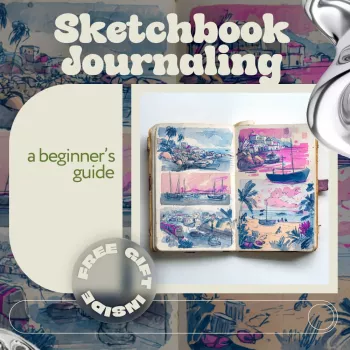
One habit-changing move is a “travel kit” pouch: keep your minimal tools together so quick sessions are always possible. If you prefer a structured path while keeping materials simple, A Beginner’s Guide to Sketchbook Journaling | How to Start Sketchbook Journaling for Beginners | Creative Drawing & Reflection eBook provides an easy starting point with pages you can repeat.
A Beginner-Friendly Routine: The 10-Minute Page
Consistency matters more than intensity. Pick a cue that already exists in your day—morning coffee, lunch break, end-of-day wind-down, or right after a walk—so you don’t have to “find time.”
Use a simple structure: one small sketch plus three short written lines. Try: (1) what happened, (2) how it felt, (3) one detail you noticed. Set a timer for 10 minutes; it reduces pressure and teaches you to finish pages even when motivation is low.
Make “unfinished” a valid ending. When the timer ends, stop. If you want, add a tiny note like “continue later” or “good enough for today.” Repeat the same format for a week before experimenting with more complex spreads.
Easy Things to Draw When You Don’t Know What to Draw
Most beginners get stuck because they assume a page needs a “big idea.” Instead, draw what’s already around you.
- Everyday objects: a mug, keys, shoes, headphones, a plant, your snack—simple forms build confidence quickly.
- Scenes in snapshots: a corner of the room, view from a window, a bus seat, a street sign.
- Micro-collections: draw five variations of one item (leaves, cups, clouds, chairs) as a single page.
- Textures and patterns: fabric folds, wood grain, tile shapes, shadows on a wall.
- Low-pressure self-portraits: your hands holding something, or quick face thumbnails with simplified features.
Reflection Prompts That Pair Well With Sketches
Sketchbook journaling is especially powerful when words and images support each other. Research often points to benefits of expressive writing for stress and emotional processing; see Harvard Health Publishing’s overview on writing about emotions and health. Pair that idea with light drawing, and the page can feel both grounding and memorable.
For more on journaling and well-being, the Smithsonian also discusses how keeping a journal can support your mental health: Why Keeping a Journal Can Boost Your Well-Being.
Simple Page Layouts That Always Work
Common Sticking Points (and Quick Fixes)
A Gentle 7-Day Starter Plan
A Guided Option for Building the Habit
Sometimes the hardest part is deciding what to do on the page. A structured guide can reduce guesswork by offering prompts, examples, and repeatable layouts that work in short sessions. For a ready-to-follow approach, A Beginner’s Guide to Sketchbook Journaling | How to Start Sketchbook Journaling for Beginners | Creative Drawing & Reflection eBook is designed to help you start simply and keep going.
If you like taking your practice outside for quick observation walks, comfortable footwear can make those short “sketch breaks” easier to keep: Armani Exchange Men’s Sneakers.
FAQ
Do you need to be good at drawing to start sketchbook journaling?
No. Basic shapes, symbols, and quick sketches are enough; the value comes from observation and personal meaning, not realism. With repetition, your mark-making naturally gets more confident.
What should a beginner put on the first page?
Start with tool tests, color swatches, a short “about me” note, or a simple object sketch. If the first page feels high-pressure, begin on page 3 and use the first two pages for experiments.
How often should sketchbook journaling be done to see progress?
A small baseline works best—5–10 minutes daily or about three times per week. Progress can look like more creative confidence, noticing more details, and smoother, faster drawing.
Recommended for you

Was this article helpful?
Yes
No









Leave a comment