-
Shop
- Advanced Technologies
- AI Skills for Creators & Freelancers
- AI Client Management
- AI Ethics
- AI Mindset
- AI Tools & Prompts
- AI Writing & Content Creation
- Audio, Voice & Music
- Design & Visual Creation
- Email, Messaging & Communication
- Freelancing & Business
- Marketing, Ads & Conversion
- Productivity, Workflow & Automation
- SEO & Search Optimization
- Social Media Content & Growth
- Strategy, Planning & Analytics
- Video Creation & Editing
- AI Skills Mastery 2026 Collection
- Bathroom
- Best-Sellers
- Car Accessories
- Confidence
- Dating & Social Skills
- Digital Resources
- Easter Products
- Education & Learning
- Family & Parenting
- Fashion
- Fashion Accessories
- Furniture
- Gadgets
- Health & Beauty
- Health & Wellness
- Home & Garden
- Home Electronics
- Home Supplies
- Jewelry
- Kids & Babies
- Kitchen
- Lighting
- Patio, Lawn & Garden
- Personal Growth
- Pet Care
- Pet Supplies
- Pets
- Shoes
- Smart Home Living Guides
- Sport & Outdoors
- Stress Relief & Relaxation
- Super Deals
- TikTok Growth & Monetization Mastery
- Travel
- Travel & Adventure
- Wealth
- Wellness
Build Credit Fast: Simple Weekly Checklist for Beginners
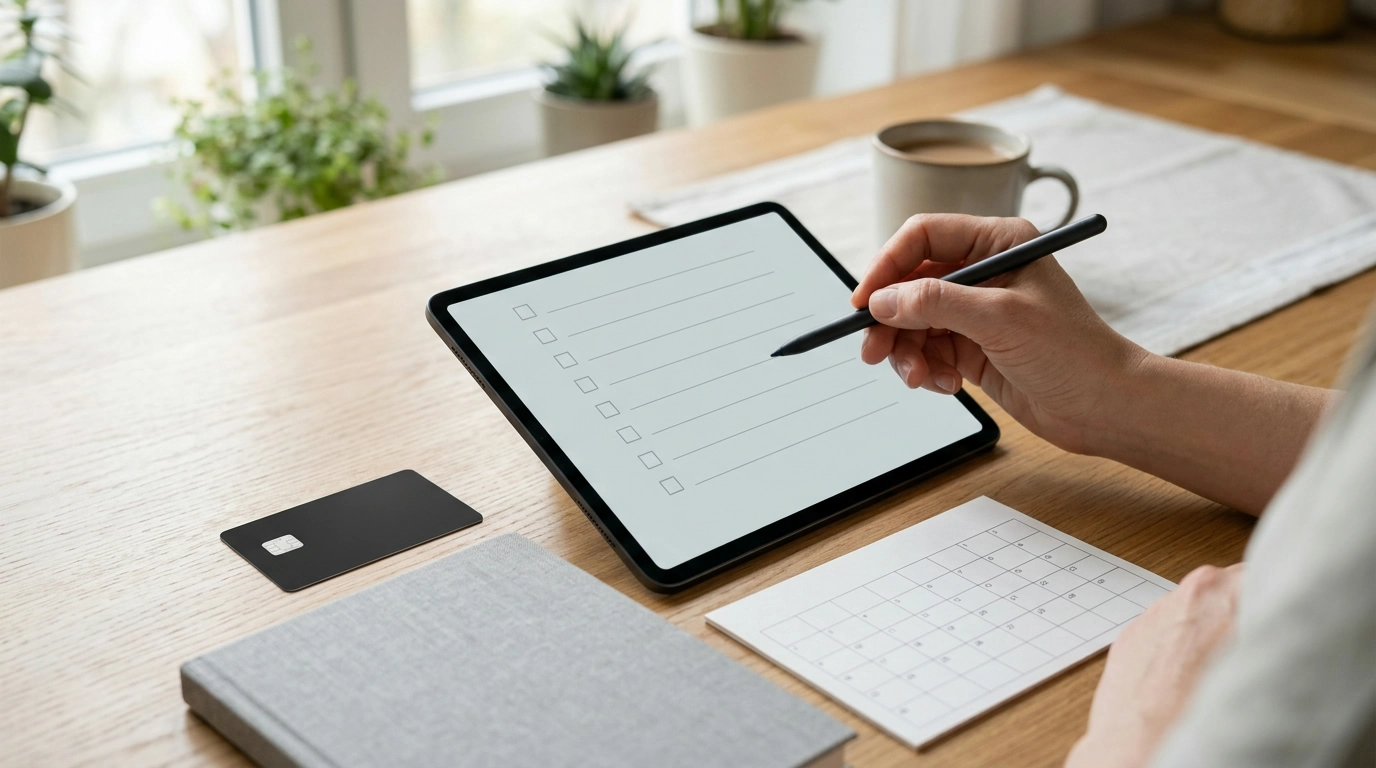
Build Credit Without the Headache: A Fun, Simple Checklist That Keeps You on Track
Credit building doesn’t have to feel like a confusing game with invisible rules. The fastest way to make progress is to keep the basics consistent—on-time payments, low balances, and smart account habits—then track them in a way that’s easy enough to actually stick with. Our digital download checklist is designed to turn “I should work on my credit” into a clear weekly routine that builds strong credit history step by step—especially if you’re a beginner who wants structure, not overwhelm.
What “strong credit history” really means (in plain language)
Your credit history is the pattern lenders can see over time: how long your accounts have been open, whether you pay on time, how much credit you use, and how often you apply for new credit. A strong profile usually looks like consistent on-time payments, manageable balances, a mix of accounts over time, and only occasional new applications.
The tricky part is that credit typically improves from repeated habits, not one-time “hacks.” That’s why a checklist works so well: it turns credit building into a repeatable routine you can actually keep up with.
Credit-building habits and what they influence
| Habit to track | Why it matters | Simple target |
|---|---|---|
| Pay every bill on time | Payment history is a major factor in most scoring models | 100% on-time each month (use reminders/autopay where possible) |
| Keep card balances low | High utilization can pull scores down even if paid in full later | Aim to keep utilization low; pay before statement closes when needed |
| Avoid frequent new applications | Hard inquiries and new accounts can temporarily lower scores | Apply only when there’s a clear reason and budget fit |
| Check reports for errors | Wrong data can hurt scores unfairly | Review periodically and dispute inaccuracies |
If you want a deeper explanation of what impacts scores, the Consumer Financial Protection Bureau, Experian, and FICO break it down clearly.
What our digital checklist helps organize
Our team built the checklist around a simple sequence: set up credit basics, build momentum, then maintain healthy routines. You’ll see monthly and weekly prompts for the actions that actually move the needle—payments, balances, and quick review moments—without turning your life into a spreadsheet.
The layout is beginner-friendly and designed to keep progress visible. Instead of guessing whether you’re “doing enough,” you’ll have a repeatable system you can use as a monthly reset or an ongoing routine.
Featured download: make your routine effortless
If you want one place to track the essentials, start with Your Fun & Simple Checklist to Build Strong Credit History (Digital Download). It’s a straightforward way to stay consistent—because consistency is what builds credit history in real life.
A simple credit-building flow (use this as your routine)
Step 1: Pick the accounts you’ll focus on first
Choose the accounts that make sense for your budget and your stage—often a starter credit card, student card, or secured card. One well-managed account beats juggling several accounts you can’t comfortably track.
Step 2: Set guardrails so you can’t “oops” your way into a problem
Set autopay for at least the minimum payment, add payment reminders, and pick a spending limit that keeps your balance comfortable. The goal is to prevent late payments and avoid the stress of scrambling at the due date.
Step 3: Track the two dates that matter
Know your statement closing date (when your balance is typically reported) and your payment due date (when payment must be received to avoid being late). Keeping both on your checklist helps you manage reported utilization and protect your on-time streak.
Step 4: Manage utilization with a mid-cycle payment when needed
If spending runs higher than planned, make an extra payment before the statement closes. That can keep the reported balance from creeping up, even if you pay the card in full later.
Step 5: Add new credit only when the current system is stable
Beginner pitfalls the checklist helps prevent
Make it feel easy: pair the checklist with a tiny weekly money routine
To make this routine even easier to stick to, try habit-stacking it with something you already do consistently. For example, some people pair their weekly check-in with a self-care routine. If you like practical tools that support simple habits, our team also carries the Triple-Sided Ultra-Fine Soft Bristle Toothbrush—a small upgrade that fits nicely into a “keep it simple, keep it consistent” lifestyle.
If your weekly check-in happens on the go, keep it safe and distraction-free: handle money tasks only when you’re parked. For drivers who rely on navigation, the Universal Car Steering Wheel Phone Mount for Safe Navigation can help keep your phone visible for directions—so you’re not fumbling with it while driving.
When results show up (and what to watch along the way)
Download, print, or use digitally: simple ways to stay consistent
FAQ
How fast can a credit score improve with consistent habits?
Timelines vary, but utilization changes can show up within a month while strong history builds over several months. The most reliable foundation is stacking on-time payments and keeping balances manageable.
Should balances be paid before the due date or before the statement closes?
Paying by the due date helps you avoid late payments, while paying before the statement closes can lower the balance that gets reported. Many people do both: pay on time no matter what, and add an early payment when they want utilization to report lower.
Is this checklist useful if starting with no credit history?
Yes—this is exactly where a routine helps most. You can use it to set reminders, track your first account’s key dates, avoid common early mistakes, and build credit history through consistent weekly and monthly habits.
Recommended for you



Was this article helpful?
Yes
No









Leave a comment