-
Shop
- Advanced Technologies
- AI Skills for Creators & Freelancers
- AI Client Management
- AI Ethics
- AI Mindset
- AI Tools & Prompts
- AI Writing & Content Creation
- Audio, Voice & Music
- Design & Visual Creation
- Email, Messaging & Communication
- Freelancing & Business
- Marketing, Ads & Conversion
- Productivity, Workflow & Automation
- SEO & Search Optimization
- Social Media Content & Growth
- Strategy, Planning & Analytics
- Video Creation & Editing
- AI Skills Mastery 2026 Collection
- Bathroom
- Best-Sellers
- Car Accessories
- Confidence
- Dating & Social Skills
- Digital Resources
- Easter Products
- Education & Learning
- Family & Parenting
- Fashion
- Fashion Accessories
- Furniture
- Gadgets
- Health & Beauty
- Health & Wellness
- Home & Garden
- Home Electronics
- Home Supplies
- Jewelry
- Kids & Babies
- Kitchen
- Lighting
- Patio, Lawn & Garden
- Personal Growth
- Pet Care
- Pet Supplies
- Pets
- Shoes
- Smart Home Living Guides
- Sport & Outdoors
- Stress Relief & Relaxation
- Super Deals
- TikTok Growth & Monetization Mastery
- Travel
- Travel & Adventure
- Wealth
- Wellness
Self-Watering Succulent Planter: Indoor Setup & Care Tips
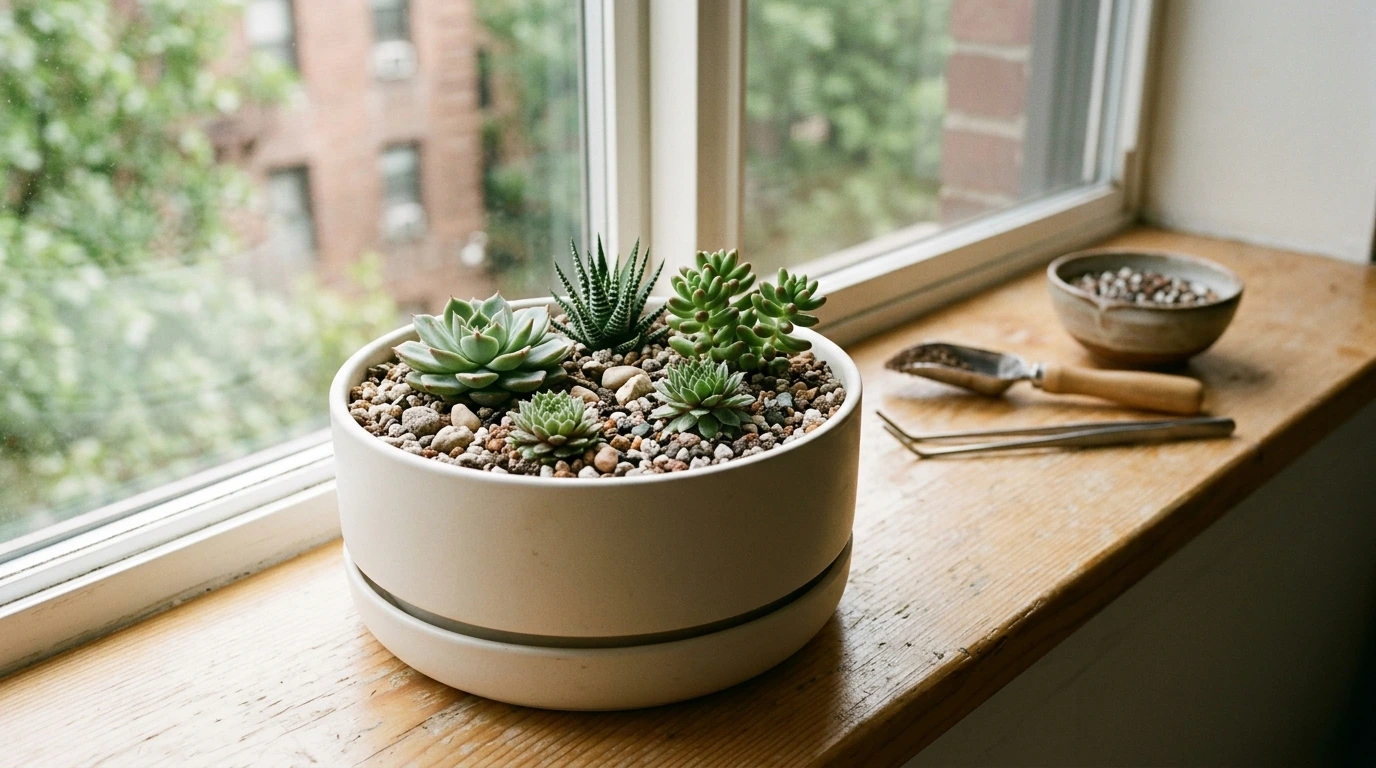
Self-Watering Indoor Succulent Planter: Easy Care for Small-Space Greens
A self-watering planter can simplify succulent care by keeping moisture available in a controlled way while reducing day-to-day guesswork. The key is using that “extra help” without letting roots sit in constant dampness. Below is a practical guide to how self-watering planters work, which succulents adapt best, how to set one up for long-term health, and how to troubleshoot common indoor issues like soggy roots and slow growth.
What a self-watering planter does (and what it doesn’t)
A self-watering planter typically uses a lower reservoir plus a wicking path (such as a wick, false bottom, or capillary channel) that moves small amounts of moisture upward as the potting mix dries. For succulents, this can reduce the “all-or-nothing” cycle that happens when a plant is watered heavily, then forgotten.
- Helps smooth out watering intervals for busy schedules, travel, and warm indoor climates.
- Does not water on a timer—light, potting mix, temperature, and plant size still determine how fast water is used.
- Works best when paired with a fast-draining succulent mix and a cautious refill routine (so the soil isn’t always wet).
Why indoor succulents struggle with watering
Indoors, succulents often use water more slowly than expected—especially compared with outdoor conditions. That mismatch is where most problems start.
- Indoor light is frequently weaker, so growth and water use slow down, increasing the risk of staying too wet.
- Common household potting soils can hold moisture too long for succulent roots.
- Small containers can dry unevenly: edges dry quickly while the center stays damp.
- Overwatering symptoms can mimic underwatering (soft leaves, dull color), making simple schedules unreliable.
For a reliable foundation on indoor succulent care basics, see the University of Minnesota Extension guidance and the Royal Horticultural Society overview.
Who benefits most from a self-watering indoor succulent planter
Self-watering designs aren’t only for “thirsty” plants. They can be a smart fit for succulents when the goal is consistency without constant top watering.
- Beginners who tend to water too frequently.
- People who travel or miss watering windows.
- Office and dorm setups where a sink isn’t convenient.
- Small succulents in warm rooms that dry quickly but still need good aeration.
- Indoor gardeners who prefer bottom-up moisture delivery rather than frequent top watering.
Best succulent types for self-watering setups
The most successful pairings are succulents that tolerate a slightly steadier moisture gradient—provided the mix is gritty and the reservoir isn’t kept constantly full.
- Rosette types (echeveria-style) when paired with a very fast-draining, mineral-heavy mix.
- Compact haworthia-type plants that often appreciate steadier moisture than many desert succulents.
- Small jade-type plants once established, allowing deeper dry-downs between refills.
- Avoid starting with extremely moisture-sensitive species until the refill rhythm is understood.
- Newly propagated cuttings need closer monitoring because their root systems are small and easily stressed.
Setup: potting mix, drainage strategy, and planting steps
The mix matters more than the planter. A self-watering reservoir is only “safe” for succulents when the root zone can still breathe.
- Start with a cactus/succulent mix and increase drainage with mineral grit (pumice, perlite, coarse sand) to reduce water retention.
- Keep the plant crown above the mix line to prevent rot where leaves meet soil.
- Avoid thick decorative top dressings that trap moisture unless airflow and light are strong.
- After planting, wait briefly before the first reservoir fill if roots were disturbed; then start with a partial fill and observe.
A simple way to think about it: the reservoir is a backup supply, not a promise that the soil stays moist every day.
Refill routine and seasonal adjustments
Instead of following a calendar, use a repeatable pattern that creates dry-down time. Succulent roots handle “wet then dry” better than “always a little wet.”
Common problems and quick fixes
Care guide at a glance
| Care factor | Best practice | What to change if problems appear |
|---|---|---|
| Potting mix | Fast-draining cactus/succulent mix plus added mineral grit | If staying wet: add more pumice/perlite; reduce peat-heavy soil |
| Reservoir refills | Let reservoir empty, then refill partially and observe | If leaves get mushy: stop refills longer; increase dry-down time |
| Light | Bright window light or a strong grow light | If stretching: increase light hours/intensity, rotate weekly |
| Temperature & airflow | Moderate warmth with gentle airflow | If soil stays damp: improve airflow and avoid cool, stagnant corners |
| Fertilizer | Light feeding during active growth, diluted | If salts build up: flush with low-mineral water; fertilize less often |
Product details and simple ways to use it well
If you want a compact option designed for easier indoor maintenance, the Self-Watering Indoor Succulent Planter is a straightforward choice for windowsills, desks, and shelves.
More in-stock favorites
- Triple-Sided Ultra-Fine Soft Bristle Toothbrush for Enhanced Oral Health
- Universal Car Steering Wheel Phone Mount for Safe Navigation
FAQ
Can succulents get root rot in a self-watering planter?
Yes—constant moisture is the main risk. Use a gritty mix, keep the plant crown dry, and let the reservoir fully empty before refilling; early rot signs include soft, translucent leaves and a collapsing base, so stop refills and check roots promptly.
How often should the reservoir be refilled for indoor succulents?
There isn’t a fixed schedule. Refill only after the reservoir is empty and the mix has had a dry-down period, then adjust based on light and temperature (refills are typically less frequent in winter or low light).
What water is best for a self-watering succulent planter?
Filtered, distilled, or other low-mineral water helps reduce salt buildup, and room-temperature water is gentler on roots. If minerals accumulate, flush the mix occasionally and keep fertilizing light and infrequent.
Recommended for you


Was this article helpful?
Yes
No









Leave a comment