-
Shop
- Advanced Technologies
- AI Skills for Creators & Freelancers
- AI Client Management
- AI Ethics
- AI Mindset
- AI Tools & Prompts
- AI Writing & Content Creation
- Audio, Voice & Music
- Design & Visual Creation
- Email, Messaging & Communication
- Freelancing & Business
- Marketing, Ads & Conversion
- Productivity, Workflow & Automation
- SEO & Search Optimization
- Social Media Content & Growth
- Strategy, Planning & Analytics
- Video Creation & Editing
- AI Skills Mastery 2026 Collection
- Bathroom
- Best-Sellers
- Car Accessories
- Confidence
- Dating & Social Skills
- Digital Resources
- Easter Products
- Education & Learning
- Family & Parenting
- Fashion
- Fashion Accessories
- Furniture
- Gadgets
- Health & Beauty
- Health & Wellness
- Home & Garden
- Home Electronics
- Home Supplies
- Jewelry
- Kids & Babies
- Kitchen
- Lighting
- Patio, Lawn & Garden
- Personal Growth
- Pet Care
- Pet Supplies
- Pets
- Shoes
- Smart Home Living Guides
- Sport & Outdoors
- Stress Relief & Relaxation
- Super Deals
- TikTok Growth & Monetization Mastery
- Travel
- Travel & Adventure
- Wealth
- Wellness
Quiz Hobby Finder Workbook: Pick a Hobby in 7 Days

Quiz-Based Hobby Finder for Adults: A Practical Digital Workbook for Self-Discovery
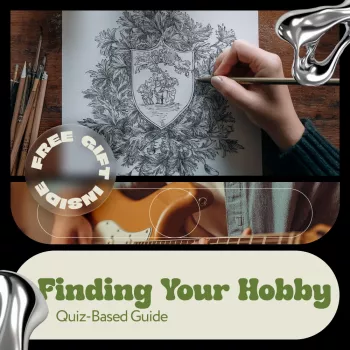
A satisfying hobby fits more than a schedule—it matches energy, personality, budget, and the kind of progress that feels motivating. A quiz-and-workbook approach makes the search simpler: instead of scrolling endless lists, you translate your real-life preferences into a shortlist you can actually test. If you want a guided, low-pressure way to narrow options and turn curiosity into action, the Quiz-Based Guide to Finding Your Hobby (digital download) is designed to move from “I should have a hobby” to “I know what I’m trying this week.”
Hobbies can also be a practical part of stress relief, especially when they create a predictable off-ramp from work mode. For background on how stress affects the body and why recovery habits matter, see the American Psychological Association overview and the Mayo Clinic guide to stress management.
Why hobbies feel hard to choose (even when there are endless options)
Having “so many choices” sounds like a good problem—until it turns into decision fatigue. Comparing every possible activity makes starting feel risky: what if you pick wrong, waste money, or quit after two tries?
Another common trap is choosing a hobby that’s good on paper but doesn’t match constraints. Time windows, space limits, noise level, and social comfort can quietly sabotage motivation. An apartment-friendly hobby often needs to be compact and quiet; a busy parent may need something that works in 15-minute chunks.
Adults also tend to overvalue being good quickly. Many hobbies have an awkward beginner phase where the effort-to-reward ratio feels unfair. When the goal becomes “don’t be bad,” it’s easy to quit before the hobby gets enjoyable.
Finally, the best match depends on the type of reward you’re chasing: calm, novelty, mastery, social connection, or creative expression. Two people can try the same activity and have opposite experiences simply because they want different rewards.
How the quiz-based method narrows the field
A quiz-based hobby finder starts with preference signals—simple, honest data points that describe what feels sustainable. Think indoor/outdoor, solo/social, structured/freeform, hands-on/mental, active/restorative. None of these are “better”; they just reduce noise.
Those signals can be translated into hobby “profiles” such as builder, collector, performer, explorer, caretaker, or tinkerer. Profiles are useful because they point toward categories of activities instead of a single fragile “perfect hobby.”
Constraints become filters rather than obstacles: a budget cap, weekly minutes available, accessibility needs, and space requirements help you avoid options that won’t survive contact with real life. The end goal is a shortlist (often 3–7 hobbies) so you can experiment without pressure.
Common preference signals and what they suggest
| Preference signal | Often pairs well with | Examples of hobby directions |
|---|---|---|
| Low energy after work | Restorative, low setup | Journaling, puzzles, sketching, casual photography, learning a language with short sessions |
| Needs visible progress | Skill-building with milestones | Knitting/crochet, guitar basics, cooking techniques, digital illustration drills |
| Craves social connection | Community-friendly formats | Dance classes, book clubs, recreational sports leagues, volunteer roles |
| Likes tinkering and systems | Iterative problem-solving | Home coffee brewing, model kits, coding mini-projects, DIY repair |
| Wants outdoors time | Nature + routine | Hiking, birding, gardening, urban sketching walks, kayaking (where available) |
What’s inside the digital interactive quiz workbook
This style of workbook is built to be used, not admired. The most helpful versions include step-by-step quiz pages that convert preferences into a practical hobby shortlist, plus reflection prompts that clarify what “fun” means personally—calm, challenge, meaning, novelty, or community.
You’ll also want mini-planning worksheets that lower friction: a simple supplies list, realistic time blocks, learning sources, and a first-session script (so you’re not negotiating with yourself at 9 p.m.). A scoring or clustering approach can feel “AI-inspired” by spotting patterns across preferences and constraints to recommend directions rather than a generic one-size-fits-all result.
For a ready-to-use option, the Quiz-Based Guide to Finding Your Hobby – Digital Download is designed to be revisited as seasons and schedules change—especially helpful if you rotate between “high-energy months” and “survival weeks.”
A 7-day hobby trial plan (small experiments, low pressure)
If one of your trial options is walking, light hiking, or “explorer” style hobbies, comfortable basics matter. Supportive footwear can reduce the friction of getting out the door—options like Armani Exchange Men’s Sneakers can fit into a simple “walk-and-listen” routine where the hobby is consistency, not intensity.
Picking a hobby that actually fits real life
Common roadblocks and quick fixes
Digital download details and how to use it smoothly
Keep the workbook as a reusable “hobby compass” for shifting goals: fitness months, creativity months, social months, or stress-reduction months. If one direction involves driving to new spots (parks, classes, trailheads), small convenience tools can help you follow through—like a Universal Car Steering Wheel Phone Mount for Safe Navigation to keep navigation visible and reduce last-minute stress.
FAQ
Is this hobby guide suitable for complete beginners?
Yes. It’s built around low-pressure discovery, beginner-friendly trials, and prompts that focus on starting small and adjusting based on what actually feels enjoyable.
How long does it take to get useful results from the quiz?
Most people can complete a first pass in about 20–45 minutes and get a shortlist the same day. A short trial week then adds confidence by turning the shortlist into real experience.
What if the recommended hobbies don’t feel right after trying them?
Use your reflections to spot which signal was off—energy level, social vs. solo, structure, or budget—and rerun the shortlisting with updated constraints. The goal is iteration, not forcing a mismatch.
Recommended for you
Was this article helpful?
Yes
No









Leave a comment