-
Shop
- Advanced Technologies
- AI Skills for Creators & Freelancers
- AI Client Management
- AI Ethics
- AI Mindset
- AI Tools & Prompts
- AI Writing & Content Creation
- Audio, Voice & Music
- Design & Visual Creation
- Email, Messaging & Communication
- Freelancing & Business
- Marketing, Ads & Conversion
- Productivity, Workflow & Automation
- SEO & Search Optimization
- Social Media Content & Growth
- Strategy, Planning & Analytics
- Video Creation & Editing
- AI Skills Mastery 2026 Collection
- Bathroom
- Best-Sellers
- Car Accessories
- Confidence
- Dating & Social Skills
- Digital Resources
- Easter Products
- Education & Learning
- Family & Parenting
- Fashion
- Fashion Accessories
- Furniture
- Gadgets
- Health & Beauty
- Health & Wellness
- Home & Garden
- Home Electronics
- Home Supplies
- Jewelry
- Kids & Babies
- Kitchen
- Lighting
- Patio, Lawn & Garden
- Personal Growth
- Pet Care
- Pet Supplies
- Pets
- Shoes
- Smart Home Living Guides
- Sport & Outdoors
- Stress Relief & Relaxation
- Super Deals
- TikTok Growth & Monetization Mastery
- Travel
- Travel & Adventure
- Wealth
- Wellness
Quick Reset Rituals: Breathing, Yoga, Journaling
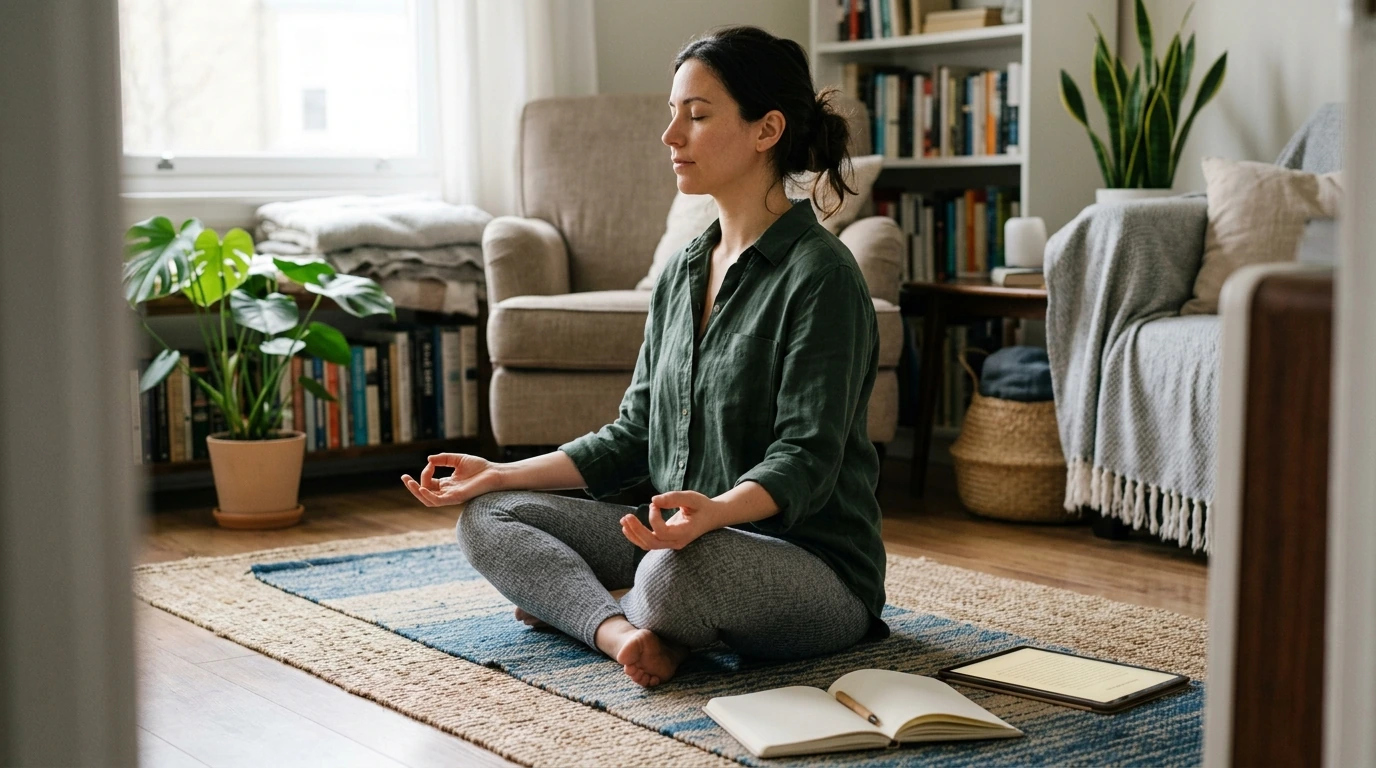
Reset Rituals for Real Life: Guided Breathing, Yoga, Journaling, and Mindful Living
A reset doesn’t require a perfect schedule or an hour of silence. It requires a few reliable relaxation activities that calm your nervous system, clear mental clutter, and bring your body back to steady. Our team pulled guided breathing, gentle yoga, journaling prompts, and mindful living practices into one practical digital download—so stress relief stays within reach when the day feels busy, heavy, or simply noisy.
If you’re building a small “reset kit” for real life, start with one tool you’ll actually use, then stack the others as needed. That’s the point: less pressure, more consistency, and a calmer baseline you can return to.
What a “reset” actually means (and why it works)
A reset is a short, intentional shift that signals safety to your body: slower breathing, softer muscles, and less mental spiraling. Stress doesn’t live in only one place—it shows up in both mind and body—so blending breath, movement, and reflection tends to work better than relying on a single tool.
- A reset is a short, intentional shift that signals safety to your body: slower breathing, softer muscles, less mental spiraling.
- Stress shows up in both mind and body; blending breath + movement + reflection helps more than relying on only one tool.
- Consistency matters more than duration: 3–10 minutes done often is more sustainable than a rare “big” self-care session.
- The goal is not to erase feelings; it is to create enough space to respond with clarity.
Quick reset options by time and need
| Time available | Best for | Try this | How it should feel |
|---|---|---|---|
| 2–3 minutes | Racing thoughts, tight chest, impatience | Guided breathing (slow exhale focus) | More space between thoughts; shoulders drop |
| 5 minutes | Restlessness, “wired” energy | Gentle yoga flow + steady nasal breathing | Warmer body, less fidgety |
| 7–10 minutes | Overwhelm, emotional buildup | Journaling prompt + grounding breath | Lighter, clearer, more organized |
| 10–15 minutes | End-of-day decompression | Mindful living routine (screen-off reset + breath + reflection) | Calm readiness for rest |
Guided breathing: the fastest way to shift your state
When you need the quickest “state change,” start with breath. Breath is always available, and small changes—especially longer exhales—can help reduce the stress response. Harvard Health notes that breath control can help quell an errant stress response, which is why we treat breathing as the first lever to pull when your day starts to spike.
- Start with a posture that makes breathing easier: feet grounded or seated tall, jaw relaxed, tongue resting.
- Use an exhale-led rhythm to reduce stress response: extend the exhale slightly longer than the inhale.
- Pair breath with a simple cue: “Inhale—soften. Exhale—release.” The mind likes something to hold.
- Keep it practical: one round before a meeting, after scrolling, or whenever your body feels braced.
If you want more context on why this helps, the Harvard Health Publishing overview of relaxation techniques is a helpful read, and the NCCIH guide to relaxation techniques offers a broad, evidence-informed primer.
Gentle yoga to reset tension (without turning it into a workout)
Gentle yoga works best as a downshift—not a performance. The goal is to reduce the “brace pattern” that builds up in your shoulders, hips, jaw, hands, and even between the ribs. You’re not chasing intensity; you’re practicing release.
- Choose movement that downshifts: slow transitions, longer holds, and no strain in the neck or low back.
- Focus on high-tension zones: hips, shoulders, jaw, hands, and the space between the ribs.
- Use breath as the metronome: move on the exhale when possible to encourage letting go.
- Finish with stillness: a short pause teaches your nervous system that it is safe to be quiet.
When your muscles soften, your mind often follows. The American Psychological Association’s overview of how stress affects the body is a strong reminder that stress is physical—not “just in your head.”
Journaling that clears the mind instead of adding another task
Journaling is most effective when it reduces pressure. Our team built prompts and quick structures that help you unload thoughts and sort what matters—without trying to write beautifully or solve everything at once.
Mindful living micro-habits that protect your calm
A simple “reset plan” to follow on tough days
What’s inside the Relaxation Activities digital download
Our Relaxation Activities to Reset Your Mind and Body (digital download) brings the four core reset tools together—guided breathing, gentle yoga ideas, journaling prompts, and mindful living practices—so you can mix and match based on what you need that day.
Two small add-ons that support your everyday reset
- Universal Car Steering Wheel Phone Mount for Safe Navigation for calmer driving routines and fewer “where did my phone go?” moments before you start the car.
- Triple-Sided Ultra-Fine Soft Bristle Toothbrush for Enhanced Oral Health to make your morning and evening routines feel easier and more consistent—perfect anchors for micro-mindfulness.
FAQ
How quickly can these relaxation activities help during a stressful moment?
You can often feel a small shift within 1–3 minutes, especially with exhale-led guided breathing. Stronger, more reliable benefits build when you repeat short resets daily, even if it’s just one round of breathing plus a single journal line.
Is this digital download suitable for beginners who are new to yoga or mindfulness?
Yes—everything is designed to be gentle, low-pressure, and beginner-friendly. Start with the easiest option (often breathing), keep it to 2–5 minutes, and build only when it feels supportive rather than demanding.
Can the eBook be used daily, or is it meant for occasional use?
It works well for daily micro-use, and it’s also there for high-stress days when you need extra support. Rotate between breathing, movement, and journaling based on what your mind and body are asking for that day.
Recommended for you


Was this article helpful?
Yes
No









Leave a comment