-
Shop
- Advanced Technologies
- AI Skills for Creators & Freelancers
- AI Client Management
- AI Ethics
- AI Mindset
- AI Tools & Prompts
- AI Writing & Content Creation
- Audio, Voice & Music
- Design & Visual Creation
- Email, Messaging & Communication
- Freelancing & Business
- Marketing, Ads & Conversion
- Productivity, Workflow & Automation
- SEO & Search Optimization
- Social Media Content & Growth
- Strategy, Planning & Analytics
- Video Creation & Editing
- AI Skills Mastery 2026 Collection
- Bathroom
- Best-Sellers
- Car Accessories
- Confidence
- Dating & Social Skills
- Digital Resources
- Easter Products
- Education & Learning
- Family & Parenting
- Fashion
- Fashion Accessories
- Furniture
- Gadgets
- Health & Beauty
- Health & Wellness
- Home & Garden
- Home Electronics
- Home Supplies
- Jewelry
- Kids & Babies
- Kitchen
- Lighting
- Patio, Lawn & Garden
- Personal Growth
- Pet Care
- Pet Supplies
- Pets
- Shoes
- Smart Home Living Guides
- Sport & Outdoors
- Stress Relief & Relaxation
- Super Deals
- TikTok Growth & Monetization Mastery
- Travel
- Travel & Adventure
- Wealth
- Wellness
Printable Cat Puzzle Feeder Checklist for Daily Enrichment
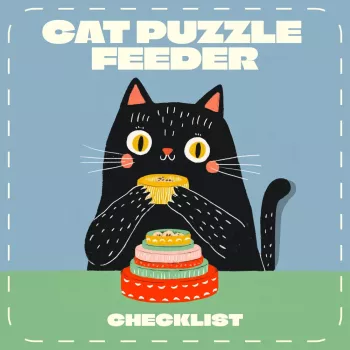
Cat Puzzle Feeder Checklist: A Printable Routine for Smarter Mealtimes
Puzzle feeders can turn everyday meals into safe, structured enrichment that supports healthy pacing, curiosity, and confidence. A simple routine—plus a quick way to track what’s working—helps puzzle feeding stay fun and sustainable in real life (even in multi-cat homes or on busy mornings). Below is a practical checklist-style approach you can follow daily, along with a troubleshooting table and a weekly rotation plan.
What a puzzle feeder routine supports
- More natural food-seeking behavior through sniffing, pawing, and problem-solving
- Slower eating that can reduce scarf-and-barf patterns for many cats
- Daily mental enrichment that can help prevent boredom-related behaviors
- Predictable structure for multi-cat homes and busy schedules
- A simple way to rotate toys and difficulty without guessing
Many feline behavior resources recommend enrichment as a cornerstone of indoor cat wellbeing. For deeper reading, see OSU College of Veterinary Medicine on indoor cat enrichment and International Cat Care’s guide to food puzzles.
Before starting: quick safety and success checks
- Confirm the feeder size and openings match the kibble or treat size (too large = no challenge; too small = frustration).
- Start with a portion of the meal, not the full daily intake, until the cat reliably solves the puzzle.
- Choose a calm location with non-slip footing; add a mat if the feeder skates across the floor.
- Keep fresh water available and avoid forcing puzzle feeding during illness, recovery, or major routine changes.
- For cats with mobility or dental concerns, use low-effort puzzles (lick mats, shallow trays, wide channels) and consult a veterinarian if unsure.
If you want a ready-to-print routine you can keep on the fridge (or mark up on a tablet), the Cat Puzzle Feeder Checklist (digital download) is designed for quick checkmarks, timing notes, and week-to-week rotation planning.
How to introduce puzzle feeders without frustration
Phase 1: easy wins
Place a few pieces of kibble on top or in open sections so success is immediate. This helps your cat understand, “This object makes food happen,” without needing persistence yet.
Phase 2: guided challenge
Lightly cover food with a movable piece (paper ball, flap) that takes one simple action to move. Keep the effort low and the reward obvious.
Phase 3: true puzzle
Increase steps gradually—more compartments, smaller openings, or light rolling/tilting required. If your cat stalls, help by loosening pieces or adding a few easy-access treats, then end the session on a win. Early sessions often work best at 3–10 minutes, repeated daily to build confidence.
Daily checklist: set up, observe, and adjust
| What’s happening | Likely cause | Try this next |
|---|---|---|
| Cat walks away quickly | Difficulty too high or low motivation | Make the first rewards easier, use higher-value treats briefly, shorten sessions |
| Cat paws aggressively or bites feeder | Frustration or feeder design mismatch | Switch to a simpler feeder, increase opening size, stabilize on a mat |
| Food spills too fast | Puzzle too easy or openings too large | Use smaller openings, add internal barriers, rotate to a higher-difficulty option |
| Cat eats too slowly and seems stressed | Portion too large for the puzzle level | Feed part in a bowl, reduce puzzle portion, keep sessions shorter |
| One cat monopolizes the feeder | Resource guarding or competition | Separate feeding stations, run parallel puzzles, supervise and space cats apart |
| Cat learns it once, then gets bored | Not enough variety | Rotate puzzle types weekly, hide mini “snack stations,” vary textures and shapes |
Weekly rotation plan to keep enrichment fresh
- Plan 2–4 puzzle types across the week: one easy, one medium, one rolling/active, and one calm/lick-style option.
- Change only one element per day (location, feeder style, or difficulty) to keep the routine predictable.
- Build a reset day: use a simple puzzle or scatter feed to maintain confidence and enjoyment.
- For indoor-only cats, add non-food enrichment alongside puzzle feeding (window perch time, play wand session, scent games). Consider the broader enrichment framework in the AAFP/ISFM environmental needs guidelines.
Portioning and pacing tips that prevent overeating
To keep your routine consistent, it can help to pair puzzle feeding with another quick household habit (like setting out tomorrow’s feeder or wiping the station). Some cat owners also like stacking routines so they’re easier to remember—if you’re building better daily habits overall, tools like the Triple-Sided Ultra-Fine Soft Bristle Toothbrush can fit into the same “after meals” rhythm for humans, while your cat works on their own enrichment.
What’s included in the printable checklist
Download option
Get the Cat Puzzle Feeder Checklist (digital download) and start with a simple baseline week, then adjust one variable at a time.
FAQ
How long should a cat take to finish a puzzle feeder?
Many cats do well around 5–15 minutes once they understand the game, but newer cats may take longer with simpler setups. A helpful rule is that the first reward should be reachable within 30–60 seconds, and stress signals matter more than the clock.
Can puzzle feeders replace a regular food bowl?
They can for some cats, but it’s usually best to transition in phases by starting with a partial meal in the puzzle and the rest in a bowl. Cats with medical issues, high stress, or mobility limits may do best with a mix of bowl feeding and low-effort puzzles.
What if my cat gets frustrated with puzzle feeders?
Common signs include walking away, growling, tail flicking, or biting the feeder. Lower the difficulty, stabilize the feeder, use higher-value treats briefly to rebuild confidence, and end sessions on an easy win; if food-related stress or guarding escalates, contact a veterinarian or qualified behavior professional.
Recommended for you

Was this article helpful?
Yes
No









Leave a comment