-
Shop
- Advanced Technologies
- AI Skills for Creators & Freelancers
- AI Client Management
- AI Ethics
- AI Mindset
- AI Tools & Prompts
- AI Writing & Content Creation
- Audio, Voice & Music
- Design & Visual Creation
- Email, Messaging & Communication
- Freelancing & Business
- Marketing, Ads & Conversion
- Productivity, Workflow & Automation
- SEO & Search Optimization
- Social Media Content & Growth
- Strategy, Planning & Analytics
- Video Creation & Editing
- AI Skills Mastery 2026 Collection
- Bathroom
- Best-Sellers
- Car Accessories
- Confidence
- Dating & Social Skills
- Digital Resources
- Easter Products
- Education & Learning
- Family & Parenting
- Fashion
- Fashion Accessories
- Furniture
- Gadgets
- Health & Beauty
- Health & Wellness
- Home & Garden
- Home Electronics
- Home Supplies
- Jewelry
- Kids & Babies
- Kitchen
- Lighting
- Patio, Lawn & Garden
- Personal Growth
- Pet Care
- Pet Supplies
- Pets
- Shoes
- Smart Home Living Guides
- Sport & Outdoors
- Stress Relief & Relaxation
- Super Deals
- TikTok Growth & Monetization Mastery
- Travel
- Travel & Adventure
- Wealth
- Wellness
Pet Water Fountain Benefits: Hydration Checklist & Care
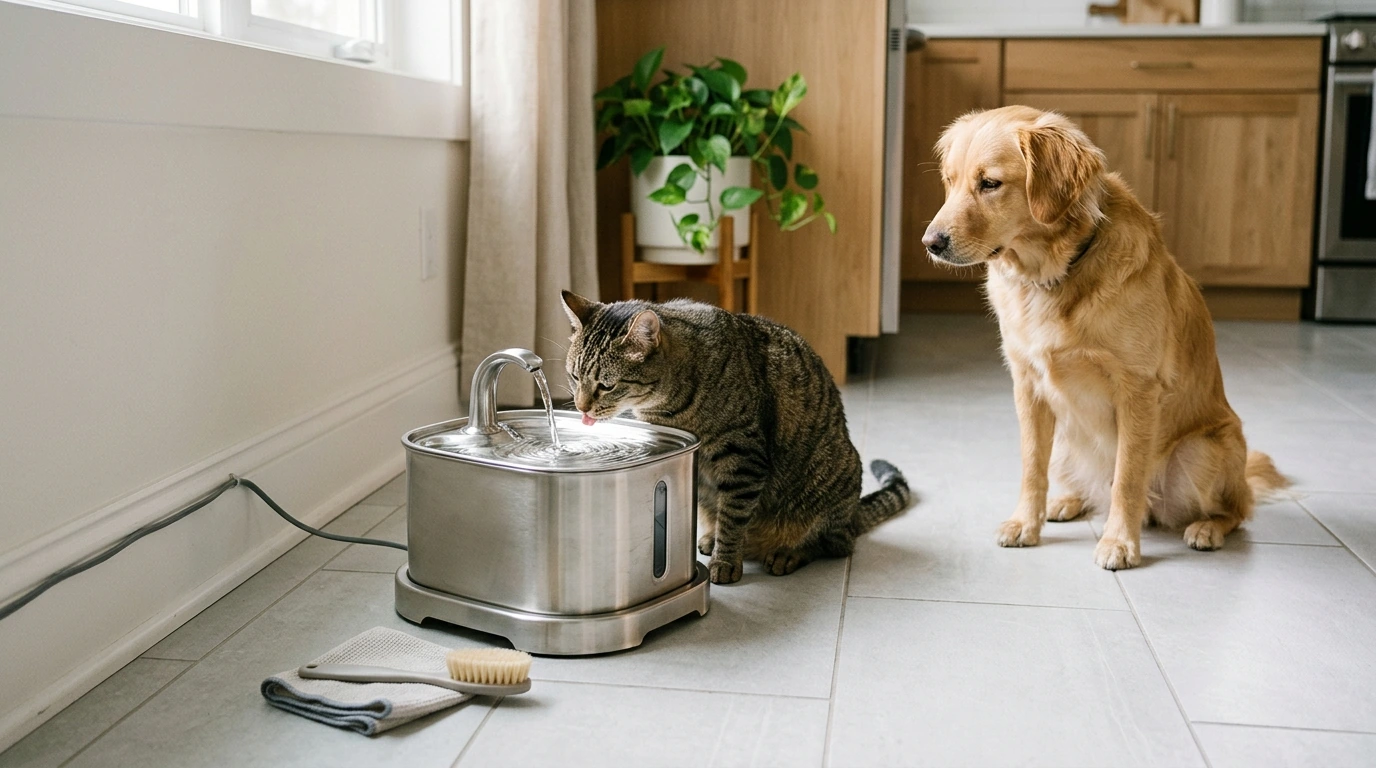
Pet Water Fountain Benefits Checklist: Hydration Wins for Cats and Dogs
Many pets drink more consistently when water looks, sounds, and smells fresh. A water fountain can support healthier hydration habits for cats and dogs, but the real value comes from choosing the right style and maintaining it correctly. Use the checklist below to spot meaningful benefits, set up a simple cleaning routine, and decide whether a fountain fits your pet’s needs and your home’s schedule.
Why steady hydration matters for cats and dogs
Hydration helps support kidneys, urinary health, digestion, temperature regulation, and everyday energy. When pets don’t drink enough (or suddenly drink far more than usual), small shifts can snowball into bigger health concerns over time.
- Hydration supports kidney function, urinary health, digestion, temperature regulation, and energy levels.
- Cats often have a naturally low thirst drive; small improvements in daily drinking can be meaningful over time.
- Dogs can drink inconsistently due to routine changes, stress, travel, or stale water; predictable access helps.
- Wet food, climate, activity level, age, and medical conditions all change how much water a pet may need.
- Any sudden increase or decrease in drinking should be discussed with a veterinarian.
For general, trustworthy pet health guidance, you can also review owner resources from the American Veterinary Medical Association (AVMA) and cat-focused information from the Cornell Feline Health Center.
Benefits checklist: what a fountain can improve
- Fresher taste and smell: moving water can feel “newer” than a bowl that sits all day, encouraging more frequent sips.
- Water clarity: filters can reduce hair, crumbs, and sediment that would otherwise float in a bowl.
- Preference for running water: some cats and dogs are drawn to motion and gentle sound cues.
- Bowl cleanliness: a covered reservoir can reduce dust, household debris, and curious paws compared with an open dish.
- Multi-pet harmony: larger capacity fountains may reduce competition at the water station (still keep more than one source if needed).
- Daily routine support: a visible water level and predictable refill cadence can make hydration tracking easier.
- Travel and busy-day buffer: higher capacity can help when refill timing slips (never replace daily checks).
Quick checklist to confirm the benefits are real for your pet
| Benefit to look for | Signs it’s working | When it’s not a match yet |
|---|---|---|
| Drinks more often | More frequent visits, longer sipping, fewer “dry bowl” moments | Pet avoids it, drinks only from other sources, seems startled by sound |
| Water stays cleaner | Less hair/crumbs, fewer slime odors, clearer surface | Filter clogs quickly, visible film returns fast, cleaning is skipped |
| Less mess around the station | Reduced splashing, fewer paw-dips, drier floor | Fountain tip-prone, splashes from spout height, cord tugging |
| Easier upkeep routine | Quick rinse daily, deeper clean weekly, reminders are simple | Parts are hard to disassemble, biofilm builds in tight corners |
| Comfort for cautious pets | Pet approaches calmly, drinks without flinching | Vibration noise, strong stream, or new placement causes avoidance |
Choosing the right fountain style for your home
If you’re comparing options and want a quick way to evaluate what matters, the Pet Water Fountain Benefits Checklist (printable digital download) is designed to make the decision (and the follow-through) simpler.
Setup that encourages drinking from day one
Cleaning and maintenance routine (the part that makes fountains worth it)
Simple maintenance calendar
| Task | How often | Why it matters |
|---|---|---|
| Top off and quick rinse | Daily | Keeps flow steady and reduces gurgling/noise |
| Wash bowl and spout pieces | Weekly | Prevents biofilm buildup and odor |
| Clean pump and impeller area | Weekly to every 2 weeks | Maintains quiet operation and safe circulation |
| Replace filters | Every 2–4 weeks (varies) | Improves taste and reduces debris reaching the pump |
| Deep descale (if hard water) | Monthly | Removes mineral buildup that slows flow and traps grime |
For additional practical health-and-care references, the VCA Animal Hospitals Pet Health Library is a helpful starting point.
When a fountain may not be the best option
Printable checklist: track what changes after switching
If you want a ready-to-print tracker, grab the Pet Water Fountain Benefits Checklist | Digital Download to record results week by week.
Optional add-ons for pet-parent routines
- Universal Car Steering Wheel Phone Mount for Safe Navigation for hands-free navigation when heading to the vet or pet store.
- Triple-Sided Ultra-Fine Soft Bristle Toothbrush for Enhanced Oral Health as a simple household staple for daily care routines.
FAQ
Do pet water fountains really help pets drink more?
Many pets drink more often when water is moving and smells fresher, but results vary by personality and environment. Track drinking for a few days before and after, and keep a backup bowl available during the transition so your pet always has a comfortable option.
How often should a pet water fountain be cleaned?
A practical rhythm is a quick daily top-off and rinse, a weekly wash of parts and pump cleaning, and filter replacement about every 2–4 weeks (sooner for multi-pet homes). If you have hard water, add a monthly descale to keep flow strong and surfaces cleaner.
Are stainless steel or ceramic fountains better than plastic?
Stainless steel and ceramic are often easier to sanitize and resist lingering odors, which can help with long-term freshness. Plastic can still work, but scratches may hold biofilm over time, so consistent cleaning and timely replacement matter more.
Recommended for you


Was this article helpful?
Yes
No









Leave a comment