-
Shop
- Advanced Technologies
- AI Skills for Creators & Freelancers
- AI Client Management
- AI Ethics
- AI Mindset
- AI Tools & Prompts
- AI Writing & Content Creation
- Audio, Voice & Music
- Design & Visual Creation
- Email, Messaging & Communication
- Freelancing & Business
- Marketing, Ads & Conversion
- Productivity, Workflow & Automation
- SEO & Search Optimization
- Social Media Content & Growth
- Strategy, Planning & Analytics
- Video Creation & Editing
- AI Skills Mastery 2026 Collection
- Bathroom
- Best-Sellers
- Car Accessories
- Confidence
- Dating & Social Skills
- Digital Resources
- Easter Products
- Education & Learning
- Family & Parenting
- Fashion
- Fashion Accessories
- Furniture
- Gadgets
- Health & Beauty
- Health & Wellness
- Home & Garden
- Home Electronics
- Home Supplies
- Jewelry
- Kids & Babies
- Kitchen
- Lighting
- Patio, Lawn & Garden
- Personal Growth
- Pet Care
- Pet Supplies
- Pets
- Shoes
- Smart Home Living Guides
- Sport & Outdoors
- Stress Relief & Relaxation
- Super Deals
- TikTok Growth & Monetization Mastery
- Travel
- Travel & Adventure
- Wealth
- Wellness
Painting for Calm: Mindful Brushstrokes for Stress Relief
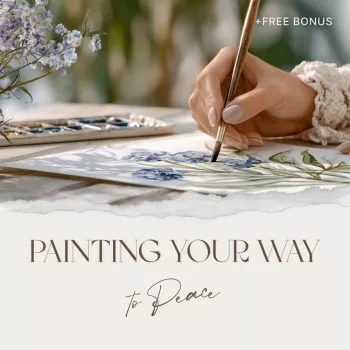
Painting Your Way to Peace: How Creativity Calms the Mind and Lifts the Spirit
Painting can be a gentle, practical way to slow racing thoughts, release emotions safely, and rebuild a sense of meaning—no “talent” required. With simple supplies and a mindful approach, the act of putting color on a page can support stress relief, emotional processing, and daily resilience. The goal isn’t to make a masterpiece; it’s to make a moment where your nervous system can soften and your attention has somewhere kind to land.
Why painting can feel calming (even for beginners)
When life feels loud, painting offers a quieter channel. The repetition of brushstrokes and the small decisions you make—mixing a color, choosing a shape, adding a layer—can create a steady rhythm that feels grounding.
- Rhythmic movement calms the body: Repeated hand motions paired with steady attention can help shift the body away from fight-or-flight and toward a calmer baseline.
- A nonverbal outlet: Color, shape, and texture give emotions somewhere to go when words feel too sharp, too messy, or simply unavailable.
- Less mental multitasking: One creative task narrows focus to the present moment and can quiet mental noise.
- Small actions restore safety: Mixing a hue, filling a simple form, or layering a wash provides a sense of control—especially helpful when other parts of life feel uncertain.
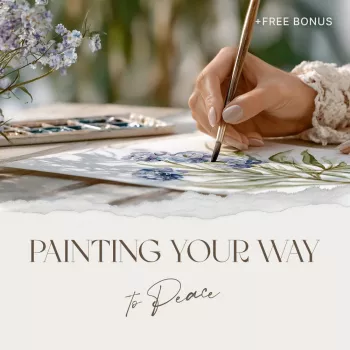
For a more structured approach with prompts and routines, consider a guided resource like Painting Your Way to Peace – How Creativity Can Calm the Mind and Lift the Spirit.
Mental health benefits linked to creative practice
Creative practice is increasingly recognized as a supportive tool for wellbeing. While painting isn’t a replacement for professional mental health care, it can be a meaningful part of a self-care toolkit—especially when used as a consistent, low-pressure habit. Organizations like the American Art Therapy Association (AATA) describe how art-based processes can support expression and emotional integration.
- Stress reduction: Painting can lower perceived stress by offering absorption, play, and emotional release.
- Mood support: Pleasing colors and the satisfaction of finishing small pieces can nudge motivation and positive affect.
- Anxiety relief: A “one brushstroke at a time” structure can interrupt worry loops by anchoring attention to immediate steps.
- Self-esteem and agency: Completing a piece—no matter how simple—reinforces capability and persistence.
- Connection and belonging: Sharing art in a class or online group can reduce isolation and create supportive routines.
Common struggles and how painting can help
| What’s showing up | What painting offers | A simple starting prompt |
|---|---|---|
| Feeling overwhelmed | A single focal point and limited choices | Paint one shape in three shades of the same color |
| Restlessness or agitation | Repetitive marks that discharge energy safely | Fill a page with slow lines, dots, or gentle crosshatching |
| Low mood or numbness | Sensory stimulation and small wins | Choose two colors that feel “least hard” and make a gradient |
| Worry and rumination | Present-moment focus with concrete steps | Paint a simple horizon: sky band, land band, one detail |
| Emotional heaviness | Symbolic expression without forcing words | Paint a “weather report” of the day using color and texture |
Mindfulness through brushstrokes: a short practice
Mindfulness doesn’t have to be silent meditation. Painting can be mindfulness with your hands—especially when you keep the session short enough to feel safe and doable. If you want a broader grounding framework, the NHS guide to mindfulness offers approachable context.
If you’re building a calm routine around creative time, small supportive habits can help—like setting a “start signal” (tea, a playlist, a cleared desk) or pairing it with another simple self-care item such as the Triple-Sided Ultra-Fine Soft Bristle Toothbrush for Enhanced Oral Health to make your wind-down routine feel more consistent.
Emotional healing: painting as a safe container for feelings
Relaxation skills can complement this approach; the National Center for Complementary and Integrative Health (NCCIH) summarizes evidence-informed techniques you can pair with creative time (like breathing, progressive muscle relaxation, or guided imagery).
A beginner-friendly routine for peace-building (7 days)
If you want step-by-step exercises and reflection questions that match your mood and energy level, Painting Your Way to Peace – How Creativity Can Calm the Mind and Lift the Spirit can serve as a guided companion you can return to whenever you feel stuck or scattered.
When painting feels hard: common blocks and compassionate fixes
If your calm practice happens between errands or appointments, it can help to reduce friction in everyday routines too—small tools like a Universal Car Steering Wheel Phone Mount for Safe Navigation can make transitions less stressful, which makes it easier to protect your creative time.
A guided companion for deeper practice
- For structured prompts that blend creativity with calm routines, see: Painting Your Way to Peace – How Creativity Can Calm the Mind and Lift the Spirit | Guide to the Benefits of Painting for Mental Health, Mindfulness & Emotional Healing.
- Look for step-by-step exercises, reflection questions, and adaptable routines for different moods and energy levels.
FAQ
Does painting help anxiety and stress if you’re not good at art?
Yes. The calming effects often come from attention, repetition, sensory engagement, and self-expression—not artistic skill. Use a timer, a limited palette, and simple prompts to keep it supportive rather than performance-based.
How long should a calming painting session be?
Ten to twenty minutes is long enough to settle in without getting overwhelmed, and it’s easier to repeat consistently. On low-energy days, a 3–5 minute micro-session still helps—stop before frustration rises.
What if painting brings up strong emotions?
Pause and ground (for example, 5-4-3-2-1 sensory noticing), then decide whether to continue. You can also “contain” feelings by painting within a frame or circle and shifting to soothing colors or gentle textures; if distress persists or feels unmanageable, consider professional support.
Recommended for you

Was this article helpful?
Yes
No









Leave a comment