-
Shop
- Advanced Technologies
- AI Skills for Creators & Freelancers
- AI Client Management
- AI Ethics
- AI Mindset
- AI Tools & Prompts
- AI Writing & Content Creation
- Audio, Voice & Music
- Design & Visual Creation
- Email, Messaging & Communication
- Freelancing & Business
- Marketing, Ads & Conversion
- Productivity, Workflow & Automation
- SEO & Search Optimization
- Social Media Content & Growth
- Strategy, Planning & Analytics
- Video Creation & Editing
- AI Skills Mastery 2026 Collection
- Bathroom
- Best-Sellers
- Car Accessories
- Confidence
- Dating & Social Skills
- Digital Resources
- Easter Products
- Education & Learning
- Family & Parenting
- Fashion
- Fashion Accessories
- Furniture
- Gadgets
- Health & Beauty
- Health & Wellness
- Home & Garden
- Home Electronics
- Home Supplies
- Jewelry
- Kids & Babies
- Kitchen
- Lighting
- Patio, Lawn & Garden
- Personal Growth
- Pet Care
- Pet Supplies
- Pets
- Shoes
- Smart Home Living Guides
- Sport & Outdoors
- Stress Relief & Relaxation
- Super Deals
- TikTok Growth & Monetization Mastery
- Travel
- Travel & Adventure
- Wealth
- Wellness
Outdoor Smartwatch LED Flashlight: Long Battery Guide
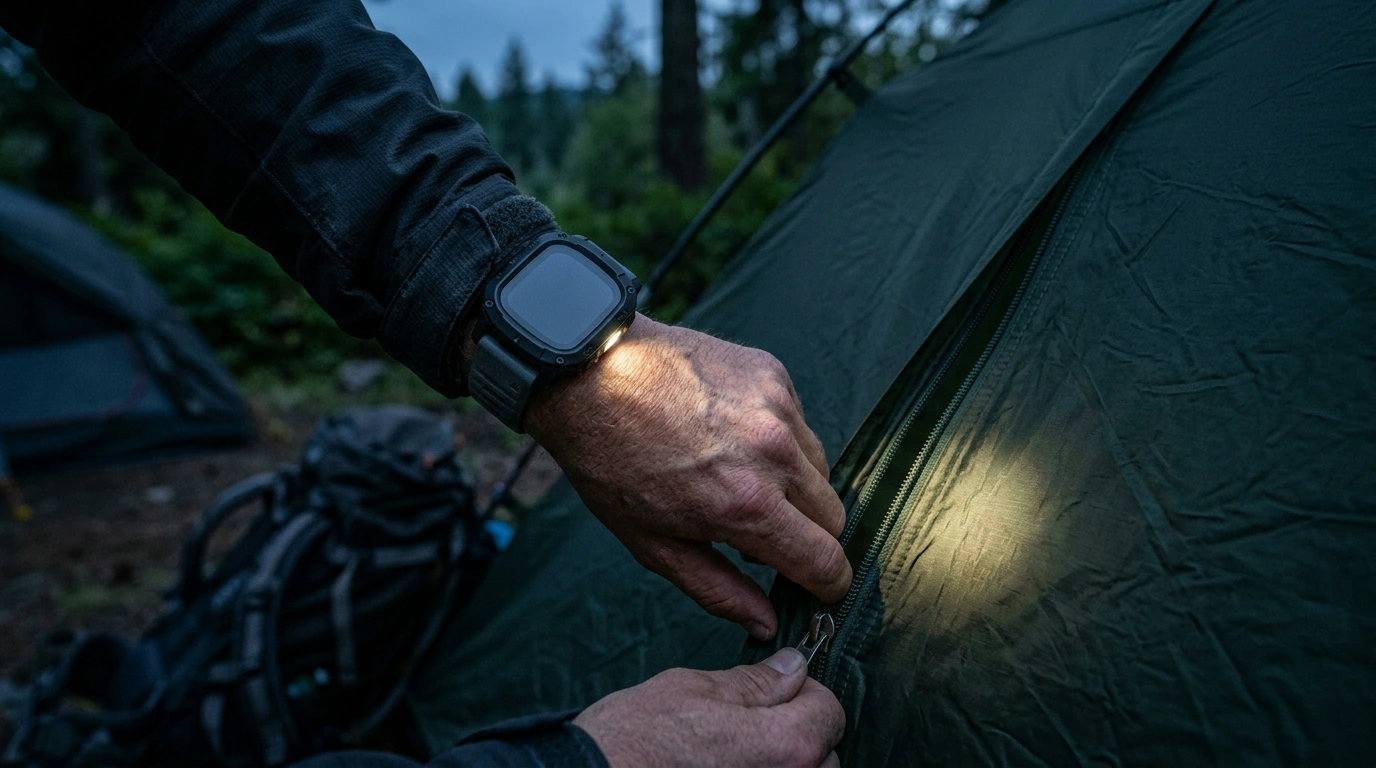
For camping, hiking, night runs, and emergency kits, the most useful wearable is the one that still works when power outlets and daylight disappear. An outdoor-ready smartwatch that combines a bright LED flashlight with ultra-long battery life can replace a pocket light for quick tasks, keep essential stats on-wrist, and stay dependable across multi-day outings.
What Makes a Flashlight Smartwatch Genuinely Useful Outdoors
A built-in LED on a smartwatch isn’t a gimmick when it solves the little problems that slow people down outdoors. The key is speed: light and information without rummaging through a pack, fumbling for a phone, or realizing a headlamp is buried under yesterday’s layers.
- On-wrist illumination for fast tasks: tent zippers, keyholes, trail signs, dog leash clips, and quick gear checks without digging through your bag.
- Ultra-long battery reduces “range anxiety”: fewer charging worries on multi-day hikes, long work shifts, or travel days with unpredictable access to outlets.
- Outdoor-first design priorities: a readable screen, a stable fit, and controls that are manageable when hands are cold, wet, or busy.
- Everyday carry advantage: a watch is harder to forget at home than a separate flashlight or headlamp.
- Best-use situations: night walks, power outages, roadside checks, early-morning fishing, late camp setup, and quick indoor fixes.
LED Flashlight: When It Helps (and When a Headlamp Still Wins)
Think of a watch light as a “close-range problem solver.” It shines when you need a quick, controlled beam and don’t want to sacrifice time (or battery) by pulling out a phone. For long tasks, a headlamp still owns the category.
- Ideal for short bursts: finding something in a backpack, checking a map, scanning the campsite perimeter, or lighting a lock.
- More convenient than a phone flashlight: no unlocking screens, no awkward grip, and you’re less likely to drop an expensive device in the dark.
- Headlamps remain best for hands-free work: cooking, setting up shelters, repairs, or long night hikes where you need continuous light.
- Practical approach: treat the watch as an always-ready backup light, and carry a headlamp for extended or technical night use.
- Battery-smart tip: if multiple brightness levels are available, save the highest output for quick checks and use lower settings for simple navigation.
| Task | Best option | Why it works |
|---|---|---|
| Finding gear inside a bag | Smartwatch LED | Immediate, close-range light without unpacking or unlocking a phone |
| Setting up a tent after dark | Headlamp | Hands-free, wide beam for continuous work |
| Checking a trail marker or sign | Smartwatch LED | Fast spot illumination for quick confirmation |
| Cooking at camp | Headlamp or lantern | Stable lighting that stays on for longer periods |
| Power outage at home | Smartwatch LED + lantern | Watch for quick navigation; lantern for room lighting |
Ultra-Long Battery Life: What to Look For on Multi-Day Trips
Battery life is never just a number—it’s a combination of settings, temperature, and how you actually use the watch. Flashlight bursts, high screen brightness, constant heart-rate tracking, and always-on display features can shorten runtime faster than expected.
For broader trip planning, basic hiking safety guidance (route choices, pacing, essentials) can also prevent your battery from becoming the weakest link. The National Park Service’s hiking safety overview is a solid baseline: https://www.nps.gov/articles/hiking-safety.htm.
Comfort, Durability, and Day-to-Day Wear
For storm-day planning and lightning awareness on exposed terrain, NOAA’s outdoor safety resources are worth reviewing before heading out: https://www.weather.gov/safety/.
Trail Safety and Preparedness: Making the Most of an On-Wrist Light
If comparing flashlights more broadly, performance standards like ANSI/PLATO FL 1 can help explain common terms and testing approaches: https://www.nema.org/standards/view/ansi-plato-fl-1-flashlight-basic-performance-standard.
Featured Option: Outdoor Smartwatch with LED Flashlight & Ultra-Long Battery Life
If the goal is quick illumination plus dependable runtime without adding another gadget to your pockets, Outdoor Smartwatch with LED Flashlight & Ultra-Long Battery Life fits the routine well. It’s built for those moments when you need light now—walking the dog at night, checking gear at camp, moving around during a blackout—and you don’t want charging to become the main storyline of the trip.
| Item | Details |
|---|---|
| Product | Outdoor Smartwatch with LED Flashlight & Ultra-Long Battery Life |
| Price | 72.51 USD |
| Availability | In stock |
| Product page | https://ulorin.com/outdoor-smartwatch-with-led-flashlight-ultra-long-battery-life/ |
Two handy add-ons for travel days
- Universal Car Steering Wheel Phone Mount for Safe Navigation for hands-off map viewing when you’re parked and planning the next leg.
- Armani Exchange Men’s Sneakers for an everyday option that transitions from travel to casual walking.
FAQ
Is an LED flashlight on a smartwatch bright enough for hiking at night?
It’s typically bright enough for quick, close-range checks like trail markers, zippers, or finding items in a bag. For sustained night hiking, a headlamp is still the safer choice because it’s hands-free and designed for continuous use.
How can battery life be extended on long trips?
Lower screen brightness, limit nonessential notifications, and use the flashlight in short bursts instead of leaving it on. If available, disable always-on display features and keep the watch warm in cold conditions; a small power bank helps with quick top-ups.
Is it safe to rely on a smartwatch flashlight during a power outage?
It’s a strong option for immediate navigation and quick tasks like finding a breaker or grabbing first-aid supplies. For extended outages, it’s safer to also keep a dedicated flashlight or lantern and a charged power bank.
Recommended for you

Was this article helpful?
Yes
No









Leave a comment