-
Shop
- Advanced Technologies
- AI Skills for Creators & Freelancers
- AI Client Management
- AI Ethics
- AI Mindset
- AI Tools & Prompts
- AI Writing & Content Creation
- Audio, Voice & Music
- Design & Visual Creation
- Email, Messaging & Communication
- Freelancing & Business
- Marketing, Ads & Conversion
- Productivity, Workflow & Automation
- SEO & Search Optimization
- Social Media Content & Growth
- Strategy, Planning & Analytics
- Video Creation & Editing
- AI Skills Mastery 2026 Collection
- Bathroom
- Best-Sellers
- Car Accessories
- Confidence
- Dating & Social Skills
- Digital Resources
- Easter Products
- Education & Learning
- Family & Parenting
- Fashion
- Fashion Accessories
- Furniture
- Gadgets
- Health & Beauty
- Health & Wellness
- Home & Garden
- Home Electronics
- Home Supplies
- Jewelry
- Kids & Babies
- Kitchen
- Lighting
- Patio, Lawn & Garden
- Personal Growth
- Pet Care
- Pet Supplies
- Pets
- Shoes
- Smart Home Living Guides
- Sport & Outdoors
- Stress Relief & Relaxation
- Super Deals
- TikTok Growth & Monetization Mastery
- Travel
- Travel & Adventure
- Wealth
- Wellness
Offline Hobbies for Kids: Simple Routines That Stick
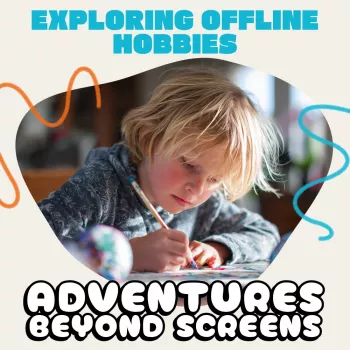
Adventures Beyond Screens: A Practical Guide to Helping Kids Discover Offline Hobbies
Offline hobbies give kids a low-pressure way to build confidence, patience, and real-world skills—without turning free time into a battle. With a few small changes to the environment and routine, hobbies become something kids can start on their own, return to regularly, and feel proud of over time. The goal isn’t to eliminate screens; it’s to make sure kids have satisfying options beyond them.
Why offline hobbies matter (even when screens are part of life)
Offline hobbies create a different kind of “practice space” than digital entertainment. When kids draw, build, cook, or move their bodies, they’re rehearsing skills that add up quietly but powerfully over months.
- Supports attention, self-regulation, and follow-through by practicing one task for a little longer each time.
- Builds identity and confidence through small wins: “I’m a person who can do hard things.”
- Creates natural opportunities for family connection and peer collaboration.
- Helps kids notice boredom as a cue to create, move, build, or explore—not just scroll.
- Balances screen use without framing technology as “bad,” which reduces power struggles.
For extra support in setting healthy media boundaries that don’t turn into daily conflict, the American Academy of Pediatrics Family Media Plan is a practical starting point.
Start with the child: motivation, personality, and readiness
The fastest way to spark momentum is to start with what’s already “alive” for the child—then choose a hobby that fits their temperament and current skill level.
- Look for “sticky interests”: topics they return to (animals, maps, cooking shows, sports highlights, music, mystery stories).
- Match hobbies to temperament: quiet solo options (drawing, puzzles) vs. active outlets (jump rope, scavenger hunts).
- Use a low-stakes choice set: offer 2–4 options instead of an open-ended “What do you want to do?”
- Pick the right difficulty: aim for a first session that can be completed in 10–20 minutes.
- Honor sensory preferences: messy vs. clean, loud vs. quiet, indoors vs. outdoors.
If a child has big feelings about mistakes, start with “process hobbies” (collage, simple weaving, nature collections) where the outcome can’t really be “wrong.” If they crave clear rules, try structured games, beginner chess puzzles, or timed building challenges.
A simple 3-step method to make hobbies stick
Most kids don’t resist hobbies—they resist the friction around getting started. This three-part setup reduces the “activation energy” so the hobby is easier to begin than to avoid.
Step 1 — Make it visible
Put supplies where kids can reach them: a basket, shelf bin, clipboard, or small tackle box. If it’s out of sight, it’s out of mind.
Step 2 — Make it easy
Pre-set “hobby starts” so the first move is obvious: one page open, a puzzle already sorted, ingredients measured, a ball inflated, a notebook on the desk with a prompt on top.
Step 3 — Make it repeatable
Create a predictable window (after snack, before dinner, weekend morning “try time”). Consistency matters more than length.
Use the two-minute bridge: ask for two minutes to begin. Continuing becomes the child’s choice. Also, end with a win—stop while it’s still going well so the next session feels inviting.
| Moment | Quick setup | What to say |
|---|---|---|
| After school | Snack + 1 hobby bin on the table | “Pick one small thing to start—two minutes only.” |
| Before dinner | Timer for 15 minutes + clear end point | “When the timer ends, you’re done unless you want more.” |
| Weekend morning | Choice board (3 options) + supplies pre-set | “Choose one to try first; you can swap once.” |
| Group/classroom | Stations labeled by interest | “Explore a station, then share one thing you noticed.” |
Offline hobby ideas by age (with low-cost supply notes)
Think “starter kit,” not “new lifestyle.” One small container per hobby keeps starting simple and cleanup contained.
Ages 4–7
- Sticker stories (stickers + blank paper)
- Nature sorting trays (egg carton + found objects)
- Simple origami (square paper)
- Sidewalk chalk games (hopscotch, target toss, obstacle paths)
- Beginner cooking helper roles (wash produce, tear lettuce, stir)
Ages 8–11
Ages 12–15
Rotate hobbies seasonally to keep them naturally fresh: indoor crafts and puzzles for winter, outdoor walks and collecting for warmer months. For movement-based ideas and why they matter, the CDC physical activity guidelines offer clear, age-appropriate direction.
Making screens work for you (without turning hobbies into homework)
Many of these skills overlap with executive function—planning, flexible thinking, and persistence. The Harvard Center on the Developing Child explains why these “life skills” grow through practice, not lectures.
Common obstacles and quick fixes
Printable support for families and educators
If you want a ready-to-use set, the Adventures Beyond Screens printable guide is designed for quick setup at home, in classrooms, or small groups.
And since “routines that stick” often come down to friction-free habits, a small add-on that supports smoother mornings and evenings is the Triple-sided ultra-fine soft bristle toothbrush for routines that stick—simple, kid-friendly, and fast to use.
FAQ
How many offline hobbies should a child try at once?
Stick to 1–2 active hobbies at a time, with a small “try later” list for everything else. Fewer choices reduces overwhelm and makes it easier to build follow-through.
What if my child quits after a few minutes?
Use a two-minute start, make the first goal beginner-sized, and stop on a positive note. Treat quitting as feedback—adjust the difficulty, setup, or timing and try again.
How can teachers encourage offline hobbies without adding extra workload?
Use simple stations, shared supply bins, and short reflection prompts that students can complete independently. Once the routine is established, rotations can run with minimal teacher direction.
Recommended for you

Was this article helpful?
Yes
No









Leave a comment