-
Shop
- Advanced Technologies
- AI Skills for Creators & Freelancers
- AI Client Management
- AI Ethics
- AI Mindset
- AI Tools & Prompts
- AI Writing & Content Creation
- Audio, Voice & Music
- Design & Visual Creation
- Email, Messaging & Communication
- Freelancing & Business
- Marketing, Ads & Conversion
- Productivity, Workflow & Automation
- SEO & Search Optimization
- Social Media Content & Growth
- Strategy, Planning & Analytics
- Video Creation & Editing
- AI Skills Mastery 2026 Collection
- Bathroom
- Best-Sellers
- Car Accessories
- Confidence
- Dating & Social Skills
- Digital Resources
- Easter Products
- Education & Learning
- Family & Parenting
- Fashion
- Fashion Accessories
- Furniture
- Gadgets
- Health & Beauty
- Health & Wellness
- Home & Garden
- Home Electronics
- Home Supplies
- Jewelry
- Kids & Babies
- Kitchen
- Lighting
- Patio, Lawn & Garden
- Personal Growth
- Pet Care
- Pet Supplies
- Pets
- Shoes
- Smart Home Living Guides
- Sport & Outdoors
- Stress Relief & Relaxation
- Super Deals
- TikTok Growth & Monetization Mastery
- Travel
- Travel & Adventure
- Wealth
- Wellness
No-Buy Year for Clothes: Rules, Checklist, Monthly Plan
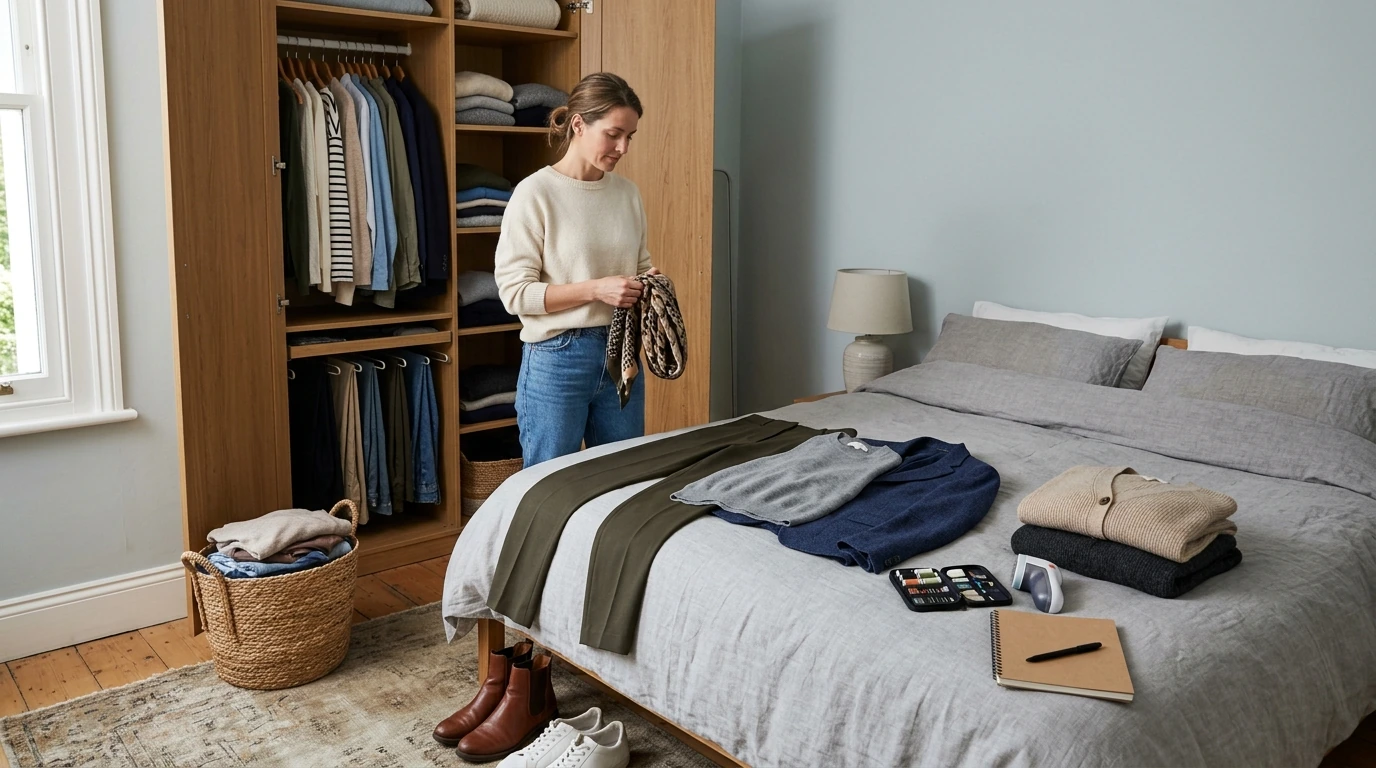
What a no-buy year is (and what it isn’t)
A no-buy year for clothes is a decision to pause purchasing clothing and accessories for a set timeframe—often 12 months—using a few pre-decided exceptions so the plan stays realistic. The goal isn’t perfection; it’s reducing impulse shopping while getting more wear, more outfits, and more confidence out of what’s already in the closet.
It also isn’t a ban on looking put-together. A successful no-buy year leans on outfit planning, basic repairs, swaps, and mindful replacements when something truly wears out. Pairing the challenge with a quick wardrobe reset keeps daily dressing easy instead of frustrating.
Beyond personal finances and clutter, it can also reduce the waste tied to overconsumption. For context on the broader textile waste problem, see the EPA’s textiles data and the Ellen MacArthur Foundation’s work on a circular textiles economy.
Set your rules before day one
Most no-buy attempts fail because the rules are fuzzy. Decide your boundaries once, write them down, and treat them like a policy you don’t renegotiate when you’re tired, bored, or stressed.
1) Define the scope
Choose what your “no-buy” covers: clothing only, or also shoes, bags, jewelry, athletic gear, and occasionwear. If you travel frequently or have a uniformed job, spell out what counts as “work essentials” so you’re not making judgment calls at checkout.
2) Choose exceptions (and keep them tight)
Common exception categories include: true replacements (something is worn out), underwear/socks as needed, and legitimate weather or size changes. If you allow replacements, require a gap analysis first: no workable substitute in your current closet, and the replacement must pair with multiple outfits.
3) Add a spending boundary
Even with exceptions, set a cap (monthly or annual) so “replacement-only” doesn’t become a loophole. Quality matters here—one durable replacement beats repeated “almost-right” purchases.
4) Use a cooling-off rule
For any exception purchase, build in a waiting period (7–30 days). During the cooling-off window, try styling alternatives, repairing, borrowing, or rotating seasonal items back into view.
5) Decide what counts as “buying”
Be explicit: online orders, thrift and vintage, resale apps, discount-store add-ons, and “gifts to yourself” all count unless you say otherwise.
Wardrobe reset: a quick system that makes no-buy realistic
A no-buy year becomes dramatically easier when your closet works like a small, reliable toolkit rather than a packed storage unit.
Step 1: Do a fast inventory
Group items by category (tops, bottoms, dresses, outerwear, shoes). Note duplicates (especially black tees, denim, leggings, and “special occasion” pieces). Duplicates aren’t automatically bad—just make sure they’re intentional.
Step 2: Identify your daily drivers
Step 3: Make a repair and care list
Step 4: Create “style yes” and “style no” lists
Step 5: Build a seasonal capsule from what you own
The checklist that keeps the challenge simple
If you want a ready-to-use structure, Your No-Buy Year Checklist digital download bundles wardrobe reset prompts, rules/exceptions pages, and simple monthly tracking so you don’t have to build a system from scratch.
A monthly plan for the year
| Month | Focus | One action | Success metric |
|---|---|---|---|
| 1 | Reset | Inventory + donate/sell pile | 10 outfits documented |
| 2 | Care | Repair 3 items or tailor 1 | 3 fixes completed |
| 3 | Outfit formulas | Create 5 go-to formulas | 5 formulas saved |
| 4 | Shoes & bags | Clean/condition + rotate | No “emergency” buys |
| 5 | Occasions | Plan event outfits early | 0 last-minute purchases |
| 6 | Warm-weather capsule | Store off-season items | Faster morning dressing |
| 7 | Wishlist audit | Delete items older than 60 days | Wishlist reduced by 50% |
| 8 | Repeat outfits | Wear top 10 items more often | 10 repeats logged |
| 9 | Cold-weather prep | Layering test + coat care | All-weather outfits ready |
| 10 | Minimal add-ons | Replace only if worn out | No exception overspend |
| 11 | Gift strategy | Create a non-clothing gift list | No “treat yourself” slip |
| 12 | Review & reset | Count savings + plan next year | Clear rules for year 2 |
How to handle common pressure points
Special events
Changing seasons
Boredom
Social media triggers
Gifts
Ask for experiences, consumables, or one specific replacement need. If you want a practical non-clothing option for your gift list, a small everyday item like the Triple-Sided Ultra-Fine Soft Bristle Toothbrush for Enhanced Oral Health can be useful without adding closet clutter.
Use a printable planner to make the rules stick
For a done-for-you option, Your No-Buy Year Checklist | Digital Download Wardrobe Reset Guide, No-Buy Year Planner, Sustainable Fashion Checklist, Minimalist Clothing Challenge is designed to keep the system simple: reset, define exceptions, track, and reflect.
Digital download: what’s included in the no-buy year checklist
If your rules allow replacement footwear (only when necessary), consider choosing one versatile pair you’ll genuinely wear on repeat rather than collecting near-duplicates. For example, Armani Exchange Men’s Sneakers can fit a “buy it once, wear it often” replacement approach when an old pair is fully worn out.
FAQ
Can a no-buy year include thrift stores or resale apps?
It can, but only if your rules are crystal clear. Many people count secondhand as “buying” to avoid loopholes, or allow secondhand replacements only with a strict cap and a cooling-off period.
What counts as a replacement purchase during a no-buy year?
A replacement should be tied to genuine wear-out or a real fit change, with no workable substitute already in your closet. Set quality criteria so one good replacement doesn’t turn into multiple similar purchases.
How do you avoid the ‘nothing to wear’ feeling without shopping?
Use outfit formulas, a small seasonal capsule, and a repair list to keep your rotation functional. Styling challenges (like repeating your top 10 items) add variety without adding new pieces.
Recommended for you



Was this article helpful?
Yes
No









Leave a comment