-
Shop
- Advanced Technologies
- AI Skills for Creators & Freelancers
- AI Client Management
- AI Ethics
- AI Mindset
- AI Tools & Prompts
- AI Writing & Content Creation
- Audio, Voice & Music
- Design & Visual Creation
- Email, Messaging & Communication
- Freelancing & Business
- Marketing, Ads & Conversion
- Productivity, Workflow & Automation
- SEO & Search Optimization
- Social Media Content & Growth
- Strategy, Planning & Analytics
- Video Creation & Editing
- AI Skills Mastery 2026 Collection
- Bathroom
- Best-Sellers
- Car Accessories
- Confidence
- Dating & Social Skills
- Digital Resources
- Easter Products
- Education & Learning
- Family & Parenting
- Fashion
- Fashion Accessories
- Furniture
- Gadgets
- Health & Beauty
- Health & Wellness
- Home & Garden
- Home Electronics
- Home Supplies
- Jewelry
- Kids & Babies
- Kitchen
- Lighting
- Patio, Lawn & Garden
- Personal Growth
- Pet Care
- Pet Supplies
- Pets
- Shoes
- Smart Home Living Guides
- Sport & Outdoors
- Stress Relief & Relaxation
- Super Deals
- TikTok Growth & Monetization Mastery
- Travel
- Travel & Adventure
- Wealth
- Wellness
Minute-by-Minute Printable Time Blocking Planner
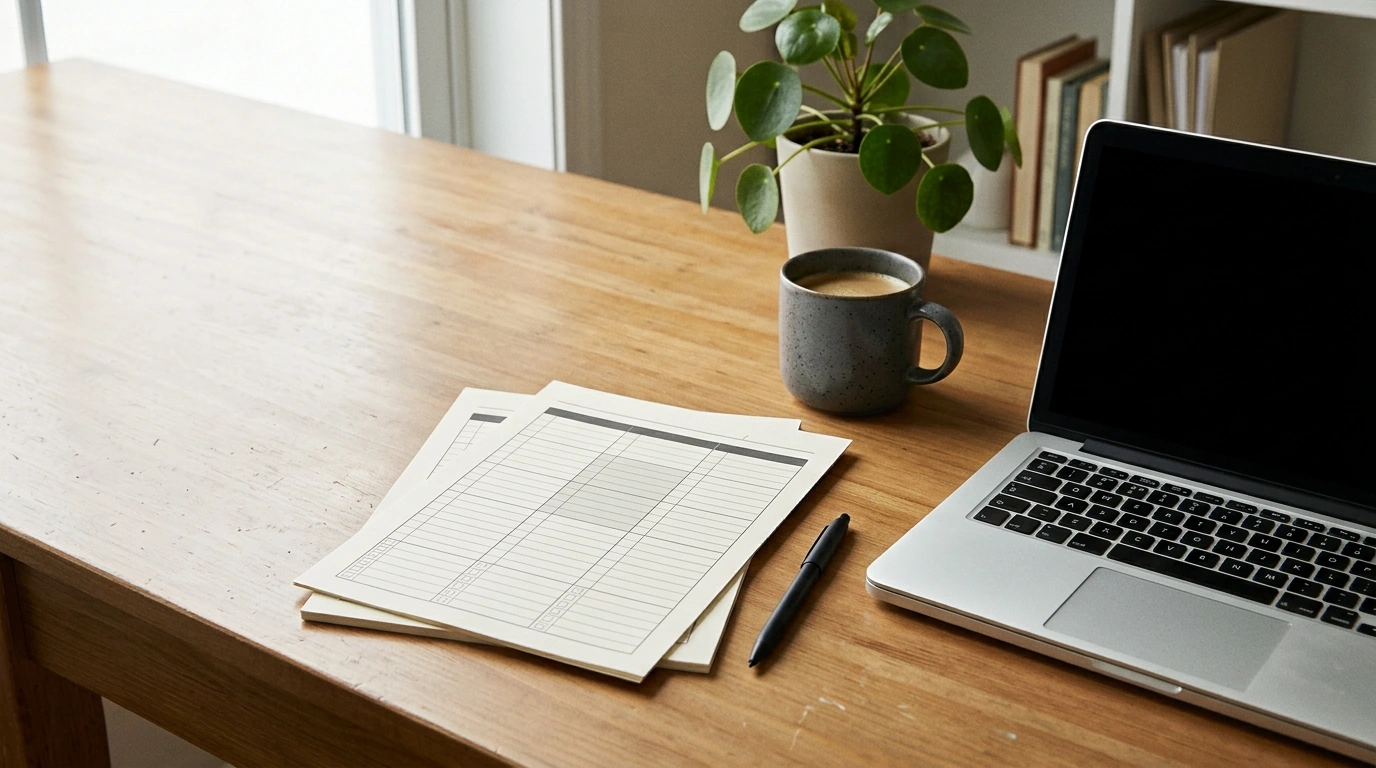
Busy days feel lighter when time has a clear job to do. A printable planning system turns “I’ll get to it” into a realistic map of what happens next—so priorities don’t compete with distractions, and routines feel doable instead of rigid. Master Your Minutes, Shape Your Day | Printable Time Management Guide (Digital Download) is built for setting priorities, blocking time in minutes, and using quick check-ins to make follow-through easier—whether the goal is focused work, consistent habits, or simply more breathing room between tasks.
What changes when time is planned in minutes (not vague intentions)
Planning in minutes creates a visible plan for the day instead of relying on memory or motivation. When tasks live on a timeline, it’s easier to begin—because you’re not deciding what to do next every time you finish something.
It also turns big goals into time-bound steps that are easier to start and finish. This aligns with well-established goal-setting research: clear, specific goals support stronger performance than fuzzy ones (APA Dictionary of Psychology: Goal-Setting Theory).
Time blocks reduce task-switching by grouping similar work into focused windows (deep work together, admin together). Trade-offs become obvious: what fits today, what can wait, and what should be dropped. Over time, repeatable daily and weekly planning prompts build consistency—especially when paired with a short review that captures loose ends instead of letting them linger.
What’s inside the digital download
This digital download is designed to print cleanly at home and use immediately, without complicated setup. The pages support daily structure, priorities, and time blocks, so the plan stays in one place instead of scattered across apps, notes, and memory.
- Printable planning pages for daily structure, priorities, and time blocks
- Sections for key tasks, appointments, and personal commitments in one view
- Space to define a daily highlight and the next small step to start momentum
- A simple check-in format to reflect on what worked and adjust tomorrow’s plan
- Made for printing, reusing, and building into a weekly routine
When days expand to fill the available time, even straightforward tasks can feel endless—an effect often summarized as Parkinson’s Law (The Economist Explains: Parkinson’s Law). Time blocks counter that drift by giving tasks a defined container.
A simple routine to improve time management skills (10 minutes to plan, 5 minutes to review)
The goal isn’t to schedule every second—it’s to create a day you can actually execute. A lightweight routine keeps planning helpful instead of time-consuming.
Plan (10 minutes)
- Choose 1 daily highlight (the one outcome that would make the day feel like progress).
- List 3–5 supporting tasks that move that highlight forward.
- Assign time blocks to the highlight and the support tasks.
- Protect focus: schedule the hardest task during peak energy hours; keep shallow tasks for low-energy windows.
- Add buffers: reserve small gaps between blocks for transitions, messages, and surprises.
- Use a “minimum finish line”: define what “done enough” looks like for each block to avoid perfection spirals.
Review (5 minutes)
- Mark what moved forward (even partial progress counts).
- Capture loose ends in one place so they don’t become mental clutter.
- Pick tomorrow’s first action so the next day starts smoothly.
| Time block | Focus | Outcome to aim for |
|---|---|---|
| 8:30–9:00 | Start-up routine | Set the day’s highlight + open only the tools needed |
| 9:00–10:30 | Deep work block | Complete the first draft / core deliverable step |
| 10:30–10:45 | Buffer | Stretch, water, quick reset |
| 10:45–11:30 | Admin batch | Reply to priority messages + schedule next actions |
| 1:00–2:00 | Project support tasks | Finish 2 smaller tasks that unblock progress |
| 4:30–4:45 | Daily review | Log wins, capture leftovers, choose tomorrow’s first step |
Common time traps—and how the guide helps prevent them
Most scheduling issues aren’t a discipline problem—they’re a design problem. A printable system helps you spot patterns and make small structural fixes.
When pressure stays high without enough recovery, burnout risk rises—so breaks and realistic workloads aren’t optional extras (NIOSH: Stress at Work). Building buffers and review time helps keep the plan sustainable.
Who benefits most from a printable system
How to get the best results in the first week
Digital download details to know before purchasing
Helpful add-ons for smoother routines
- Universal Car Steering Wheel Phone Mount for Safe Navigation for more reliable navigation and fewer last-minute detours during commute blocks.
- Triple-Sided Ultra-Fine Soft Bristle Toothbrush for Enhanced Oral Health to keep morning and evening routines quick and consistent.
- Armani Exchange Men’s Sneakers for comfortable walking breaks that fit naturally into buffer time.
FAQ
How is a printable time management guide different from a normal to-do list?
It combines priorities, time blocks, and review prompts so tasks fit the day instead of piling up. Buffers and outcome-based blocks also make it clearer what “done” looks like.
What if the day doesn’t go according to plan?
Use buffers to absorb surprises, then re-block the remaining time instead of abandoning the plan. Stick to a minimum finish line for key blocks and carry over tasks intentionally during the end-of-day review.
Is this better for daily planning or weekly planning?
It works best as daily-first planning with a weekly rhythm: outline the week lightly, then map each day in detail with time blocks and one daily highlight.
Recommended for you



Was this article helpful?
Yes
No









Leave a comment