-
Shop
- Advanced Technologies
- AI Skills for Creators & Freelancers
- AI Client Management
- AI Ethics
- AI Mindset
- AI Tools & Prompts
- AI Writing & Content Creation
- Audio, Voice & Music
- Design & Visual Creation
- Email, Messaging & Communication
- Freelancing & Business
- Marketing, Ads & Conversion
- Productivity, Workflow & Automation
- SEO & Search Optimization
- Social Media Content & Growth
- Strategy, Planning & Analytics
- Video Creation & Editing
- AI Skills Mastery 2026 Collection
- Bathroom
- Best-Sellers
- Car Accessories
- Confidence
- Dating & Social Skills
- Digital Resources
- Easter Products
- Education & Learning
- Family & Parenting
- Fashion
- Fashion Accessories
- Furniture
- Gadgets
- Health & Beauty
- Health & Wellness
- Home & Garden
- Home Electronics
- Home Supplies
- Jewelry
- Kids & Babies
- Kitchen
- Lighting
- Patio, Lawn & Garden
- Personal Growth
- Pet Care
- Pet Supplies
- Pets
- Shoes
- Smart Home Living Guides
- Sport & Outdoors
- Stress Relief & Relaxation
- Super Deals
- TikTok Growth & Monetization Mastery
- Travel
- Travel & Adventure
- Wealth
- Wellness
Minimal Nightstand Checklist for a Calm Bedside Setup
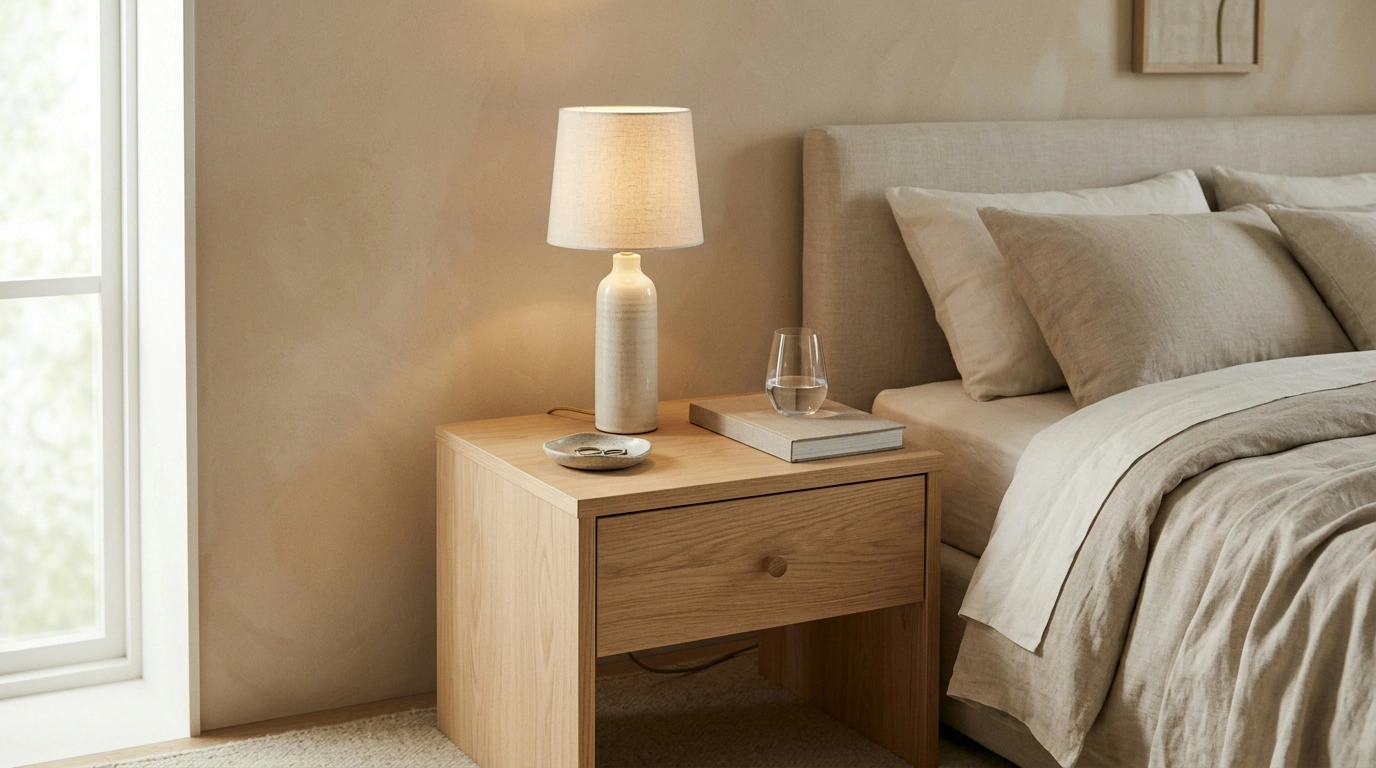
Bedside Table Styling Checklist: A Calm, Minimal Nightstand Setup That Actually Works
A bedside table can look tidy and styled without turning into a mini storage unit. The secret is a simple checklist mindset: keep only what supports rest, a smooth bedtime routine, and an easy morning reset. When the surface has a clear purpose and a few “earned” essentials, it stays calmer—and it’s easier to maintain even on busy weeks.
Start With a Quick Reset (5 Minutes)
Before deciding what belongs on your nightstand, start from zero. A fresh surface makes choices obvious, and it helps you notice what’s clutter versus what truly supports sleep.
- Clear everything off the surface and wipe it down; start from zero so decisions are easier.
- Sort items into three piles: nightly essentials, occasional use, and elsewhere-in-the-house.
- Remove anything that doesn’t belong in the bedroom (mail, dishes, random chargers, loose change).
- Decide whether the tabletop is for “sleep support” (calm, minimal) or “multi-use” (reading, journaling, work). Keep the purpose consistent.
- Aim for one open “landing zone” so a phone, book, or water glass has a clear spot.
If you want a bedroom that feels more restorative, keep your setup aligned with basic sleep hygiene guidance from sources like the CDC’s sleep resources and the APA’s notes on stress and sleep: less mental noise, fewer distractions, and an environment that cues relaxation.
The Minimal Nightstand Formula: Essentials + Style Trio
A functional nightstand usually needs fewer items than expected. The goal is to make each object feel intentional, not accidental.
- Choose 3–5 essentials maximum that earn their place every night (example: lamp, water, book/e-reader, tissues, one charger).
- Use a “style trio” to keep it visually composed: something tall, something medium, something small (or a stacked/clustered variation).
- Keep the tallest item at the back or outer edge to frame the arrangement; keep the center slightly open.
- Repeat one material or finish (wood, brass, ceramic, glass) to make a small setup feel cohesive.
- Limit patterns to one item (a book cover, a small tray, or a vase) to avoid visual noise.
Quick Nightstand Styling Checklist by Category
| Category | Purpose | Good Options | Keep It Minimal Tip |
|---|---|---|---|
| Lighting | Comfort and function | Table lamp, wall sconce, clip lamp | One main light source; hide the cord path |
| Hydration | Night comfort | Water glass, lidded bottle, carafe set | Use one vessel; place on a coaster or tray |
| Storage | Contain small items | Tray, small box, drawer organizer | Contain, don’t add: one container per surface |
| Reading | Wind-down routine | One book, e-reader, journal | One active item at a time; rotate weekly |
| Ambience | Calm and style | Small plant, bud vase, candle (unlit overnight) | Choose one “mood” item, not three |
Choose Containers That Prevent Clutter (Not Create It)
Containers should reduce visual noise and decision fatigue. If a tray or box becomes a magnet for random objects, it’s not working—downsize it or remove it.
- Add a tray only if it replaces loose items; it should define a boundary, not invite more objects.
- Use drawers for the “not pretty but useful” items: eye mask, lip balm, backup charger, hand cream, earplugs.
- If there’s no drawer, use a lidded box or small basket on the lower shelf to hide visual clutter.
- Group tiny items (rings, hair ties) into a single catchall dish; avoid multiple mini dishes.
- Give cords one route: behind the table, clipped to the back, or guided through a cord sleeve so the surface stays clean.
If your bedtime routine includes oral care close to bed, keep it contained and simple. A compact option like the Triple-Sided Ultra-Fine Soft Bristle Toothbrush for Enhanced Oral Health can live neatly in a drawer or a lidded container, rather than staying out on the tabletop.
Nightstand Styling Ideas for Different Bedroom Needs
One setup won’t fit every room. The best nightstand styling is the one you can keep up with in two minutes, even when life is messy.
- Small space setup: go vertical with a taller lamp or wall light; keep the surface to 2–3 items and rely on a drawer or shelf.
- Shared bedroom: mirror the overall height and spacing on both sides, but personalize with one unique item each.
- Minimalist look: stick to a tight palette (2–3 colors) and one main texture (wood + ceramic, or black metal + glass).
- Cozy look: add one soft element nearby (linen shade, woven coaster, fabric-covered book) instead of piling on decor.
- Tech-friendly setup: keep charging out of sight; use one cable type where possible and store extras away from the tabletop.
For a ready-to-follow system you can keep on hand (and reprint whenever you reset a room), use the Bedside Table Styling Checklist digital download to set item limits, define zones, and stay consistent week to week.
A Simple Bedtime + Morning Reset Routine
Small environmental cues can reinforce better wind-down habits. The National Sleep Foundation’s healthy sleep tips highlight the value of a consistent routine—your nightstand can either support that routine, or quietly sabotage it.
Make the Printable Work: How to Use the Digital Checklist
FAQ
How many items should be on a bedside table?
Aim for about 3–7 items depending on surface size, with 3–5 true essentials and at least one clear landing zone. If it feels “busy” at a glance, reduce the count and move backups into a drawer.
What should always be in a bedside table drawer?
Keep a small set of genuinely useful items: a spare charger, lip balm, tissues, an eye mask, and hand cream. A simple drawer organizer prevents those basics from becoming a jumbled mess.
How can a nightstand look styled without being cluttered?
Use a tall/medium/small “style trio,” repeat one material or finish, and limit containers to what truly corrals essentials. Leave one open space so the setup looks intentional and stays easy to reset.
Recommended for you



Was this article helpful?
Yes
No









Leave a comment