-
Shop
- Advanced Technologies
- AI Skills for Creators & Freelancers
- AI Client Management
- AI Ethics
- AI Mindset
- AI Tools & Prompts
- AI Writing & Content Creation
- Audio, Voice & Music
- Design & Visual Creation
- Email, Messaging & Communication
- Freelancing & Business
- Marketing, Ads & Conversion
- Productivity, Workflow & Automation
- SEO & Search Optimization
- Social Media Content & Growth
- Strategy, Planning & Analytics
- Video Creation & Editing
- AI Skills Mastery 2026 Collection
- Bathroom
- Best-Sellers
- Car Accessories
- Confidence
- Dating & Social Skills
- Digital Resources
- Easter Products
- Education & Learning
- Family & Parenting
- Fashion
- Fashion Accessories
- Furniture
- Gadgets
- Health & Beauty
- Health & Wellness
- Home & Garden
- Home Electronics
- Home Supplies
- Jewelry
- Kids & Babies
- Kitchen
- Lighting
- Patio, Lawn & Garden
- Personal Growth
- Pet Care
- Pet Supplies
- Pets
- Shoes
- Smart Home Living Guides
- Sport & Outdoors
- Stress Relief & Relaxation
- Super Deals
- TikTok Growth & Monetization Mastery
- Travel
- Travel & Adventure
- Wealth
- Wellness
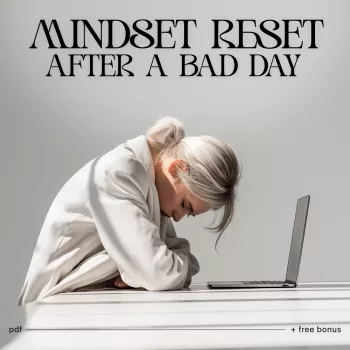
Mindset Reset After a Bad Day: Printable Self-Care Guide

The Mindset Reset After a Bad Day: A Printable Self-Care Checklist for Emotional Balance
Bad days happen—sometimes loudly, sometimes quietly. A mindset reset is a simple, repeatable way to move from spiraling thoughts to steady ground, using short steps that support the nervous system, clarify what happened, and shift attention toward what can be done next. This printable checklist is designed for quick use after a hard moment, a rough workday, conflict, or mental overload.
What a “mindset reset” really means (and what it doesn’t)
A mindset reset is a transition, not a denial. It starts by acknowledging what you feel and then choosing the next supportive action—especially when you’re depleted and everything feels harder than it should.
- A reset aims for emotional balance: calmer body signals, clearer thinking, and a gentler inner voice.
- It isn’t forced positivity; it’s regulating first, reframing second, problem-solving last.
- Small, concrete steps reduce decision fatigue when energy and patience are low.
- It doesn’t erase what happened; it helps you stop re-living it at full volume.
If you want a simple routine you can keep on your desk or nightstand, The Mindset Reset After a Bad Day | Printable Self-Care Checklist for Emotional Balance & Reflection is built for quick “use it now” moments—no perfect setup required.
Start with the body: quick calm in 5–10 minutes
When your nervous system is activated, thinking your way out can feel impossible. Start with the body so your mind has something steadier to stand on.
- Hydrate and eat something simple if blood sugar may be low (protein + carb often works well).
- Do a 60–120 second breathing reset: make the exhale slower than the inhale to signal safety.
- Change sensory input: wash hands/face, step outside, open a window, dim harsh lights.
- Move gently: a short walk, stretching, or shaking out tension to discharge stress.
- If tears come, let them; emotional release often shortens the recovery curve.
Fast reset options (choose one from each column)
| Body | Mind | Environment |
|---|---|---|
| Drink water + a snack | Name the feeling in 3 words | Step outside for 2 minutes |
| Slow exhales (2 minutes) | Write one honest sentence | Tidy one small surface |
| Stretch neck/shoulders | Ask: “What do I need right now?” | Lower screen brightness |
| Short walk | Read a grounding statement | Put on a calming playlist |
If you want a structured breathing pattern, Cleveland Clinic’s overview of box breathing is a helpful reference. If box breathing feels too rigid in the moment, keep it simpler: inhale gently, then exhale longer.
For the “short walk” option, comfortable shoes can remove friction when motivation is low. If you’re already due for an everyday pair, Armani Exchange Men’s Sneakers can support a quick reset walk around the block, up and down the hallway, or even just a few minutes outside.
Reflection without rumination: a gentle debrief
Once your body is a little calmer, you can “debrief” without sliding into overthinking. The goal is clarity, not a courtroom trial.
- Describe what happened in neutral language (facts first) to reduce emotional reactivity.
- Identify the trigger: disappointment, embarrassment, rejection, overwhelm, exhaustion, or conflict.
- Spot the thought loop: “I always…”, “Nothing works…”, “They must think…”, then rewrite it more accurately.
- Separate responsibility from blame: what was controllable, what wasn’t, what can be repaired.
- Choose one lesson to carry forward; leave the rest for tomorrow.
For a broader overview of how stress impacts the body and mind, the American Psychological Association’s stress resources can help you normalize the experience and understand why resets work best when they’re practical and repeatable.
A 3-step reset script for hard moments
When you don’t have the bandwidth to “figure it all out,” use a short script. Keep the next step small enough to finish in 10 minutes so you can rebuild momentum.
- Step 1 — Validate: “This was a rough day. It makes sense that I feel this way.”
- Step 2 — Regulate: choose one grounding action (breathing, water, movement, shower).
- Step 3 — Reorient: pick one small next step (send one message, set a boundary, plan tomorrow’s first task).
Using the printable checklist for emotional balance
If you like tools that are simple and fast to follow, you can keep The Mindset Reset After a Bad Day | Printable Self-Care Checklist for Emotional Balance & Reflection within reach so “what do I do now?” is already answered.
When a bad day signals something bigger
For additional self-care guidance and signs to watch for, the National Institute of Mental Health’s mental health care resources offer practical, trustworthy next steps.
Try it tonight: a simple reset routine before bed
One small add-on that can make the routine feel more complete: a fresh, gentle hygiene step. A soft toothbrush can turn “I’m too tired” into “I can do one small caring thing,” like using the Triple-Sided Ultra-Fine Soft Bristle Toothbrush for Enhanced Oral Health as part of your wind-down.
FAQ
How do you reset your mindset after a bad day when you’re exhausted?
Keep it minimal: drink water, do 6–10 slow exhales, complete one comfort task, and choose one tiny next step you can finish in under 10 minutes. Regulate first, reflect later.
What if reflection turns into overthinking?
Time-box it to five minutes, stick to the facts, and write one realistic reframe statement. Then “park” the thoughts on paper and switch to a physical grounding step like a short walk or a shower.
Can a checklist actually help with emotional balance?
Yes—structure reduces decision fatigue and makes self-support more automatic when you’re stressed. It’s a helpful routine and reminder system, and it can complement professional support if stress is chronic.
Recommended for you


Was this article helpful?
Yes
No









Leave a comment