-
Shop
- Advanced Technologies
- AI Skills for Creators & Freelancers
- AI Client Management
- AI Ethics
- AI Mindset
- AI Tools & Prompts
- AI Writing & Content Creation
- Audio, Voice & Music
- Design & Visual Creation
- Email, Messaging & Communication
- Freelancing & Business
- Marketing, Ads & Conversion
- Productivity, Workflow & Automation
- SEO & Search Optimization
- Social Media Content & Growth
- Strategy, Planning & Analytics
- Video Creation & Editing
- AI Skills Mastery 2026 Collection
- Bathroom
- Best-Sellers
- Car Accessories
- Confidence
- Dating & Social Skills
- Digital Resources
- Easter Products
- Education & Learning
- Family & Parenting
- Fashion
- Fashion Accessories
- Furniture
- Gadgets
- Health & Beauty
- Health & Wellness
- Home & Garden
- Home Electronics
- Home Supplies
- Jewelry
- Kids & Babies
- Kitchen
- Lighting
- Patio, Lawn & Garden
- Personal Growth
- Pet Care
- Pet Supplies
- Pets
- Shoes
- Smart Home Living Guides
- Sport & Outdoors
- Stress Relief & Relaxation
- Super Deals
- TikTok Growth & Monetization Mastery
- Travel
- Travel & Adventure
- Wealth
- Wellness
Mindfulness for Beginners: A Simple Daily Practice Plan
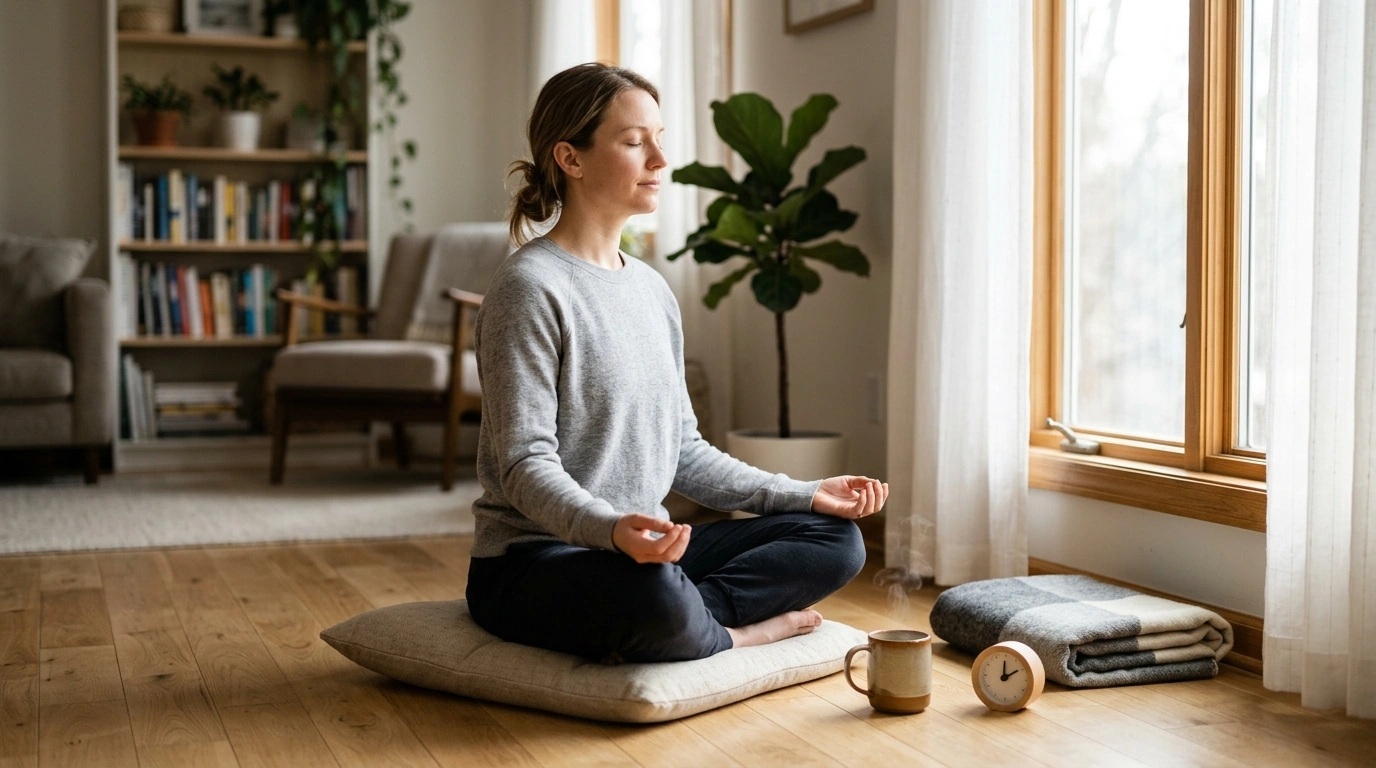
Living Mindfully Every Day: A Beginner’s Guide to Practicing Mindfulness Regularly
Mindfulness is a practical skill for meeting everyday life with more clarity, steadiness, and presence. For beginners, the goal isn’t to empty the mind—it’s to notice what’s happening right now with less judgment, then gently return when attention drifts. This guide breaks mindfulness into small, repeatable steps that fit real schedules and real distractions.
What Mindfulness Means (in Plain Language)
Mindfulness is paying attention to the present moment on purpose, with an attitude of openness rather than criticism. That might sound simple, but it’s powerful—especially when life feels busy, reactive, or emotionally loud.
There are two common ways to practice:
- Formal practice: a timed meditation session where you sit (or stand) and train attention.
- Informal practice: bringing fuller attention to everyday actions like walking, eating, or listening.
A wandering mind is normal. Getting distracted doesn’t mean you failed—it means you noticed. The practice is the return, again and again, without harsh self-talk. Over time, that gentle returning builds steadier attention and more choice in how you respond.
For most beginners, consistency matters more than duration. A steady 2–5 minutes daily often beats an occasional 30-minute session that never becomes a habit. For a research-backed overview of how mindfulness relates to stress and well-being, see the American Psychological Association’s mindfulness resource.
A Simple Daily Framework: Anchor, Notice, Return
If you’ve ever tried to meditate and felt unsure what to “do,” this three-part framework keeps it concrete and repeatable.
1) Choose an anchor
Pick one home base for attention: the breath, sounds, body sensations, or a short phrase like “here, now.” Choose something simple and available anywhere.
2) Notice what pulls you away
Distractions can be thoughts, emotions, physical sensations, urges to check your phone, or planning your next move. The goal isn’t to block them—it’s to recognize them.
3) Return gently
Come back to the anchor without forcing it. A helpful trick is to label briefly—“thinking,” “worrying,” “remembering”—then return. That label isn’t a judgment; it’s a soft reset.
End with a 10-second check-in
Before you get up, name one body sensation (tight shoulders, warm hands) and one emotion (calm, irritated, hopeful) without trying to change anything. This builds self-awareness that carries into the rest of your day.
| Time | Practice | How it works | Best moment to use it |
|---|---|---|---|
| 1 minute | One mindful breath cycle | Slow inhale, slow exhale; feel air at nose or chest | Before opening email or social apps |
| 2 minutes | Body scan mini | Move attention from face to feet, noticing tension | Midday reset or after a meeting |
| 3 minutes | Sounds practice | Listen to near and far sounds without labeling as “good/bad” | When feeling overstimulated |
| 5 minutes | Breath counting | Count 1–10 on exhales; restart at 1 when distracted | Morning routine or pre-bed |
How to Start as a Beginner (Without Overhauling Your Life)
Start with a “minimum daily dose” you can keep even on messy days. Two minutes is enough to build momentum, and momentum is what turns mindfulness into something you actually do.
If you like pairing mindfulness with daily routines, a small “anchor habit” can help. For example, brushing can become a built-in reset: notice the feel of the bristles, the hand motion, and your breath for 20–30 seconds. A simple tool like the Triple-Sided Ultra-Fine Soft Bristle Toothbrush for Enhanced Oral Health can make that routine easier to stick to because it’s already part of something you do every day.
Mindful Moments You Can Practice Anywhere
Mindful walking
Feel heel-to-toe contact. Notice sights and sounds. When you realize you’re lost in thought, return to the feeling of your feet meeting the ground. If you want to reinforce the habit, you can tie it to a daily walk—some people even use a comfortable, consistent pair of shoes as their cue (like the Armani Exchange Men’s Sneakers).
Mindful eating
Mindful transitions
Mindful listening
Building a Consistent Practice That Sticks
For commutes and errand runs, reducing phone friction helps. A simple setup like the Universal Car Steering Wheel Phone Mount for Safe Navigation can support safer, more intentional navigation—then you can use red lights or parked moments for one calm breath instead of reflex scrolling.
For additional guidance on mindfulness exercises and how to apply them day to day, the Mayo Clinic’s mindfulness exercises overview is a helpful reference. For broader background on meditation and mindfulness, the NCCIH (NIH) guide covers common questions and safety notes.
Common Beginner Obstacles (and What to Do Instead)
A Guided Path for Daily Mindfulness (Digital Download)
Look for beginner-friendly instructions, short practices, and a plan that gradually strengthens attention and self-awareness. One option with instant access is the Living Mindfully Every Day digital download eBook.
FAQ
How long should a beginner practice mindfulness each day?
Starting with 2–5 minutes daily is often enough to build consistency. If it feels supportive, you can gradually increase toward 10–20 minutes, but daily repetition matters more than long sessions.
Is mindfulness the same as meditation?
Mindfulness is a quality of attention you can bring to any moment, like listening carefully or taking a conscious breath. Meditation is a dedicated practice session (often timed) designed to train that mindful attention.
What should the focus be during mindfulness practice?
Use a single anchor such as the breath, body sensations, or sounds. When you notice distraction, gently acknowledge it and return to the anchor without judging yourself.
Recommended for you



Was this article helpful?
Yes
No









Leave a comment