-
Shop
- Advanced Technologies
- AI Skills for Creators & Freelancers
- AI Client Management
- AI Ethics
- AI Mindset
- AI Tools & Prompts
- AI Writing & Content Creation
- Audio, Voice & Music
- Design & Visual Creation
- Email, Messaging & Communication
- Freelancing & Business
- Marketing, Ads & Conversion
- Productivity, Workflow & Automation
- SEO & Search Optimization
- Social Media Content & Growth
- Strategy, Planning & Analytics
- Video Creation & Editing
- AI Skills Mastery 2026 Collection
- Bathroom
- Best-Sellers
- Car Accessories
- Confidence
- Dating & Social Skills
- Digital Resources
- Easter Products
- Education & Learning
- Family & Parenting
- Fashion
- Fashion Accessories
- Furniture
- Gadgets
- Health & Beauty
- Health & Wellness
- Home & Garden
- Home Electronics
- Home Supplies
- Jewelry
- Kids & Babies
- Kitchen
- Lighting
- Patio, Lawn & Garden
- Personal Growth
- Pet Care
- Pet Supplies
- Pets
- Shoes
- Smart Home Living Guides
- Sport & Outdoors
- Stress Relief & Relaxation
- Super Deals
- TikTok Growth & Monetization Mastery
- Travel
- Travel & Adventure
- Wealth
- Wellness
Mindful Knitting for Calm: A 10-Minute Reset
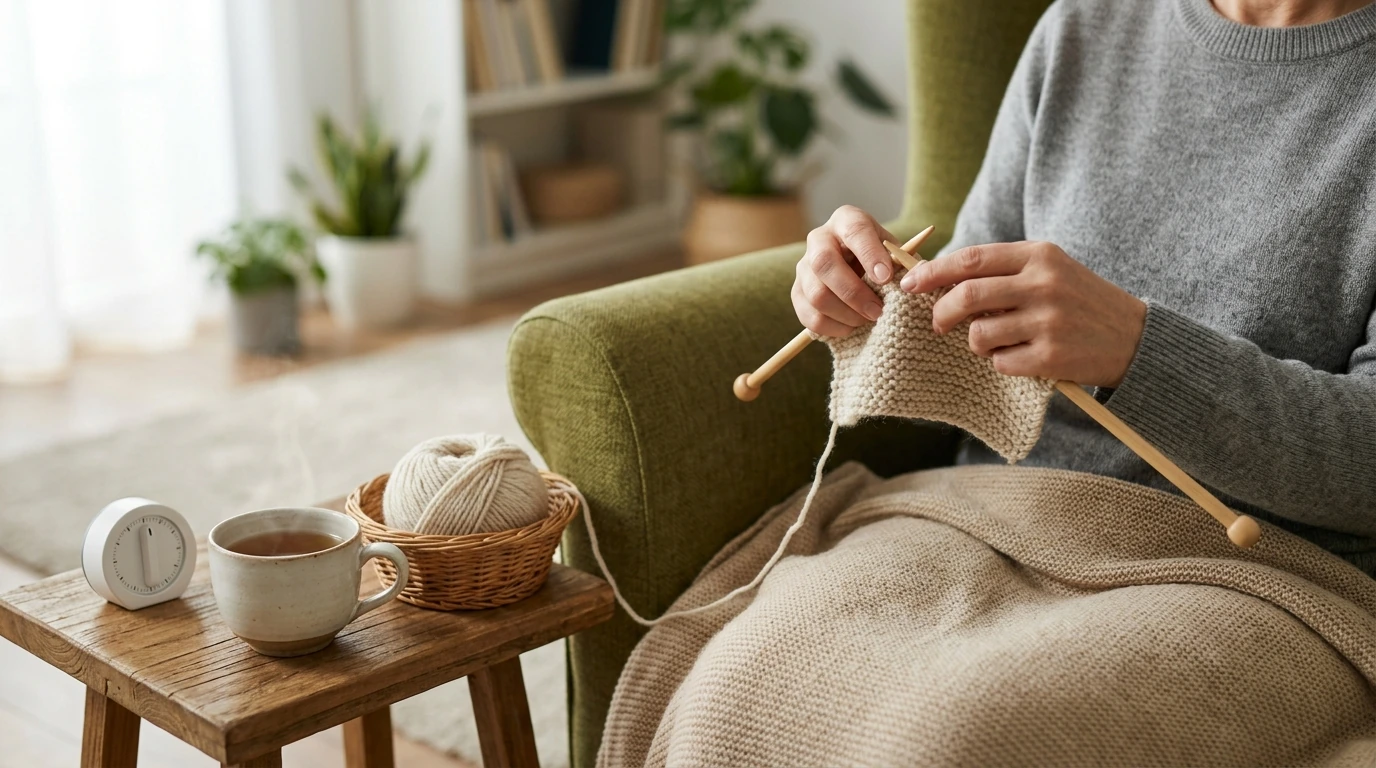
Knitting Your Way to Calm and Balance: A Mindful Knitting Practice for Everyday Ease
Mindful knitting blends gentle repetition, tactile comfort, and focused attention into a simple practice that can steady the mind and soften daily stress. When life feels loud—deadlines, notifications, decision fatigue—knitting offers a quiet, physical rhythm you can return to. With a few small adjustments, a basic project can become a reliable “reset,” whether you have ten minutes between tasks or a longer window to unwind at night.
Stress can affect the body in very real ways, from muscle tension to sleep disruption and mood swings. For a helpful overview of how stress shows up physically, see the American Psychological Association’s guide to stress effects on the body. Mindful crafts aren’t a cure-all, but they can be a supportive, accessible practice that pairs well with healthy routines.
Why knitting can feel calming
Knitting often feels soothing not because it “fixes” everything, but because it gives the brain and body a stable place to land.
- Repetition creates rhythm. The steady cycle of stitch after stitch can feel like a soft metronome, making it easier to step away from spiraling thoughts.
- Tactile input supports grounding. Yarn texture, needle weight, and the gentle drag of fiber through fingers provide sensory anchors that pull attention into the present moment.
- Small, achievable actions restore agency. Casting on, finishing a row, or counting a repeat offers a manageable “next step” when emotions feel intense or a day feels chaotic.
- Progress is visible. Fabric grows in a way you can see and touch, reinforcing patience and a quiet kind of self-trust.
Mindfulness, stress relief, and emotional wellness: how the pieces fit
Mindfulness is the practice of noticing what’s happening right now—sensations, breath, and thoughts—without harsh judgment. For many people, knitting makes that easier because attention naturally has a home: the stitches.
- A built-in focal point. Counting, repeating a simple pattern, and feeling the yarn move can be more approachable than silent meditation, especially on restless days.
- Process over perfection. A mindful approach treats uneven tension and dropped stitches as information, not failure—an invitation to pause, breathe, and respond gently.
- Breath cues add steadiness. Pairing a few slow breaths with an easy stitch repeat can help the body downshift. If you’d like a deeper look at breath-based relaxation, Harvard Health Publishing offers an overview of relaxation techniques and breath control.
A gentle setup for calmer knitting sessions
A calming knitting practice works best when it removes friction. The goal is to make starting (and stopping) feel easy.
- Choose comfortable tools. Pick needles that don’t strain your hands, yarn that feels pleasant against your skin, and a project size that matches your attention span.
- Create a calm corner. Supportive seating, good lighting, and a small kit (stitch markers, scissors, tape measure) can prevent avoidable frustration.
- Reduce mental load. For “calm time,” stick to a simple repeat. Save complex charts for dedicated “learning time,” when challenge is the point.
- Add supportive cues. Try a timer for short breaks, a simple mantra, or a low-volume playlist. If you want quick, practical ideas, the NHS shares everyday stress busters that pair well with gentle craft routines.
Quick start: a 10-minute mindful knitting routine
Use this routine when stress spikes, before bed, or during a midday break. Aim for “soft focus”: each time the mind wanders, return attention to hands and breath without scolding yourself. Stop before fatigue—the goal is steadiness, not pushing through pain or frustration.
10-Minute Routine for Everyday Calm
| Minute | What to do | What to notice |
|---|---|---|
| 0–1 | Settle posture, place feet on the floor, hold needles and yarn | Contact points: feet, hands, fabric weight |
| 1–3 | Take slower breaths; begin a simple row (knit stitch or basic repeat) | Breath pace; shoulders softening |
| 3–7 | Continue stitching at an easy tempo; pause if counting creates tension | Sound of yarn, sensation of stitches forming |
| 7–9 | Check in: unclench jaw, relax grip, loosen forearms | Where the body holds stress |
| 9–10 | Finish the row or stop mid-row intentionally; place work down gently | A small completion or a calm pause without urgency |
Turning knitting into a steadier habit (without pressure)
Consistency grows faster when the practice feels kind. A “good” session is one that supports your nervous system—even if you only knit a few minutes.
Using a guided eBook practice for structure and confidence
Featured tools for a calmer routine
If you want a ready-to-follow approach, Knitting Your Way to Calm and Balance – A Mindful Knitting eBook for Stress Relief, Emotional Wellness, and Everyday Calm is designed to support emotional steadiness through guided mindful knitting sessions—useful for quick resets or longer wind-down routines.
For a broader “small rituals” self-care setup, pairing your knit break with a simple daily routine can help the day feel more anchored. A tiny upgrade like the Triple-Sided Ultra-Fine Soft Bristle Toothbrush for Enhanced Oral Health can fit into an evening reset—especially when you’re trying to make bedtime feel calmer and more consistent.
Comfort and safety tips for a relaxing experience
FAQ
Is mindful knitting suitable for beginners?
Yes. Start with basic stitches and a simple repeat, because the calming benefit comes from gentle attention and rhythm—not complexity or speed.
How long should a calming knitting session be?
Even 5–10 minutes can help, especially when you focus on breath, posture, and an easy stitch pattern. Choose a duration that feels restorative and doesn’t create pressure or physical strain.
What if mistakes make knitting feel more stressful?
Switch to an easier pattern for calm sessions and treat mistakes as a cue to pause, breathe, and relax your grip. Before fixing anything, do a quick body check (jaw, shoulders, hands) and decide calmly whether to repair now or later.
Recommended for you


Was this article helpful?
Yes
No









Leave a comment