-
Shop
- Advanced Technologies
- AI Skills for Creators & Freelancers
- AI Client Management
- AI Ethics
- AI Mindset
- AI Tools & Prompts
- AI Writing & Content Creation
- Audio, Voice & Music
- Design & Visual Creation
- Email, Messaging & Communication
- Freelancing & Business
- Marketing, Ads & Conversion
- Productivity, Workflow & Automation
- SEO & Search Optimization
- Social Media Content & Growth
- Strategy, Planning & Analytics
- Video Creation & Editing
- AI Skills Mastery 2026 Collection
- Bathroom
- Best-Sellers
- Car Accessories
- Confidence
- Dating & Social Skills
- Digital Resources
- Easter Products
- Education & Learning
- Family & Parenting
- Fashion
- Fashion Accessories
- Furniture
- Gadgets
- Health & Beauty
- Health & Wellness
- Home & Garden
- Home Electronics
- Home Supplies
- Jewelry
- Kids & Babies
- Kitchen
- Lighting
- Patio, Lawn & Garden
- Personal Growth
- Pet Care
- Pet Supplies
- Pets
- Shoes
- Smart Home Living Guides
- Sport & Outdoors
- Stress Relief & Relaxation
- Super Deals
- TikTok Growth & Monetization Mastery
- Travel
- Travel & Adventure
- Wealth
- Wellness
Magnetic Leadership Habits: The Charisma Code

The Charisma Code: A Practical Path to Magnetic Leadership for Modern Leaders
Charismatic leadership is often treated like a rare personality trait, but many of its most powerful elements are learnable skills: presence, clarity, emotional steadiness, and the ability to make others feel seen. The Charisma Code focuses on turning those elements into daily habits that strengthen trust, influence, and team momentum without relying on showmanship or ego.
What Magnetic Leadership Really Means (and What It Doesn’t)
Magnetic leadership is best understood as a blend of warmth, competence, and consistency under pressure. It’s not about being the most entertaining person in the room—it’s about being the most stabilizing. When people know what you stand for, what you expect, and how you’ll respond when things get tense, your influence becomes durable.
Charisma and charm often get lumped together, but charm can be performance-based. Sustainable influence comes from credibility: clear decisions, honest trade-offs, and behavior that stays steady whether the news is good or bad. This style of charisma shines in moments that matter most—leading change, repairing conflict, aligning stakeholders, and inspiring teams during uncertainty.
Common myths get in the way: that leaders are “born with it,” that it only works for extroverts, or that it means being the loudest voice. In practice, quiet leaders can be intensely charismatic when they communicate with precision and follow through with consistency.
Charismatic Leadership Signals vs. Unhelpful Imitations
| Skillful signal | What it communicates | Unhelpful imitation | What it creates |
|---|---|---|---|
| Steady eye contact and calm pacing | Confidence and safety | Staring or forced intensity | Discomfort or defensiveness |
| Clear, concise messaging | Competence and direction | Overpromising and hype | Skepticism and burnout |
| Active listening and paraphrasing | Respect and understanding | Performative empathy | Distrust over time |
| Warmth with boundaries | Support and fairness | People-pleasing | Confusion and inconsistency |
| Owning mistakes quickly | Integrity and accountability | Blame shifting | Fear and disengagement |
Core Principles of the Charisma Code
Magnetic leadership can be built from a few repeatable principles—think of them as “signals” teams respond to at a nervous-system level.
- Presence: attention that is focused, undistracted, and grounded in the current conversation.
- Warmth: visible goodwill through tone, facial expression, and a generous interpretation of others’ intent.
- Power: demonstrated competence—decisive action, clear standards, and follow-through.
- Purpose: a narrative that connects daily tasks to a meaningful outcome.
- Integrity: alignment between words, actions, and values—the multiplier for long-term influence.
Research-informed perspectives on charismatic leadership and attention/self-regulation can add helpful context; see Harvard Business Review on what makes a leader charismatic and the American Psychological Association’s overview of mindfulness.
A Practical Daily Routine to Build Charisma Without Pretending
Charisma becomes reliable when it’s a routine rather than a mood. Use this lightweight sequence to show up with composed energy—especially on days when you don’t feel “on.”
- Two-minute arrival ritual: slow your body, relax jaw and shoulders, and enter with calm pacing.
- One-sentence intention: define the desired outcome and the relationship tone (e.g., “Clarify scope while keeping trust high”).
- Listening structure: ask one clarifying question, reflect the core concern, then propose next steps.
- Micro-affirmations: acknowledge effort, progress, or insight—specific and brief.
- End strong: summarize commitments, owners, and timelines in a confident close.
Communication Moves That Create Instant Clarity and Confidence
Clear communication is a charisma amplifier because it reduces uncertainty. These moves work in 1:1s, team meetings, and stakeholder updates.
- Use “headline → proof → next step”: lead with the point, back it with one or two facts, then name the decision or ask.
- Choose grounded language: fewer qualifiers and more concrete constraints (time, budget, quality bar).
- Strategic pauses: silence signals confidence and creates space for others to contribute.
- Story discipline: short stories with a clear point (context, choice, consequence).
- Inclusive influence: ask for dissent early to prevent quiet resistance later.
Leading Under Pressure: Calm as a Charismatic Advantage
In high-stakes moments, teams borrow a leader’s nervous system. Calm isn’t passive—it’s controlled capacity. It lets you think clearly, speak precisely, and keep standards consistent.
- Emotional regulation as a skill: slow breathing, slower speech, measured reactions.
- Conflict repair script: name the tension, validate impact, propose a fair process for resolution.
- Boundaries that build respect: say “no” with reasoning, offer alternatives, and provide follow-up dates.
- Decision confidence: communicate trade-offs (not certainty) and explain what you’ll monitor next.
- Consistency: predictable standards and reactions build psychological safety.
Ethical Charisma: Influence Without Manipulation
Who This Guide Helps Most
Recommended Picks (In Stock)
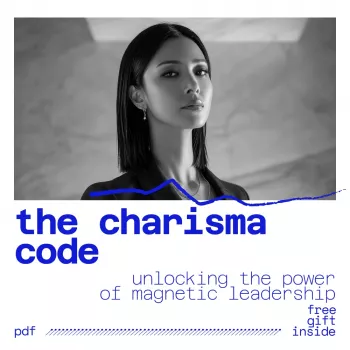
- The Charisma Code: Unlocking the Power of Magnetic Leadership – A Practical Guide to Mastering the Charismatic Leadership Style for Modern Leaders (USD 7.99)
- Universal Car Steering Wheel Phone Mount for Safe Navigation (USD 1.80)
- Triple-Sided Ultra-Fine Soft Bristle Toothbrush for Enhanced Oral Health (USD 1.52)
Get the Book
The Charisma Code: Unlocking the Power of Magnetic Leadership – A Practical Guide to Mastering the Charismatic Leadership Style for Modern Leaders is built around behaviors you can train and repeat: how to enter conversations with presence, speak with clarity, stay steady under pressure, and strengthen trust without performing. It’s designed for modern leadership realities—distributed teams, rapid change, and high accountability.
FAQ
Can charisma be learned, or is it something leaders are born with?
Many components of charisma are learnable, including presence, warmth cues, clarity in messaging, and emotional regulation. With practice, feedback, and consistency, those behaviors become a reliable leadership style rather than a personality “gift.”
How can a quiet or introverted leader develop a charismatic leadership style?
Quiet leaders can lean into calm presence, thoughtful questions, concise statements, and dependable follow-through. Charisma isn’t volume—it’s the combination of steadiness, clarity, and making others feel understood.
What’s the difference between charismatic leadership and manipulation?
Ethical charisma is transparent about trade-offs and respects people’s autonomy; it aims for clarity and alignment. Manipulation hides risks, pressures decisions, or uses emotional leverage to override consent.
Recommended for you


Was this article helpful?
Yes
No









Leave a comment