-
Shop
- Advanced Technologies
- AI Skills for Creators & Freelancers
- AI Client Management
- AI Ethics
- AI Mindset
- AI Tools & Prompts
- AI Writing & Content Creation
- Audio, Voice & Music
- Design & Visual Creation
- Email, Messaging & Communication
- Freelancing & Business
- Marketing, Ads & Conversion
- Productivity, Workflow & Automation
- SEO & Search Optimization
- Social Media Content & Growth
- Strategy, Planning & Analytics
- Video Creation & Editing
- AI Skills Mastery 2026 Collection
- Bathroom
- Best-Sellers
- Car Accessories
- Confidence
- Dating & Social Skills
- Digital Resources
- Easter Products
- Education & Learning
- Family & Parenting
- Fashion
- Fashion Accessories
- Furniture
- Gadgets
- Health & Beauty
- Health & Wellness
- Home & Garden
- Home Electronics
- Home Supplies
- Jewelry
- Kids & Babies
- Kitchen
- Lighting
- Patio, Lawn & Garden
- Personal Growth
- Pet Care
- Pet Supplies
- Pets
- Shoes
- Smart Home Living Guides
- Sport & Outdoors
- Stress Relief & Relaxation
- Super Deals
- TikTok Growth & Monetization Mastery
- Travel
- Travel & Adventure
- Wealth
- Wellness
KonMari Quick Start: Beginner Checklist & Category Order

What Makes the KonMari Method Different
The KonMari Method stands out because it’s built for lasting change, not temporary “cleaning up.” Instead of moving clutter from one spot to another, it uses a clear, repeatable decision system that helps make your home easier to maintain. For more guidance, see KonMari pdf Checklist and Marie Kondo Method Start Guide ….
- Tidy by category (not by room) to avoid shifting clutter from one space to another.
- Handle every item in a category to make consistent decisions and reduce “maybe” piles.
- Keep items that clearly deserve a place in daily life; let go of the rest respectfully.
- Finish the full process (all categories) for results that are easier to maintain.
If you want a deeper, step-by-step structure you can keep open during sessions, the A Quick Start to the KonMari Method (digital download) is designed for fast decisions and finishable sessions. For further reading, see About the KonMari Method.
The 20-Minute Setup That Prevents a Mid-Declutter Crash
Most decluttering burnout comes from starting without boundaries. A short setup keeps the session contained, prevents “doom piles,” and makes it easier to stop at a clean point (so the room isn’t worse than when you began).
- Choose a finish line: one category per session (example: all tops, all mugs, all shampoo).
- Pick a “sorting zone” with enough floor/table space; keep trash and donation bags nearby.
- Set simple rules before starting: no buying organizers yet, no putting items back until decisions are made, and no multitasking with laundry/dishes.
- Decide donation and recycling drop-off options in advance to reduce lingering bags.
- If time is tight, schedule two short sessions instead of one long one to prevent decision fatigue.
When you’re sorting small bathroom items or toiletries, having only what you use daily makes routines smoother. After you declutter, replace worn-out basics intentionally (instead of accumulating extras), like the Triple-Sided Ultra-Fine Soft Bristle Toothbrush for Enhanced Oral Health.
Quick-Start Order: Categories to Tackle First
The order matters because it trains decision-making. Early wins build momentum, and later categories become easier because you’ve practiced choosing what truly fits your current life.
- Start with Clothing to build confidence and decision speed (it’s usually the most straightforward).
- Move to Books next; keep what will realistically be read, referenced, or treasured.
- Then tackle Papers with a strict “keep only what’s necessary” mindset for documents.
- Komono (miscellaneous) comes after: kitchen, bathroom, tools, hobby supplies, cables, etc.
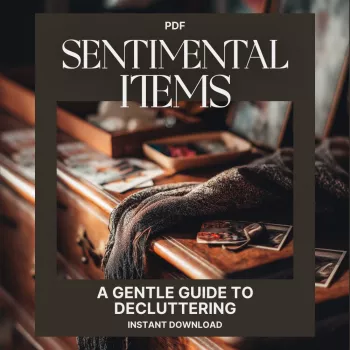
- Sentimental items last, after decision-making muscles are stronger.
Recommended first-week category plan
| Day | Category focus | Goal | Stop point |
|---|---|---|---|
| Day 1 | Clothing: tops | Decide keep/let go; create a clear home for keepers | All tops put away neatly |
| Day 2 | Clothing: bottoms + outerwear | Reduce duplicates; keep only best-fitting, most-used items | Closet/dresser closes easily |
| Day 3 | Books | Keep favorites and true references; release aspirational piles | Shelves hold only the keepers |
| Day 4 | Papers: “to do” and active files | Create one action spot + one archive spot | No loose paper on surfaces |
| Day 5 | Komono: bathroom + skincare | Remove expired/unused; group by routine | Daily items accessible; backups contained |
How to Decide Faster (Without Second-Guessing)
Speed comes from reducing the number of “open loops.” You’re not trying to find the perfect answer for every item—just a clear answer that matches real use.
- Use a three-pile system: Keep, Let Go, Undecided (cap Undecided to a small container).
- Ask practical tie-breakers: “Would this be replaced if lost?” and “Would this be chosen first?”
- Check for duplicates: keep the best version; let go of the rest unless a true backup is needed.
- Avoid the “sunk cost” trap: past spending doesn’t create present usefulness.
- When stuck, compare items directly (two similar sweaters) and keep the clear winner.
Clothing is a great place to practice “clear winner” comparisons. If you’re keeping fewer, better pieces, that often means holding onto the footwear you genuinely reach for (and letting go of pairs that never leave the closet), while investing in versatile staples when needed, such as Armani Exchange Men’s Sneakers.
The Key Habit: Give Every Keeper a Clear Home
Komono tends to spread because items don’t have a defined “parking spot.” Giving frequently used small items a dedicated home (car, entryway, bathroom cabinet, desk) prevents repeat clutter. For example, keeping navigation gear in one place—rather than bouncing between console, cupholder, and glove box—can be easier with a dedicated accessory like a Universal Car Steering Wheel Phone Mount for Safe Navigation.
Common Beginner Pitfalls (and the Fast Fix)
Digital Download Guide: A Simple Way to Stay on Track
If you want a ready-to-use format that matches the quick-start approach above, use A Quick Start to the KonMari Method | Minimalist Decluttering Guide for Beginners | Digital Download for How to Start KonMari Method Quickly.
FAQ
How long does it take to see results with the KonMari Method?
Most people notice a meaningful change within 1–3 sessions when they complete a single category (like all tops or all mugs). Full-home results depend on how much you own and how often you schedule sessions, but progress is fastest when you finish categories rather than perfecting one room.
Do organizers and storage bins help before decluttering?
Buying storage first usually increases clutter because it makes it easier to keep too much. Declutter first, assign clear homes for what remains, then measure and add only the minimal containers needed.
What should be done with items that are hard to let go of?
Postpone sentimental items until after easier categories, and set a gentle limit like one memory box per person. If something is meaningful but rarely used, taking a photo or keeping one representative item can preserve the memory without storing multiples.
Recommended for you


Was this article helpful?
Yes
No









Leave a comment