-
Shop
- Advanced Technologies
- AI Skills for Creators & Freelancers
- AI Client Management
- AI Ethics
- AI Mindset
- AI Tools & Prompts
- AI Writing & Content Creation
- Audio, Voice & Music
- Design & Visual Creation
- Email, Messaging & Communication
- Freelancing & Business
- Marketing, Ads & Conversion
- Productivity, Workflow & Automation
- SEO & Search Optimization
- Social Media Content & Growth
- Strategy, Planning & Analytics
- Video Creation & Editing
- AI Skills Mastery 2026 Collection
- Bathroom
- Best-Sellers
- Car Accessories
- Confidence
- Dating & Social Skills
- Digital Resources
- Easter Products
- Education & Learning
- Family & Parenting
- Fashion
- Fashion Accessories
- Furniture
- Gadgets
- Health & Beauty
- Health & Wellness
- Home & Garden
- Home Electronics
- Home Supplies
- Jewelry
- Kids & Babies
- Kitchen
- Lighting
- Patio, Lawn & Garden
- Personal Growth
- Pet Care
- Pet Supplies
- Pets
- Shoes
- Smart Home Living Guides
- Sport & Outdoors
- Stress Relief & Relaxation
- Super Deals
- TikTok Growth & Monetization Mastery
- Travel
- Travel & Adventure
- Wealth
- Wellness
Inflatable 3D Airbag Bike Seat Cover: Smooth Out Bumps
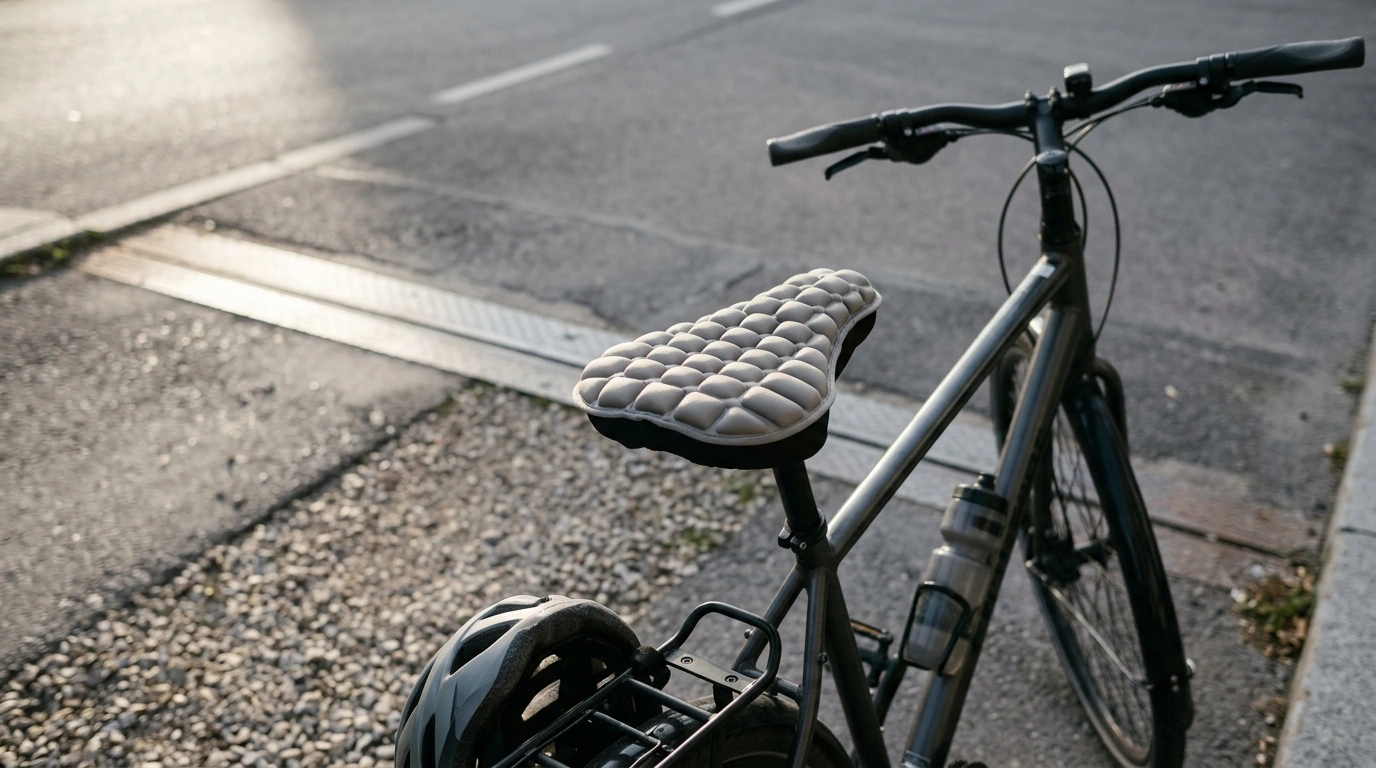
Inflatable 3D Airbag Bike Seat Cushion Cover for Softer Rides and Better Shock Absorption
A seat can feel fine for the first few minutes and then turn every bump into discomfort. An inflatable 3D airbag bike seat cushion cover adds a tunable layer between rider and saddle, helping reduce vibration, spread pressure more evenly, and improve comfort on commutes, fitness rides, and longer weekend loops.
What an inflatable 3D airbag cushion cover changes on a bike
An air-cushion cover works differently than a standard foam pad because the air cells compress and rebound with each small impact. That “give” can take the edge off road buzz while still letting the saddle support your pelvis.
- Adds an adjustable air layer that compresses and rebounds to soften road buzz and small impacts
- Helps distribute pressure across a wider surface compared with a hard saddle top
- Can improve comfort without replacing the entire saddle, useful for riders trying to fix soreness quickly
- Inflation level can be tailored for body weight, riding posture, and terrain
Comfort mechanics: shock absorption, pressure relief, and airflow
Comfort is usually a mix of vibration control, pressure management, and heat reduction. An airbag-style cushion cover targets all three—especially on rough pavement, patchy bike lanes, gravel connectors, and expansion joints.
- Micro-movements of the air cells can dampen vibration from rough pavement, gravel paths, and expansion joints
- A slightly firmer inflation often supports sit bones better; a softer setup can reduce sharp pressure points but may feel “floaty”
- Air channels and spacing can help reduce heat buildup compared with fully solid foam covers
- Improved comfort can support steadier cadence and posture, especially on longer rides
Inflation feel and when to use it
| Inflation level | Best for | What it feels like | Watch out for |
|---|---|---|---|
| Low | Very bumpy paths, casual cruising | Extra plush, high movement | May increase rocking or inner-thigh rubbing |
| Medium | Most commuting and fitness riding | Balanced support and cushioning | Recheck pressure after temperature changes |
| High | Smoother roads, riders wanting stability | Firm support with mild damping | Too firm can bring back pressure points |
Temperature matters more than many riders expect: a cushion that feels perfect in a cool garage can feel firmer after sitting in sun, and softer after a chilly morning start. Small adjustments go a long way.
Fit and compatibility with common saddles
Seat covers are most comfortable when they match the saddle’s general shape and stay locked in place while pedaling. A cover that’s too narrow can pinch and shift; too wide can bunch on the sides and rub.
- Check saddle shape (narrow road, wider comfort, MTB) and choose a cover that matches the widest point without bunching
- Confirm the fastening method can grip the saddle rails or base securely to prevent sliding when pedaling
- Works best when the underlying saddle is structurally sound; a damaged shell or broken rails should be replaced first
- If using a rain cover or saddle bag, verify clearance so the cushion doesn’t interfere with straps or mounting points
If discomfort is severe and persistent, it’s also worth reviewing bike fit basics—saddle width, height, and tilt often matter as much as cushioning. Practical guidance can be found from sources like Harvard Health Publishing, Cleveland Clinic, and Bicycle Network.
Setup tips for better comfort on the first ride
Most “this feels weird” first impressions come from over-inflation or a cover that’s slightly off-center. A quick, methodical setup usually fixes both.
- Start with medium inflation and adjust in small steps (a little air can noticeably change support)
- Center the cover so the thickest area aligns with sit bones rather than the saddle nose
- Tighten straps evenly to avoid side-to-side drift; recheck after a short test ride
- Pair with correct saddle height and tilt; even the best cushion can’t fully fix a saddle that’s angled too far up or down
A helpful rule: you want stable support under your sit bones with just enough “give” to take the sting out of bumps. If you feel like you’re balancing on a water balloon, remove a little air or increase strap tension.
Care, durability, and riding in different weather
Air cushions and straps hold up best when they’re kept clean and not stored under pressure in hot conditions.
Who benefits most from an air-cushion seat cover
Product spotlight: Inflatable 3D Airbag Bike Seat Cushion Cover
For a straightforward comfort upgrade, the Inflatable 3D Airbag Bike Seat Cushion Cover – Soft Shock Absorption & Comfort is designed to add a soft, adjustable layer that helps smooth out vibration and reduce pressure hotspots while keeping your existing saddle.
Quick add-on for safer navigation when driving to rides
If you drive to trails or group rides, the Universal Car Steering Wheel Phone Mount for Safe Navigation is a simple accessory to keep directions visible while parked or before you roll out (always set your route before driving and follow local laws).
FAQ
How much should an inflatable bike seat cushion be inflated?
Start at a medium firmness, then add or release air in small increments until your sit bones feel supported without excessive rocking. Recheck after big temperature changes, and avoid over-inflating since heat can increase internal pressure.
Will a seat cushion cover stop saddle soreness on long rides?
It can reduce vibration and soften pressure points, but long-ride comfort still depends on saddle width, bike setup, and good cycling shorts. Make one change at a time (inflation, tilt, height) and give your body time to adapt as saddle time increases.
Do inflatable saddle covers slip while pedaling?
They’re less likely to slip when the cover is the correct size, centered on the saddle, and the straps are tightened evenly. After a short test ride, retighten if needed and keep the underside clean so grit doesn’t reduce grip.
Recommended for you


Was this article helpful?
Yes
No









Leave a comment