-
Shop
- Advanced Technologies
- AI Skills for Creators & Freelancers
- AI Client Management
- AI Ethics
- AI Mindset
- AI Tools & Prompts
- AI Writing & Content Creation
- Audio, Voice & Music
- Design & Visual Creation
- Email, Messaging & Communication
- Freelancing & Business
- Marketing, Ads & Conversion
- Productivity, Workflow & Automation
- SEO & Search Optimization
- Social Media Content & Growth
- Strategy, Planning & Analytics
- Video Creation & Editing
- AI Skills Mastery 2026 Collection
- Bathroom
- Best-Sellers
- Car Accessories
- Confidence
- Dating & Social Skills
- Digital Resources
- Easter Products
- Education & Learning
- Family & Parenting
- Fashion
- Fashion Accessories
- Furniture
- Gadgets
- Health & Beauty
- Health & Wellness
- Home & Garden
- Home Electronics
- Home Supplies
- Jewelry
- Kids & Babies
- Kitchen
- Lighting
- Patio, Lawn & Garden
- Personal Growth
- Pet Care
- Pet Supplies
- Pets
- Shoes
- Smart Home Living Guides
- Sport & Outdoors
- Stress Relief & Relaxation
- Super Deals
- TikTok Growth & Monetization Mastery
- Travel
- Travel & Adventure
- Wealth
- Wellness
Heavy-Duty Ratchet Chain Binder Set: Safe Load Control
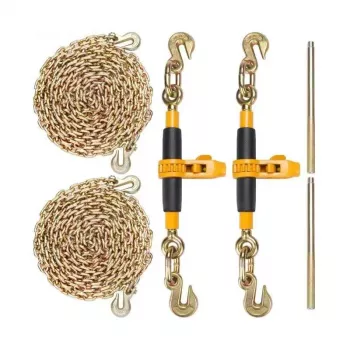
Heavy-Duty Ratchet Chain Binder Set for Secure Load Control
A ratchet chain binder set is built for tightening and securing chain tie-downs on trailers, flatbeds, and equipment haulers. A heavy-duty set is designed to deliver repeatable, controlled tension so loads stay planted through braking, potholes, and cornering. Below is what these binders are meant to handle, how to use them safely, and what to check before putting them into service.
What a heavy-duty ratchet chain binder set does
A ratchet binder applies measured tension to transport chain so machinery, pallets, and bulky cargo stay firmly in place during vibration and movement. Unlike lever binders that can “snap” into place and release abruptly if mishandled, ratchet-style binders tighten incrementally—helpful when the goal is a firm hold without sudden recoil risk.
These binders are commonly paired with transport-grade chain and suitable hooks for trailering, towing, farm tasks, construction equipment moves, and fleet work. They’re especially practical for repeat tie-down cycles where consistent tension and easier adjustment save time and reduce variability between operators.
What’s typically included in a set
While exact contents vary by manufacturer, a heavy-duty ratchet chain binder set usually includes:
- Ratchet chain binder(s) with a geared ratcheting handle for tightening and releasing.
- Grab hooks or slip hooks (depending on the set) designed to connect securely to chain links.
- Integrated hardware that allows tensioning while helping keep hands away from pinch points.
- A finish or coating intended to reduce corrosion in outdoor and roadside conditions (routine inspection still matters).
Key specs to confirm before using
Before a binder ever goes on a load, confirm the fundamentals—most failures trace back to mismatch, wear, or misuse rather than “bad luck.”
- Working Load Limit (WLL): Ensure the binder and chain match the required rating for the cargo and meet applicable regulations for tie-down quantity and capacity. For regulatory background, review FMCSA cargo securement guidance.
- Chain compatibility: Confirm the binder is designed for the chain size/grade being used. Mismatched chain can slip, deform, or fail.
- Tensioning range: Check the take-up/adjustment range so the binder can tighten properly without bottoming out.
- Hook style and fit: Hooks should seat fully on the chain link and align without side-loading.
- Handle clearance: Make sure there’s enough room to operate the ratchet without striking cargo edges, rub rails, or trailer structure.
- Markings and traceability: Look for stamped/printed rating information on the binder body and hooks where applicable. For a clear overview of WLL concepts, see WSTDA resources.
Pre-Use Checklist for a Ratchet Binder Set
| Check | What to look for | Action if not OK |
|---|---|---|
| WLL markings | Legible rating on binder and hooks | Remove from service; replace with correctly rated gear |
| Hook condition | No cracks, bends, excessive wear, or opening spread | Replace hooks/binder assembly |
| Ratchet mechanism | Smooth travel, no skipping teeth, pawl engages fully | Clean/lubricate; if still faulty, remove from service |
| Thread/pins/fasteners | No deformation, missing hardware, or looseness | Repair/replace before use |
| Chain fit | Hooks seat cleanly; chain grade/size matches | Use compatible chain and binder |
| Corrosion damage | No deep pitting or scale that weakens metal | Remove from service; replace |
How to tighten and release safely
Good securement starts before tension is applied. Center weight appropriately and block or brace items that can roll or shift. When attaching, connect hooks so they load in-line; avoid twisting chain or side-loading hooks.
- Take up slack evenly: Apply tension across multiple tie-down points instead of cranking one binder excessively.
- Use controlled ratcheting: Tighten in small increments and re-check alignment as tension increases.
- Secure the handle: After tightening, keep the handle from moving using the binder’s intended locking position or secondary restraint method.
- Release gradually: Relieve tension slowly with stable footing and hands clear of pinch points.
- Avoid extensions: Don’t add cheater bars unless the binder is explicitly designed for it; over-torquing can exceed ratings and damage components.
- Stay clear of recoil paths: Never place your body in line with a tensioned chain. General workplace handling practices are summarized in OSHA materials handling guidance.
Common applications and setup tips
Care, storage, and inspection intervals
Choosing between ratchet and lever binders
Product options for load control
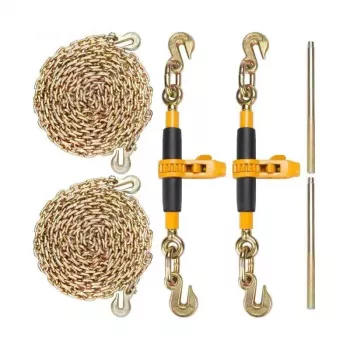
- Heavy-Duty Ratchet Chain Binder Set ($205.01) — built for repeatable tensioning when paired with compatible transport chain and correctly rated anchor points.
- Universal Car Steering Wheel Phone Mount for Safe Navigation ($1.80) — a simple add-on for route visibility when moving between job sites (use only when parked or when permitted and safe).
- Armani Exchange Men’s Sneakers ($107.51) — an off-duty option for operators who want a clean everyday shoe after the work is done.
FAQ
How many chain binders are needed to secure equipment on a trailer?
The right number depends on cargo weight, length, attachment points, and the required aggregate working load limit. Use enough tie-downs to prevent forward, rearward, and lateral movement while meeting applicable regulations for quantity and capacity.
Can a ratchet chain binder be used with any chain?
No. The binder’s capacity and hook geometry must match the chain size and grade; a mismatch can reduce capacity, cause slippage, or damage the chain and hooks.
Why does a chain binder loosen after driving a few miles?
Loads can settle as suspension movement and vibration “seat” the cargo and tie-downs. Re-check and re-tension after a short distance and continue checking periodically on longer trips.
Recommended for you
Was this article helpful?
Yes
No









Leave a comment