-
Shop
- Advanced Technologies
- AI Skills for Creators & Freelancers
- AI Client Management
- AI Ethics
- AI Mindset
- AI Tools & Prompts
- AI Writing & Content Creation
- Audio, Voice & Music
- Design & Visual Creation
- Email, Messaging & Communication
- Freelancing & Business
- Marketing, Ads & Conversion
- Productivity, Workflow & Automation
- SEO & Search Optimization
- Social Media Content & Growth
- Strategy, Planning & Analytics
- Video Creation & Editing
- AI Skills Mastery 2026 Collection
- Bathroom
- Best-Sellers
- Car Accessories
- Confidence
- Dating & Social Skills
- Digital Resources
- Easter Products
- Education & Learning
- Family & Parenting
- Fashion
- Fashion Accessories
- Furniture
- Gadgets
- Health & Beauty
- Health & Wellness
- Home & Garden
- Home Electronics
- Home Supplies
- Jewelry
- Kids & Babies
- Kitchen
- Lighting
- Patio, Lawn & Garden
- Personal Growth
- Pet Care
- Pet Supplies
- Pets
- Shoes
- Smart Home Living Guides
- Sport & Outdoors
- Stress Relief & Relaxation
- Super Deals
- TikTok Growth & Monetization Mastery
- Travel
- Travel & Adventure
- Wealth
- Wellness
Handbag Storage Checklist: Keep Bags Perfectly Shaped
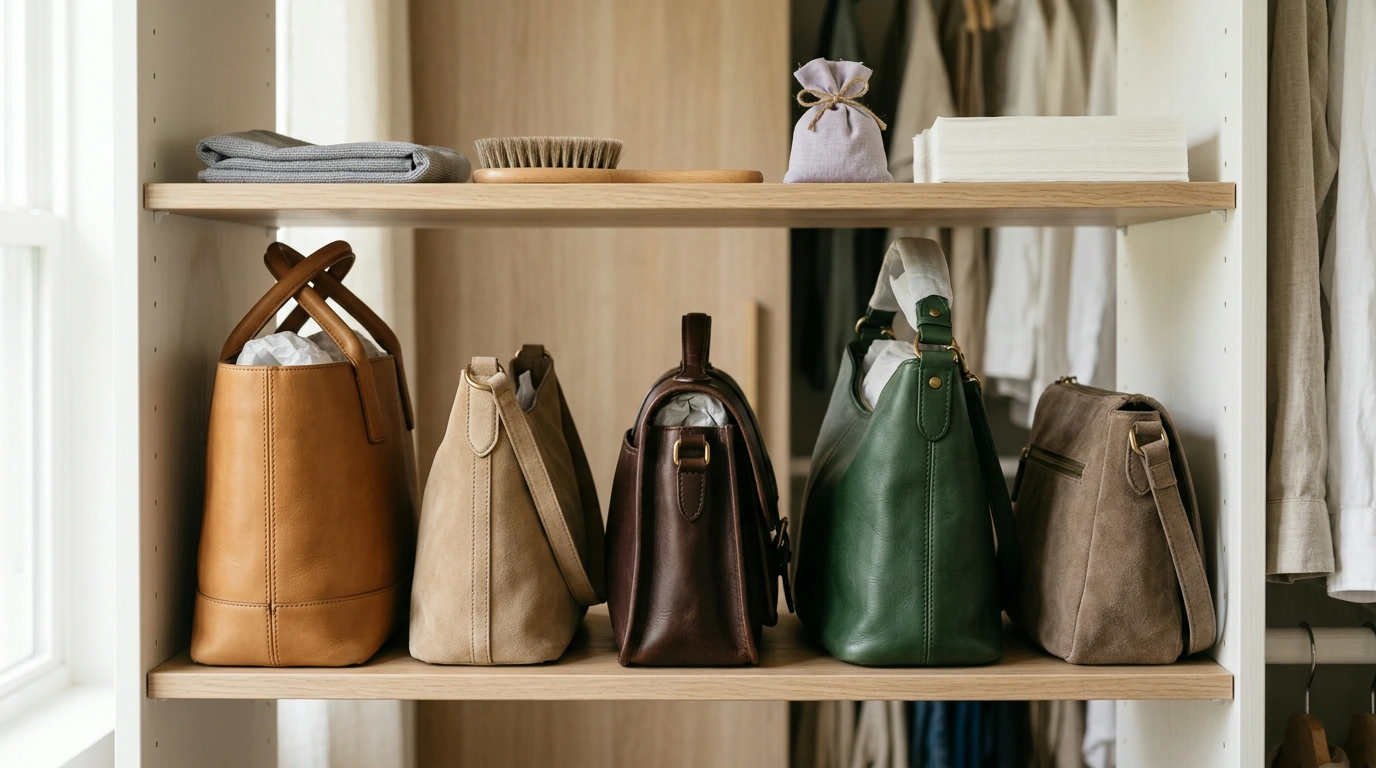
Perfectly Shaped Handbags: A Practical Storage Checklist for Long-Lasting Structure
A handbag’s shape is easiest to protect with small, consistent habits: gentle cleaning, smart stuffing, the right supports, and a storage spot that avoids pressure, heat, and humidity. Use the checklist below to prevent slouching, corner wear, strap creases, and collapsed sides—especially for soft leather, suede, and structured designer styles.
Why handbags lose their shape
Most “mystery slouch” comes down to time plus pressure. Once a bag’s panels learn a crease or dent, the material can start to “remember” it.
- Gravity and empty storage: unstuffed bags slump, panels fold inward, and edges set into permanent creases over time.
- Compression: stacking, overfilling, or tight shelves flatten corners and distort structured frames.
- Handle and strap stress: hanging by straps can stretch attachment points and leave dents where straps press into leather.
- Moisture and heat: humidity encourages mildew and leather warping; heat dries finishes and can cause cracking.
- Residue and oils: makeup, hand lotion, and dust abrade linings and exterior surfaces, making leather feel softer and less supportive.
Storage methods and when to use them
| Method | Best for | What to watch out for |
|---|---|---|
| Shelf storage (upright) | Most everyday and structured bags | Avoid tight spacing; leave room so sides don’t press inward |
| Dust bag storage | Leather, suede, fabric bags stored long-term | Use breathable fabric; avoid plastic that traps moisture |
| Bag shaper/insert | Totes, hobos, soft leather that slouches | Choose the right size to avoid outward bulging |
| Stuffing with acid-free paper | Most styles, especially medium/large | Don’t use colored newsprint; inks can transfer |
| Hanging (limited use) | Very lightweight bags with sturdy handles | Can stretch straps and distort shape; avoid for heavy or delicate bags |
| Box storage (original box) | Special-occasion and collector pieces | Vent periodically; add silica gel and avoid tightly sealing damp items |
Before storing: quick clean and prep (5–10 minutes)
Think of this as “resetting” the bag so nothing inside creates dents or stains while it sits.
- Empty everything: check inner pockets for pens, receipts, coins, cosmetics, and crumbs that can stain lining or create pressure points.
- Shake out debris: use a soft brush or lint roller inside; for fabric lining, a low-suction handheld vacuum with a clean nozzle can help.
- Wipe exterior gently: use a dry microfiber cloth first; for leather, follow with a lightly damp cloth if needed and dry immediately.
- Spot-check hardware: remove fingerprints with a soft cloth; avoid harsh metal polishes that can touch leather edges.
- Conditioning timing: for leather, apply conditioner only when needed (dry feel, dull look). Allow it to fully absorb before storage to prevent tackiness.
- Deodorize safely: use a small sachet designed for closets, or a bit of baking soda in a breathable pouch placed inside—never loose powder.
For conservation-minded care (especially for natural materials), storage environment and gentle handling matter as much as products. The Smithsonian’s leather care guidance is a helpful reference for long-term preservation principles: Smithsonian Museum Conservation Institute — Caring for Leather and Skin.
Stuffing and shaping: keep panels smooth without stretching
Stuffing should support the bag’s natural silhouette—not force it bigger or rounder than intended.
- Choose the right filler: acid-free tissue paper is ideal; unbleached cotton cloth works for delicate interiors; avoid colored paper that can transfer dye.
- Build gentle structure: fill corners first, then the center, so the bag stands naturally without forcing seams outward.
- Protect lining and zippers: place a thin layer of tissue between zipper teeth and lining to prevent snagging when stored.
- Handle placement: tuck handles upright with soft padding between handles and body to prevent handle marks on the exterior.
- For soft totes and hobos: consider a lightweight organizer insert to support sidewalls and prevent bottom sag.
- For structured bags: avoid overstuffing; the goal is to keep planes flat and corners supported, not to “stretch back” a distorted frame.
If you like having a consistent routine you can repeat across your collection, the Perfectly Shaped Handbag Checklist (digital download) keeps the steps in one place for quick resets before storing.
Best storage setup: light, airflow, and spacing
Humidity swings are a quiet troublemaker for leather and finishes. For a deeper look at why relative humidity matters in storage, see: Canadian Conservation Institute — Agents of Deterioration: Relative Humidity.
What not to do (common mistakes that cause permanent damage)
A simple rotation routine for everyday bags
For detail work (stitching lines, zipper tracks, hardware edges), a very soft, small brush helps remove dust without harsh scrubbing. A simple option is the Triple-Sided Ultra-Fine Soft Bristle Toothbrush used as a dedicated cleaning tool (kept separate from personal care).
Printable checklist for consistent results
FAQ
Should handbags be stored stuffed or empty?
Lightly stuffed storage is best for most handbags because it supports panels and corners and helps prevent collapsing. Very small bags and rigid clutches may not need stuffing, but avoid overstuffing anything—too much fill can stretch seams and distort the silhouette.
Is it okay to store handbags in their original box?
Yes, as long as the bag is completely dry and the box storage allows airflow. Wrap the bag in a breathable dust bag or tissue, add a silica gel packet, and open the box periodically to refresh air and check for moisture.
Can handbags be hung by the straps in a closet?
Generally no for heavy or structured bags, since hanging can stretch straps and create dents where straps press into the leather. If hanging is unavoidable, keep it short-term, use wide padded hooks, and support the base so the strap attachments aren’t bearing all the weight.
Recommended for you



Was this article helpful?
Yes
No









Leave a comment