-
Shop
- Advanced Technologies
- AI Skills for Creators & Freelancers
- AI Client Management
- AI Ethics
- AI Mindset
- AI Tools & Prompts
- AI Writing & Content Creation
- Audio, Voice & Music
- Design & Visual Creation
- Email, Messaging & Communication
- Freelancing & Business
- Marketing, Ads & Conversion
- Productivity, Workflow & Automation
- SEO & Search Optimization
- Social Media Content & Growth
- Strategy, Planning & Analytics
- Video Creation & Editing
- AI Skills Mastery 2026 Collection
- Bathroom
- Best-Sellers
- Car Accessories
- Confidence
- Dating & Social Skills
- Digital Resources
- Easter Products
- Education & Learning
- Family & Parenting
- Fashion
- Fashion Accessories
- Furniture
- Gadgets
- Health & Beauty
- Health & Wellness
- Home & Garden
- Home Electronics
- Home Supplies
- Jewelry
- Kids & Babies
- Kitchen
- Lighting
- Patio, Lawn & Garden
- Personal Growth
- Pet Care
- Pet Supplies
- Pets
- Shoes
- Smart Home Living Guides
- Sport & Outdoors
- Stress Relief & Relaxation
- Super Deals
- TikTok Growth & Monetization Mastery
- Travel
- Travel & Adventure
- Wealth
- Wellness
Fresh Homemade Pasta: Dough, Rolling & Sauce Finish
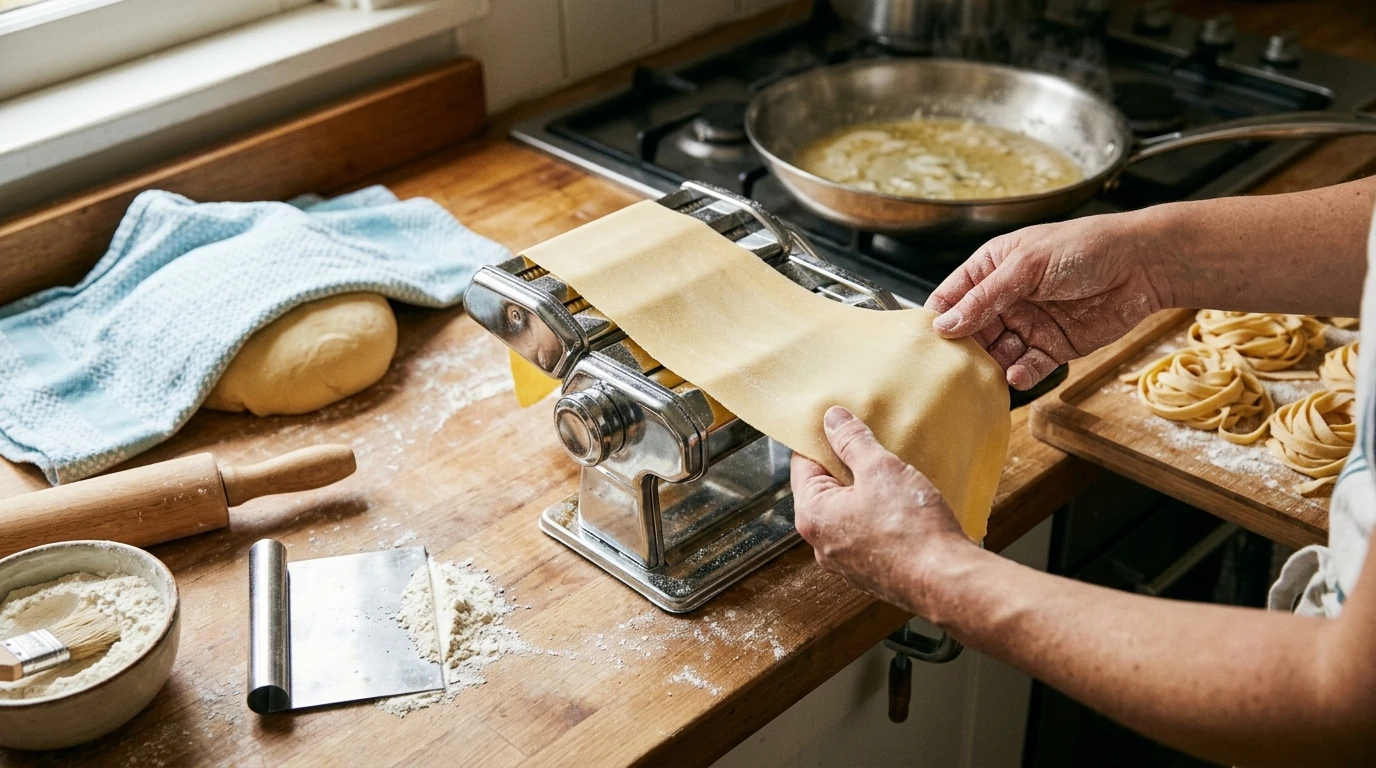
Perfect Pasta at Home: Fresh Homemade Italian Pasta from First Batch to Confident Technique
Fresh pasta is equal parts craft and repeatable process: a balanced dough, proper rest, consistent rolling, and a quick cook. Once the workflow clicks, each batch becomes easier to handle, easier to shape, and far more dependable at dinnertime. The goal isn’t perfection on day one—it’s learning the checkpoints that tell you when the dough is ready, the sheets are even, and the sauce will cling.
What Changes When Pasta Is Fresh
- Texture: Fresh pasta tends to be more tender and elastic, while dried pasta is firmer with a stronger al dente bite.
- Cooking time: Many fresh shapes cook in about 1–3 minutes, so the sauce should be hot and ready before the pasta hits the water.
- Sauce pairing: Egg doughs love butter-forward and emulsified pan sauces; sturdier doughs can handle ragù, vegetables, and heartier toss-ins.
- Expectations: Slight irregularity is normal early on. Consistency comes from weighing ingredients, resting the dough, and controlling sheet thickness.
For background on pasta’s long history and variations, see Encyclopedia Britannica: Pasta.
Tools and Ingredients That Matter Most
You can make excellent pasta with a short list: flour, eggs (or water), and a way to roll. The most important “tool,” though, is repeatability—measuring and using the same process each time.
- Flour options: “00” for silky sheets, all-purpose for convenience, semolina for bite, or blends for balance.
- Eggs and hydration: Egg size varies. Hold back a little liquid and adjust gradually to avoid a sticky dough spiral.
- Essential tools: Kitchen scale, bench scraper, rolling pin or pasta machine, sharp knife or cutter, clean towel, sheet pan, and a pot large enough for a true rolling boil.
- Nice-to-have tools: Drying rack, ravioli mold, fluted wheel, digital thermometer for sauce finishing, and airtight freezer bags.
Ingredient choices and what they do
| Choice | Best for | What to expect |
|---|---|---|
| 00 flour | Tagliatelle, ravioli sheets | Smooth rolling, delicate bite |
| All-purpose | Everyday noodles | Slightly more chew, forgiving |
| Semolina (fine) | Orecchiette, cavatelli | Texture and grip for sauces |
| Egg-rich dough | Filled pasta, ribbons | Golden color, tender structure |
| Egg-free/low-egg dough | Shaped pasta | Sturdier chew, less delicate |
Dough Basics: Mix, Knead, Rest
If you want a quick primer on how proteins form gluten networks and why rest matters, Harvard’s nutrition resource provides helpful context: Harvard T.H. Chan School of Public Health (protein basics).
Quick dough troubleshooting
| Problem | Likely cause | Fix |
|---|---|---|
| Crumbly, cracks when rolled | Too dry, under-hydrated | Mist with water, knead 2–3 minutes, rest again |
| Sticky and smears on machine | Too wet, warm kitchen | Dust lightly, chill 10 minutes, roll smaller portions |
| Tough or hard to roll | Not rested, overworked | Rest 20–30 minutes; reduce thickness gradually |
| Rips or holes in sheets | Uneven thickness, trapped air | Fold and re-roll; keep sheets lightly floured |
Rolling Sheets: Hand-Rolled or Machine
Rolling guide by pasta style
| Style | Suggested thickness | Notes |
|---|---|---|
| Tagliatelle/Fettuccine | Medium-thin | Dust, fold, cut; toss with semolina to prevent sticking |
| Lasagna sheets | Medium | Par-boil only if needed; keep sheets separated |
| Ravioli/Tortellini | Thin | Aim for a clean seal; keep fillings firm, not watery |
| Pappardelle | Medium | Wider cuts handle ragù and mushrooms well |
Cutting and Shaping: From Ribbons to Filled Pasta
Common shapes and best sauce matches
| Shape | Strength | Pairs well with |
|---|---|---|
| Tagliatelle | Balanced | Bolognese, mushrooms, butter-sage |
| Ravioli | Delicate | Light tomato, brown butter, broth |
| Orecchiette-style | Sauce-catching | Garlic greens, sausage, chunky vegetables |
| Lasagna sheets | Layering | Ragù, béchamel, roasted vegetables |
Cooking and Finishing: Timing, Salt, and Sauce Emulsions
Storing Fresh Pasta: Short-Term, Drying, Freezing
- Short-term (best texture): Dust lightly with semolina, spread on a tray, cover, and refrigerate up to a day.
- Brief drying: Let cut pasta sit 10–20 minutes to reduce sticking before cooking (humidity and thickness change the timeline).
- Freezing: Freeze portions on a tray until firm, then bag; cook from frozen with a little extra time.
- Food safety: Filled pasta should be chilled promptly and cooked thoroughly. For practical storage timing guidance, use the USDA FSIS Refrigerator & Freezer Storage chart.
A Step-by-Step Companion for Repeatable Results
Progress comes faster when each session follows the same rhythm: clear dough checkpoints, a predictable rolling routine, and a finishing method that uses pasta water to pull the sauce together. For an organized reference that walks through the workflow from first dough to more advanced shaping and filled pasta, see Perfect Pasta at Home – Step-by-Step Pasta Making Steps eBook.
More In-Stock Picks
- Universal Car Steering Wheel Phone Mount for Safe Navigation
- Triple-Sided Ultra-Fine Soft Bristle Toothbrush for Enhanced Oral Health
FAQ
Why does my fresh pasta dough keep shrinking back when I roll it?
Shrinking usually means the gluten is still tense from under-resting or from aggressive kneading. Wrap the dough and rest 20–30 minutes longer, then roll in smaller portions and let the sheet relax briefly between passes.
How long should fresh pasta cook?
Many fresh pastas cook in about 1–3 minutes, but thickness and shape can change that. Start tasting early and finish the pasta in the sauce with a splash of pasta water for the best texture and coating.
Can fresh pasta be frozen and cooked later?
Yes—freeze portions on a tray until firm, then transfer to a freezer bag to prevent clumping. Cook from frozen in boiling salted water and add a little extra time, stirring early to keep pieces separate.
Recommended for you


Was this article helpful?
Yes
No









Leave a comment