-
Shop
- Advanced Technologies
- AI Skills for Creators & Freelancers
- AI Client Management
- AI Ethics
- AI Mindset
- AI Tools & Prompts
- AI Writing & Content Creation
- Audio, Voice & Music
- Design & Visual Creation
- Email, Messaging & Communication
- Freelancing & Business
- Marketing, Ads & Conversion
- Productivity, Workflow & Automation
- SEO & Search Optimization
- Social Media Content & Growth
- Strategy, Planning & Analytics
- Video Creation & Editing
- AI Skills Mastery 2026 Collection
- Bathroom
- Best-Sellers
- Car Accessories
- Confidence
- Dating & Social Skills
- Digital Resources
- Easter Products
- Education & Learning
- Family & Parenting
- Fashion
- Fashion Accessories
- Furniture
- Gadgets
- Health & Beauty
- Health & Wellness
- Home & Garden
- Home Electronics
- Home Supplies
- Jewelry
- Kids & Babies
- Kitchen
- Lighting
- Patio, Lawn & Garden
- Personal Growth
- Pet Care
- Pet Supplies
- Pets
- Shoes
- Smart Home Living Guides
- Sport & Outdoors
- Stress Relief & Relaxation
- Super Deals
- TikTok Growth & Monetization Mastery
- Travel
- Travel & Adventure
- Wealth
- Wellness
Fishing Lure Clips: Quick-Change Snaps for Any Water
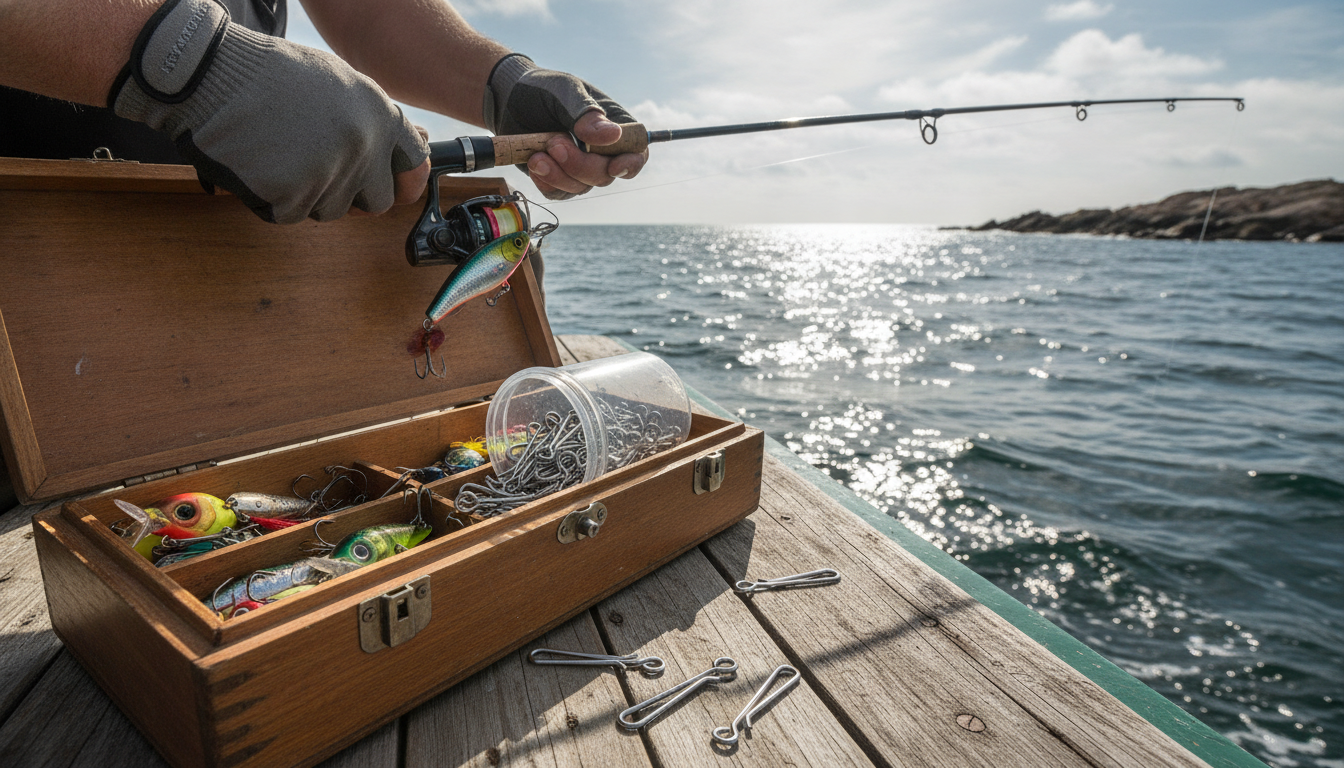
Fishing Lure Clips: Fast, Clean Lure Changes in Saltwater and Freshwater
Quick lure changes without retying can save time and keep hands off hooks in wind, waves, or cold conditions. Stainless steel snap connectors are a simple upgrade for anglers who rotate hard baits, jigs, and soft plastics across both saltwater and freshwater. When chosen in the right size and checked often, lure clips can make a day on the water smoother—especially when the bite window is short.
What lure clips do (and what they don’t)
Lure clips create a fast connection point between your line/leader and your lure so you can swap baits without cutting and retying. That speed matters when fish are actively feeding, when fingers are numb, or when you’re standing in surf where retying is awkward.
They also help preserve leader length during frequent lure changes—particularly helpful with fluorocarbon leaders that anglers prefer for abrasion resistance and lower visibility. Instead of trimming inches off your leader each time, the clip takes the wear from repeated re-rigs.
Many lures swing more freely on a clip than on a tight knot, which can help action for some hard baits (like crankbaits and jerkbaits) that rely on nose movement.
What clips don’t do: they don’t replace good knot choice or good leader material. The line-to-leader knot and leader-to-clip knot still matter, and a weak knot will fail regardless of hardware. Also, not every presentation benefits—some finesse techniques and ultra-light lures can perform better tied direct for maximum natural action and minimal hardware.
Stainless steel snap connectors: why they’re popular
Stainless steel snaps are widely used because they balance durability, strength, and convenience across a wide range of conditions.
- Corrosion resistance: Stainless steel holds up better against salt spray and brackish water when it’s rinsed and dried after use.
- Strength-to-size: Compact snaps can provide strong connections without the bulky profile that can interfere with lure action.
- Convenience: Ideal for lure testing, multi-species trips, and shore fishing where retying slows you down.
- Consistency: Keeping a uniform clip size across a few rods can standardize lure swapping and reduce mistakes when the bite is fast.
Choosing the right size clip for your lures
The best clip is the one that matches your lure weight and line class without overpowering the lure. Too large can dampen action and add unnecessary flash; too small can be hard to handle and may be under-rated for the fish you’re targeting.
For small crankbaits and spinners, prioritize a compact clip that won’t dominate the lure’s nose or change its balance. For larger plugs, spoons, and heavy jigs, prioritize strength and a secure locking profile that won’t pop open under load.
If you’re unsure, test at the shoreline or in a bucket: if the lure rolls unnaturally, tracks poorly, or loses its intended kick, size down—or tie direct for that specific bait.
Practical clip sizing guide by lure type
| Lure type | Typical use | Clip sizing tip | Notes |
|---|---|---|---|
| Small crankbaits / jerkbaits | Bass, trout, panfish | Use the smallest clip that’s easy to open/close | Oversized clips can blunt darting action |
| Spinners / spoons | Trout, salmon, inshore | Small-to-medium clip | A clip can help keep spoons from binding at the knot |
| Soft-plastic jigheads | Freshwater and saltwater | Medium clip for easy changes | If the jig swims off-center, tie direct |
| Topwater plugs | Inshore and freshwater | Medium-to-strong clip | Check that the clip doesn’t foul the split ring |
| Heavy metal jigs | Surf, pier, offshore | Stronger clip; prioritize lock security | Inspect often after hard fights and snags |
How to attach lure clips for reliable performance
For dependable performance, attach the clip to a leader rather than tying it straight to braid in most situations. Fluorocarbon is a common choice for clear water and abrasion resistance around rock, shell, dock pilings, and teeth; mono can be helpful when you want a bit more shock absorption.
Saltwater vs. freshwater use: care, corrosion, and longevity
For species rules, seasons, and local guidance, check resources like the Florida Fish and Wildlife Conservation Commission (FWC), and for species information and responsible practices, reference NOAA FishWatch.
When clips are a great idea—and when to skip them
Product picks in stock
- Fishing Lure Clips 100Pcs Stainless Steel Snap Connectors for Saltwater & Freshwater ($2.51): A big pack for building quick-change leaders, stocking multiple tackle boxes, and replacing clips after hard fights or snags.
- Universal Car Steering Wheel Phone Mount for Safe Navigation ($1.80): Handy for navigating to ramps, piers, and shoreline access points when you’re running a multi-spot day.
FAQ
Should you use snap swivels with lures?
Snap swivels can reduce line twist for lures that spin (like many spoons and some spinners), but they add bulk that may affect action. Use clips alone when twist isn’t an issue, and choose a quality swivel when twist is persistent and testing shows the lure still runs correctly.
What is the most sought after fishing lure?
It varies by region and target species, but commonly sought-after categories include crankbaits, soft plastics, and topwater lures. Clips make it easier to rotate through these popular styles quickly without retying when conditions change.
Are snap clips good for fishing?
Snap clips are good for fishing when they’re sized appropriately and inspected often: they speed up lure changes and help preserve leader length. The main drawbacks are that an oversized clip can hurt lure action, and any clip must be fully closed and pull-tested before casting.
Recommended for you


Was this article helpful?
Yes
No









Leave a comment