-
Shop
- Advanced Technologies
- AI Skills for Creators & Freelancers
- AI Client Management
- AI Ethics
- AI Mindset
- AI Tools & Prompts
- AI Writing & Content Creation
- Audio, Voice & Music
- Design & Visual Creation
- Email, Messaging & Communication
- Freelancing & Business
- Marketing, Ads & Conversion
- Productivity, Workflow & Automation
- SEO & Search Optimization
- Social Media Content & Growth
- Strategy, Planning & Analytics
- Video Creation & Editing
- AI Skills Mastery 2026 Collection
- Bathroom
- Best-Sellers
- Car Accessories
- Confidence
- Dating & Social Skills
- Digital Resources
- Easter Products
- Education & Learning
- Family & Parenting
- Fashion
- Fashion Accessories
- Furniture
- Gadgets
- Health & Beauty
- Health & Wellness
- Home & Garden
- Home Electronics
- Home Supplies
- Jewelry
- Kids & Babies
- Kitchen
- Lighting
- Patio, Lawn & Garden
- Personal Growth
- Pet Care
- Pet Supplies
- Pets
- Shoes
- Smart Home Living Guides
- Sport & Outdoors
- Stress Relief & Relaxation
- Super Deals
- TikTok Growth & Monetization Mastery
- Travel
- Travel & Adventure
- Wealth
- Wellness
Festive Cactus Cat Scratching Tower for Healthy Claws
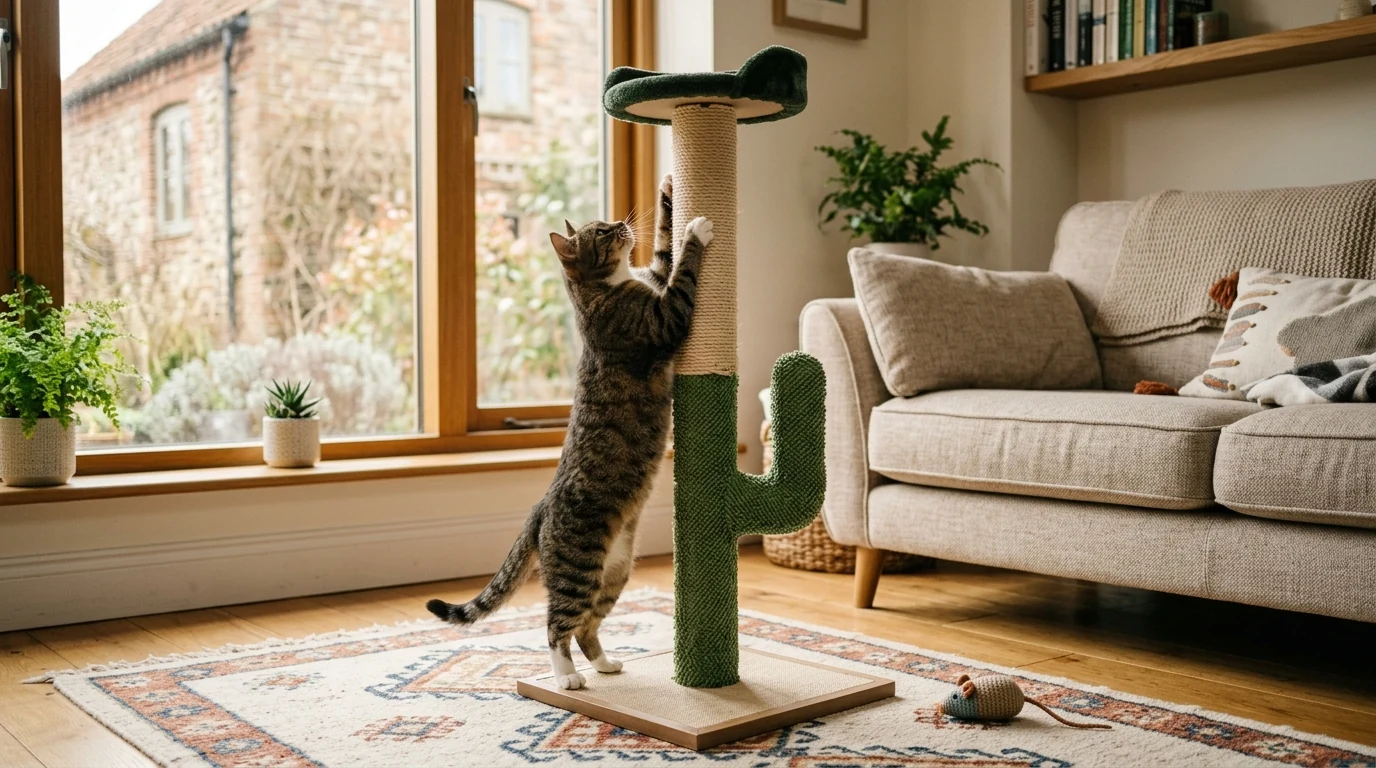
Festive Cat Scratching Post Cactus Tree Tower
A playful cactus-tree style scratching tower blends seasonal charm with everyday enrichment, giving cats a dedicated place to scratch, stretch, and perch—while helping protect carpets and furniture. If your cat gravitates toward sofa corners or doorframes, a vertical tower creates a clearer “yes” option that feels satisfying under claws and fits naturally into daily routines.
What Makes a Cactus-Tree Scratching Tower Different
A cactus-inspired scratching tower isn’t just cute decor—it’s a behavior-friendly shape that matches how many cats prefer to scratch and claim space.
- Combines a vertical scratch zone with a decorative cactus-tree look that fits festive or whimsical home decor.
- Encourages full-body stretching, which many cats prefer over flat scratchers.
- Creates a “yes space” for claws, helping redirect scratching away from sofas, doorframes, and rugs.
- Adds a small territory marker cats can claim, which can reduce conflict in multi-cat homes.
How Scratching Supports Healthy Cat Behavior
Scratching is normal, essential cat behavior—not “acting out.” Offering an appealing post helps meet those needs in a home-friendly way.
- Helps maintain claw condition by shedding outer nail layers naturally.
- Supports shoulder and back mobility through repeated stretching motions.
- Provides stress relief and can reduce boredom-related behaviors (chewing, excessive meowing, nighttime zoomies).
- Allows scent marking through paw glands, which can make a cat feel more secure in the home.
For more background on why cats scratch and how to guide it, see resources from the ASPCA and behavior guidance from International Cat Care.
Quick Details
A fast snapshot of purchase-relevant details before diving into setup and daily use.
| Item | Details |
|---|---|
| Name | Festive Cat Scratching Post Cactus Tree Tower |
| Price | 42.67 USD |
| Availability | In stock |
| Stock (listed) | 52 |
| Best for | Daily scratching, stretching, light climbing/perching |
| Style | Cactus tree / festive decor accent |
| Product page | Festive Cat Scratching Post Cactus Tree Tower |
Where to Place It for the Best Results
Placement is often the difference between “ignored” and “obsessed.” Cats scratch where it makes sense to them—near resting areas, in social spaces, and along routes they travel.
- Put it near the cat’s current favorite scratch target first (often the sofa corner) to make the switch effortless.
- Place one scratch option near sleep spots because many cats scratch immediately after waking.
- Avoid tucking it behind doors or in unused corners; cats prefer prominent, traffic-adjacent locations.
- If there are multiple cats, consider placing scratchers in separate zones to reduce guarding and ambushing.
How to Encourage a Cat to Use It
Most cats will investigate a new tower on their own, but a few small steps can turn curiosity into a lasting habit.
- Make the first interactions positive: sprinkle catnip (if the cat responds to it) or place a favorite toy nearby.
- Reward the moment claws touch the post with a treat or play; timing matters more than quantity.
- Demonstrate “scratching” by running fingers along the surface (without forcing the cat’s paws onto it).
- If the cat scratches furniture, calmly interrupt and guide attention to the tower; avoid punishment, which can increase stress.
- For persistent furniture scratching, temporarily block the old spot (double-sided tape or a furniture cover) while reinforcing the tower.
Safety, Stability, and Home-Friendly Use
A scratching tower should feel solid under your cat—especially for enthusiastic jumpers who sprint, launch, and twist mid-air.
- Place the tower on a flat, non-slip surface; add a rug pad underneath if the floor is slick.
- Check stability weekly, especially if the cat launches onto it at speed.
- Trim sharp claw tips as needed to reduce snagging and accidental scratches during play.
- Keep dangling decor (ribbons/tinsel) separate; cats may chew string-like items.
- If a cat is very large or extremely active, prioritize stability checks and consider adding a second scratcher to reduce “all energy in one place” impact.
Care and Longevity
Keeping the surface clean and the tower inviting can extend its useful life—and help prevent a “back to the couch” relapse.
- Vacuum or lint-roll hair from the surface regularly to keep it appealing.
- Spot-clean with a lightly damp cloth; avoid saturating materials so they don’t loosen or warp.
- Rotate position slightly every few weeks if the cat only scratches one side to distribute wear.
- Replace or add an additional scratcher if the cat starts returning to furniture—often a sign the preferred texture has worn down.
- Watch for loose fibers or fraying that could be ingested; trim loose strands promptly.
When a Scratching Tower Is the Right Gift Choice
In-Stock Picks You Can Add to Your Cart
- Festive Cat Scratching Post Cactus Tree Tower — a dedicated scratch-and-stretch zone with a festive cactus-tree look.
- Triple-Sided Ultra-Fine Soft Bristle Toothbrush for Enhanced Oral Health — a compact add-on for everyday hygiene routines.
- Universal Car Steering Wheel Phone Mount for Safe Navigation — a simple accessory for hands-free navigation while driving.
FAQ
How do you get a cat to use a new scratching post?
Place it right next to the current scratching “hot spot,” then reward any interaction immediately with a treat or play. Catnip and nearby toys can help, and making the old scratch area less rewarding (covering it or using double-sided tape) often speeds up the switch.
Where should a scratching tower be placed in the home?
Put it in a visible, socially relevant area where your cat already spends time—often near the living room or close to a couch corner. A second great location is near sleeping areas, since many cats scratch right after waking up.
How often should a scratching surface be replaced?
Replace it when it becomes wobbly, heavily worn, or your cat stops choosing it and returns to furniture. Regular cleaning and rotating the tower’s position can help the scratching surface last longer.
Recommended for you
Was this article helpful?
Yes
No









Leave a comment