-
Shop
- Advanced Technologies
- AI Skills for Creators & Freelancers
- AI Client Management
- AI Ethics
- AI Mindset
- AI Tools & Prompts
- AI Writing & Content Creation
- Audio, Voice & Music
- Design & Visual Creation
- Email, Messaging & Communication
- Freelancing & Business
- Marketing, Ads & Conversion
- Productivity, Workflow & Automation
- SEO & Search Optimization
- Social Media Content & Growth
- Strategy, Planning & Analytics
- Video Creation & Editing
- AI Skills Mastery 2026 Collection
- Bathroom
- Best-Sellers
- Car Accessories
- Confidence
- Dating & Social Skills
- Digital Resources
- Easter Products
- Education & Learning
- Family & Parenting
- Fashion
- Fashion Accessories
- Furniture
- Gadgets
- Health & Beauty
- Health & Wellness
- Home & Garden
- Home Electronics
- Home Supplies
- Jewelry
- Kids & Babies
- Kitchen
- Lighting
- Patio, Lawn & Garden
- Personal Growth
- Pet Care
- Pet Supplies
- Pets
- Shoes
- Smart Home Living Guides
- Sport & Outdoors
- Stress Relief & Relaxation
- Super Deals
- TikTok Growth & Monetization Mastery
- Travel
- Travel & Adventure
- Wealth
- Wellness
Family Car Guide: Comfort, Car Seats, Safety, Convenience
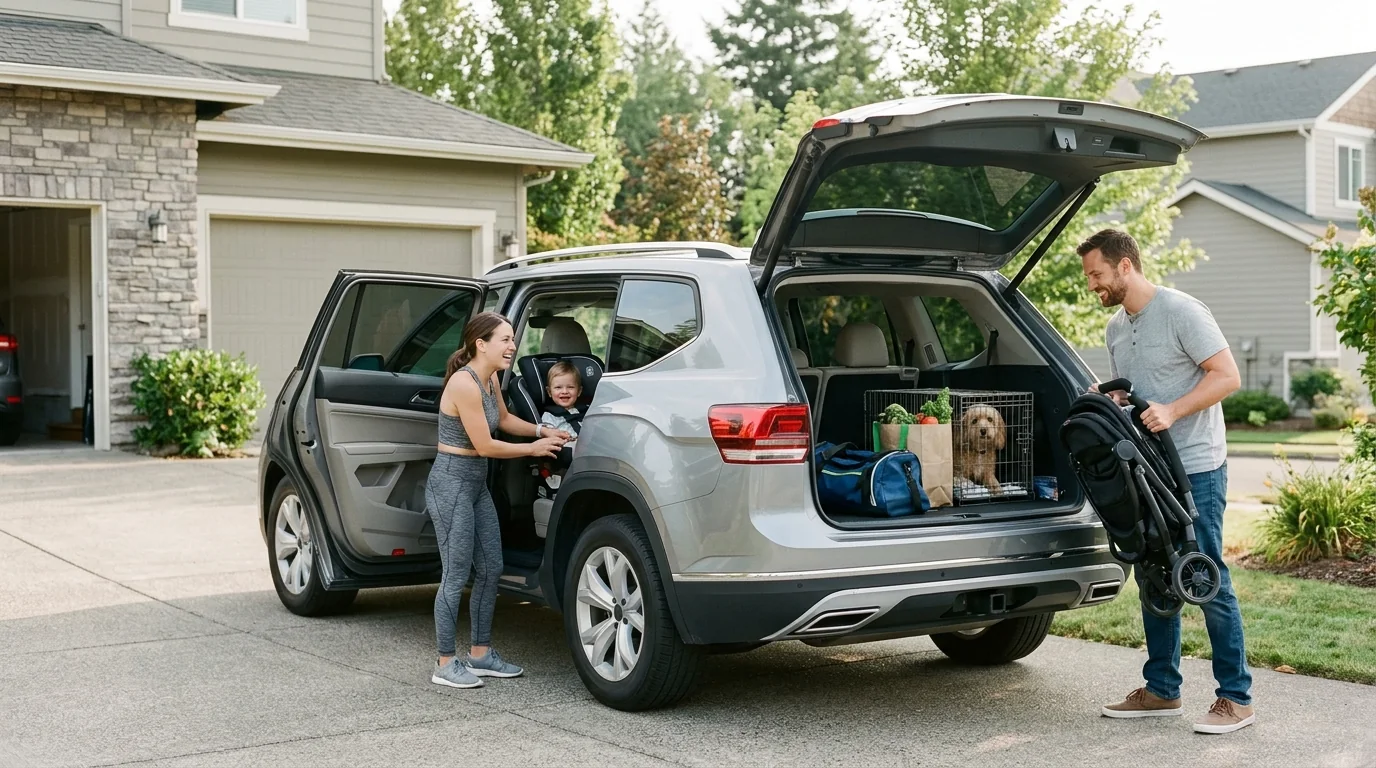
Choosing a Family Car for Everyday Comfort, Easy Child Space, and Smart Convenience
A great family car reduces daily friction: loading kids, fitting car seats, staying comfortable on long drives, and keeping everyone safe. The most practical picks combine flexible seating, thoughtful storage, strong crash protection, and tech that supports calm routines. Use the sections below to match vehicle features to real life—school runs, weekend trips, and the messy middle of family logistics.
Start With the Family Reality Check
- Count riders on the busiest day: include carpools, grandparents, and a friend seat so you don’t shop for an “average” day that rarely happens.
- Map the gear: stroller type, sports bags, groceries, foldable wagon, and even a pet crate can change which cargo shapes work best.
- Decide on seating layout: a two-row can be simpler; a three-row adds flexibility; minivan-style access can make daily buckling and third-row use less stressful.
- Set non-negotiables: prioritize top safety ratings, rear-seat reminders, and enough LATCH positions for the car seats you expect to use.
- Consider where the car lives: tight garages and city parking favor smaller footprints and better cameras; rural roads may need more tire sidewall and ground clearance.
Comfort That Holds Up on Long Days
- Front-seat comfort: look for supportive cushions, a wide adjustment range, lumbar support, and a quieter cabin (wind noise matters more than expected).
- Second-row comfort: confirm legroom, a usable recline, and cupholders kids can reach without twisting.
- Third-row comfort (if needed): check adult-usable headroom/legroom, easy entry/exit, and whether there’s still meaningful storage behind row three.
- Climate control that works: rear vents at face level, separate rear temperature controls, and quicker cool-down can prevent meltdown territory in summer.
- Ride quality and noise: smoother suspension tuning and lower road noise often lead to calmer naps and fewer headaches.
Child Space and Car-Seat Friendliness
Seat count is not the same thing as car-seat usability. A wide, square second row with simple anchors can outperform a cramped third row—especially when rear-facing seats are in the mix.
- Car-seat fit beats seat count: a wide second row can matter more than adding a third row you rarely use.
- Look for 2–3 accessible LATCH positions: confirm top-tether anchors are easy to reach without digging around seatbacks.
- Check door opening angle and sill height: wide doors and a reasonable lift-in height reduce back strain when lifting infants and toddlers.
- Rear seatbelt design matters: avoid buckles that sink into cushions and belts that don’t lock smoothly during installation.
- If using three across: prioritize flatter bench cushions, fewer protruding bolsters, and a wider cabin overall.
Quick car-seat usability checklist (bring a car seat to the test drive)
| Test | What to look for | Why it matters |
|---|---|---|
| Install in 2nd row | LATCH anchors exposed and reachable | Faster, more secure installs |
| Top tether access | Anchor clearly labeled and easy to clip | Correct forward-facing safety setup |
| Front passenger clearance | Rear-facing seat doesn’t force front seat too far forward | Adult comfort + safe seating distance |
| Buckle access | Buckle stays upright, not buried in cushion | Kids can buckle independently sooner |
| Door opening + height | Wide opening, reasonable lift-in height | Less back strain and fewer bumps |
Safety Priorities Beyond the Basics
When comparing models, check Insurance Institute for Highway Safety (IIHS) ratings and NHTSA Vehicle Safety Ratings. For everyday child passenger guidance, the CDC Child Passenger Safety resources are a solid reference.
Convenience Features That Actually Save Time
Choosing the Right Body Style for Your Routine
Body style fit guide
| Best for | Strong points | Watch-outs |
|---|---|---|
| Two-row SUV | Cargo + visibility + flexible rear seats | Car-seat three-across can be tough |
| Three-row SUV | Extra seats for carpools and relatives | Third-row access and cargo can disappoint |
| Minivan | Sliding doors, flat floor, real third row | Not everyone likes the look; check ground clearance |
| Wagon/Hatch | Easy loading, efficient size | Lower ride height; fewer three-row options |
| Sedan | Comfortable ride, often efficient | Trunk loading and rear-facing clearance |
A Simple Test-Drive Script for Busy Parents
Family-Friendly Picks From Our Store
- The Best Family Cars for Comfort and Convenience | Ultimate eBook Guide to Choosing Family Friendly Cars with Child Space, Safety, and Smart Features ($19.99) — a structured way to compare comfort, child space, safety, and convenience without getting lost in trim-level confusion.
- Universal Car Steering Wheel Phone Mount for Safe Navigation ($1.80) — keeps navigation at eye level so quick errands and unfamiliar drop-off routes feel less chaotic.
FAQ
Is a three-row SUV always better than a two-row for families?
No—if the third row is rarely used, a two-row SUV can be more comfortable, easier to park, and more cargo-friendly. When you truly need extra seating often, compare third-row access and space carefully, and remember many minivans deliver easier everyday usability for real three-row needs.
What should be checked for car-seat compatibility before buying?
Check that LATCH and top-tether anchors are easy to reach, rear-facing seats don’t crush front-seat space, and buckles aren’t buried in the cushion. Bring your car seat to test installation and confirm you can fit the number of seats you need without compromising safe installs.
Which convenience features make the biggest difference day to day?
A power liftgate, wide-opening doors (or sliding doors), rear vents with separate rear climate controls, and plenty of charging ports tend to deliver the most daily payoff. A 360° camera or reliable parking sensors also helps in tight school drop-offs and busy parking lots.
Recommended for you



Was this article helpful?
Yes
No









Leave a comment