-
Shop
- Advanced Technologies
- AI Skills for Creators & Freelancers
- AI Client Management
- AI Ethics
- AI Mindset
- AI Tools & Prompts
- AI Writing & Content Creation
- Audio, Voice & Music
- Design & Visual Creation
- Email, Messaging & Communication
- Freelancing & Business
- Marketing, Ads & Conversion
- Productivity, Workflow & Automation
- SEO & Search Optimization
- Social Media Content & Growth
- Strategy, Planning & Analytics
- Video Creation & Editing
- AI Skills Mastery 2026 Collection
- Bathroom
- Best-Sellers
- Car Accessories
- Confidence
- Dating & Social Skills
- Digital Resources
- Easter Products
- Education & Learning
- Family & Parenting
- Fashion
- Fashion Accessories
- Furniture
- Gadgets
- Health & Beauty
- Health & Wellness
- Home & Garden
- Home Electronics
- Home Supplies
- Jewelry
- Kids & Babies
- Kitchen
- Lighting
- Patio, Lawn & Garden
- Personal Growth
- Pet Care
- Pet Supplies
- Pets
- Shoes
- Smart Home Living Guides
- Sport & Outdoors
- Stress Relief & Relaxation
- Super Deals
- TikTok Growth & Monetization Mastery
- Travel
- Travel & Adventure
- Wealth
- Wellness
Fair Family Chore System That Stops the Nagging
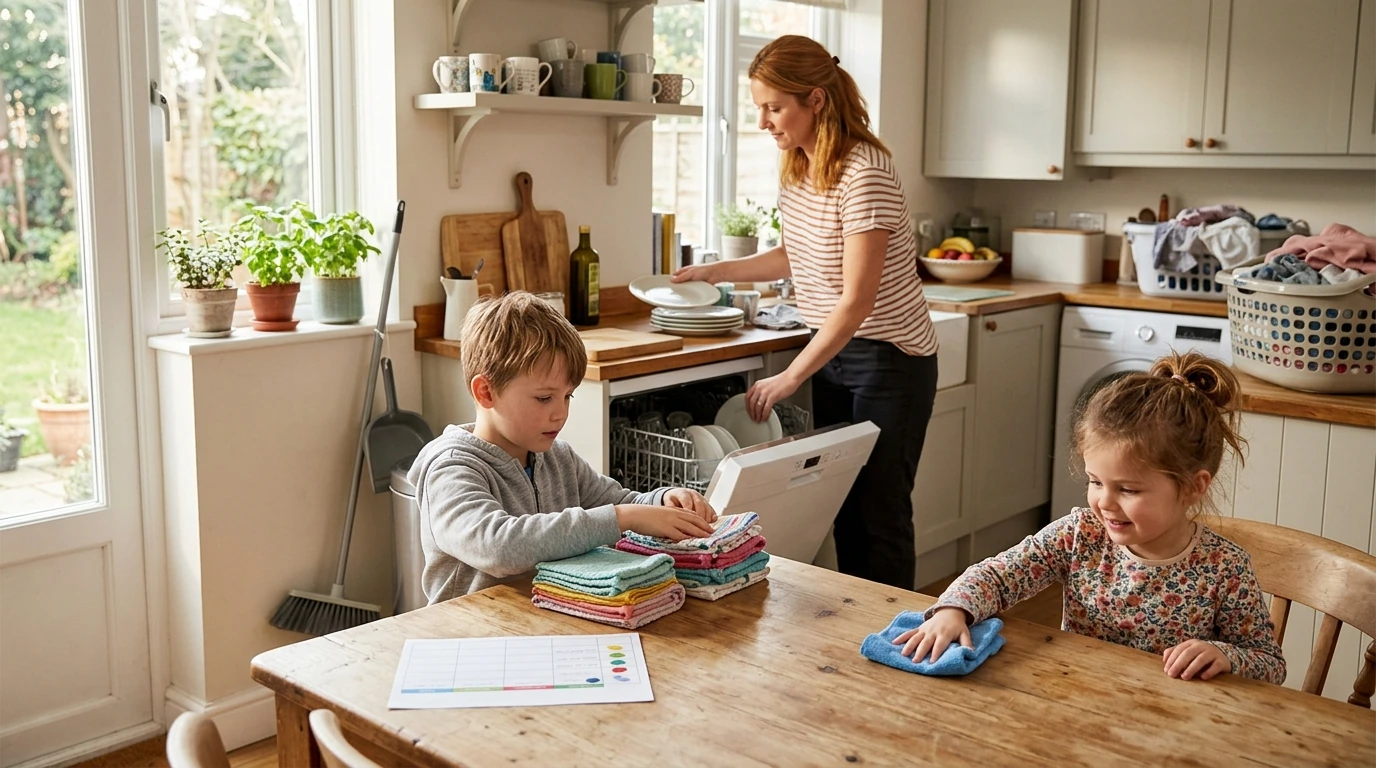
Why a “fair” cleaning system matters (and why most don’t stick)
When cleaning feels uneven, it turns into nagging, bargaining, and burnout. A fair system isn’t about assigning more—it’s about matching tasks to skills and time, making expectations visible, and building simple routines everyone can follow. The goal is a home that stays reasonably tidy without one person acting as the full-time manager.
Two things help most: clear standards (“what counts as done?”) and a repeatable rhythm (small resets that happen automatically). Add a simple way to balance workload, and the whole plan becomes easier to follow—especially during busy weeks.
Start with a shared definition of “clean enough”
Fairness starts with clarity. If one person’s “clean” is another person’s “good enough,” every task becomes a debate.
- Pick 3–5 non-negotiables that keep the home functioning (for example: dishes done nightly, counters wiped, trash out when full).
- Define what “finished” means for common tasks. “Bathroom cleaned” might include toilet, sink, mirror, and a quick floor.
- Use time windows instead of exact times when possible (after dinner, before bedtime). This lowers friction and still gets results.
- Write standards down so the system doesn’t rely on memory or repeated corrections.
If you want guidance on safe cleaning basics—especially around kitchens and bathrooms—use an authoritative reference like the CDC’s cleaning guidance to help set sensible expectations.
Use a fair workload method: time, difficulty, and frequency
Counting chores rarely feels fair because chores aren’t equal. A better method balances the weekly load using three factors: how often it happens, how long it takes, and how draining it feels.
- List recurring tasks by frequency (daily, weekly, monthly) so invisible work becomes visible.
- Estimate time ranges (5–10 min, 15–20 min, 30–45 min) to prevent lopsided assignments.
- Rate effort (light, moderate, heavy) to account for mess level and energy—not just minutes.
- Balance weekly totals using time + effort, not the number of tasks.
- Add a small “flex bucket” for surprises (spills, guests, sick days) so the plan bends without breaking.
| Task | Frequency | Typical time | Effort | Notes for “done” |
|---|---|---|---|---|
| Dishes + sink reset | Daily | 10–20 min | Moderate | Load/unload, wipe sink, clear counters |
| Trash + recycling | 2–3×/week | 5–10 min | Light | Replace liners, break down boxes |
| Bathroom wipe-down | Weekly | 20–30 min | Moderate | Toilet, sink, mirror, quick floor |
| Vacuum high-traffic areas | Weekly | 15–25 min | Moderate | Living room, entry, hallways |
| Laundry cycle (wash/dry/fold) | 2–4×/week | 30–60 min | Heavy | Includes putting away |
Assign roles by strengths—then rotate the “unpopular” chores
Consistency is easier when tasks match ability and comfort. The system should stretch skills gradually, not set people up to fail.
- Match tasks to ability: younger kids can sort laundry, wipe baseboards, or set up a vacuum run; teens can handle bathrooms or kitchen resets.
- Split into two categories: “ownership” tasks (one person is responsible that week) and “team” tasks (done together in a short sprint).
- Rotate the most disliked jobs on a predictable schedule (weekly or biweekly) so no one gets stuck forever.
- Use pairing for tough tasks: one person does the main job, another handles quick finishing touches.
- Keep micro-tasks handy (2–5 minutes) for chaotic days so participation stays consistent.
Create a routine that reduces reminders: cadence, cues, and checklists
The easiest chores are the ones that happen “by default.” Routines make that possible—especially for kids. Research on routines consistently shows they help families run more smoothly and reduce conflict; see the APA’s overview of why routines matter.
- Choose a cadence that fits real life: a 10–15 minute nightly reset + one weekly deeper-clean block often works better than marathon days.
- Use consistent cues (after dinner, before screen time, right after school) so chores become automatic.
- Keep checklists visible (printed or digital) to reduce repeat instructions and “I forgot” conflicts.
- Batch supplies where the work happens (bathroom wipes in the bathroom; trash bags by the bin).
- Hold a 5-minute weekly reset meeting to swap tasks, adjust workload, and acknowledge what went well.
Motivation that doesn’t backfire: autonomy, rewards, and accountability
Motivation works best when it feels fair and predictable—not negotiated daily.
A printable system that keeps everything in one place
If you want an organized, ready-to-use setup, use The Smart, Fair Way to Assign Family Cleaning Tasks (printable digital guide) to keep “definition of done,” rotations, and checklists visible for everyone.
For bathroom routines, keeping hygiene tools simple and consistent can help reduce resistance—especially for kids who rush. Consider pairing your cleanup plan with essentials like the Triple-Sided Ultra-Fine Soft Bristle Toothbrush for Enhanced Oral Health so morning/evening routines stay quick and standardized.
And if your checklists live on your phone during after-school shuttles and errands, a hands-free setup like the Universal Car Steering Wheel Phone Mount for Safe Navigation can make it easier to review the plan safely when parked and coordinate who’s doing what before you walk in the door.
Common problems and fast fixes
FAQ
What’s the fairest way to divide chores in a family?
Use a workload approach based on time, effort, and frequency—not just the number of tasks. Make recurring chores visible, estimate realistic time ranges, rotate unpopular jobs, and balance each person’s weekly total.
How can chores work for kids without constant nagging?
Use consistent cues (like after dinner or before screens), simple checklists, and supplies placed where the task happens. Keep chores small and specific with a clear “done” standard, then verify quickly.
Should kids get paid for cleaning tasks?
Many families separate baseline chores (expected contribution) from optional paid extras. If you use rewards, keep them predictable and connected to follow-through instead of negotiating each task.
Recommended for you



Was this article helpful?
Yes
No









Leave a comment