-
Shop
- Advanced Technologies
- AI Skills for Creators & Freelancers
- AI Client Management
- AI Ethics
- AI Mindset
- AI Tools & Prompts
- AI Writing & Content Creation
- Audio, Voice & Music
- Design & Visual Creation
- Email, Messaging & Communication
- Freelancing & Business
- Marketing, Ads & Conversion
- Productivity, Workflow & Automation
- SEO & Search Optimization
- Social Media Content & Growth
- Strategy, Planning & Analytics
- Video Creation & Editing
- AI Skills Mastery 2026 Collection
- Bathroom
- Best-Sellers
- Car Accessories
- Confidence
- Dating & Social Skills
- Digital Resources
- Easter Products
- Education & Learning
- Family & Parenting
- Fashion
- Fashion Accessories
- Furniture
- Gadgets
- Health & Beauty
- Health & Wellness
- Home & Garden
- Home Electronics
- Home Supplies
- Jewelry
- Kids & Babies
- Kitchen
- Lighting
- Patio, Lawn & Garden
- Personal Growth
- Pet Care
- Pet Supplies
- Pets
- Shoes
- Smart Home Living Guides
- Sport & Outdoors
- Stress Relief & Relaxation
- Super Deals
- TikTok Growth & Monetization Mastery
- Travel
- Travel & Adventure
- Wealth
- Wellness
Create a Calm Retreat Zone: Lighting, Clutter, Comfort
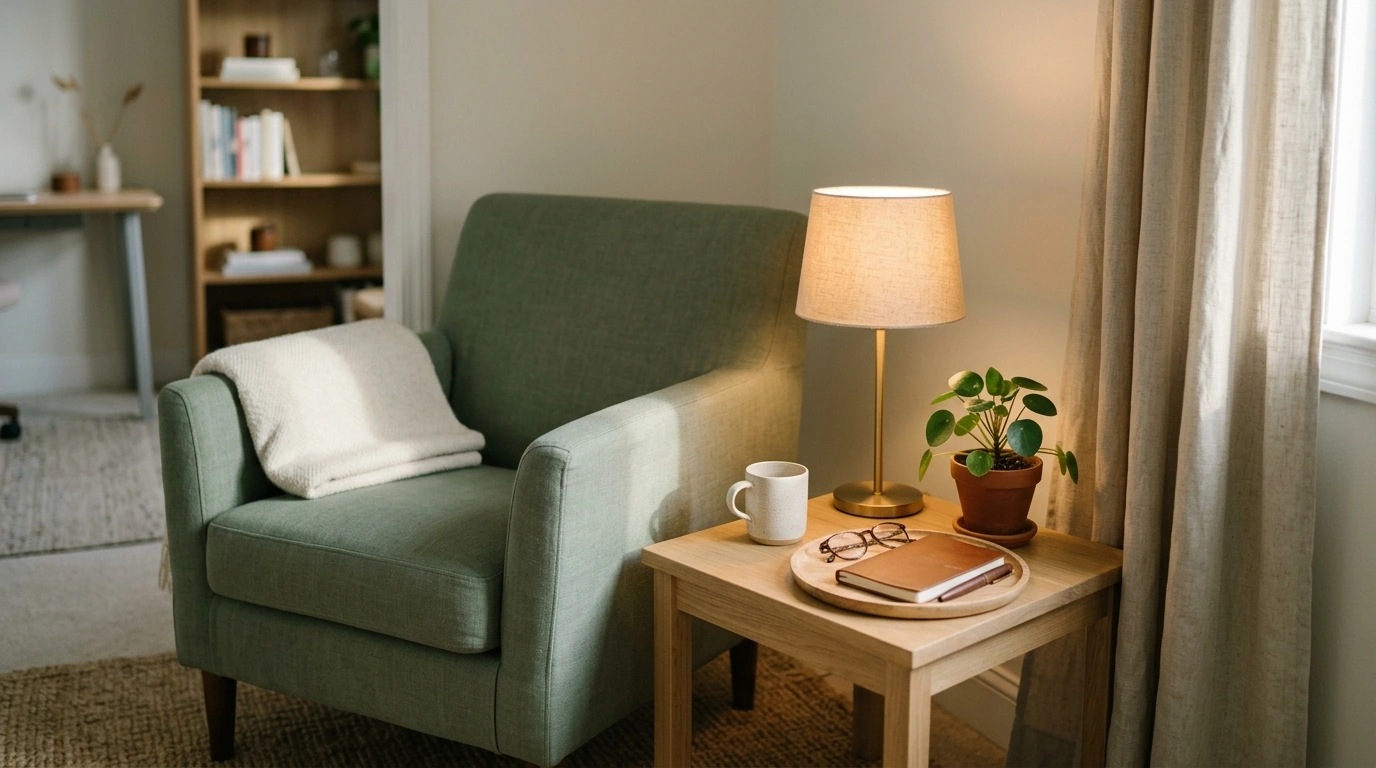
Turning Any Space into a Relaxing Retreat: A Practical Plan for Calm at Home, Work, or Studio
A calming space is less about perfect aesthetics and more about reducing friction—visual noise, harsh light, uncomfortable seating, and constant cues to stay “on.” The goal is a small, repeatable setup that feels steady: easy to enter, easy to use, and easy to reset. The steps below are designed to work whether you’re shaping a bedroom corner, an office desk, or a studio nook.
Start with a quick reset: clear, clean, and simplify
Pick one small zone to transform first—your desk area, a reading chair corner, an entry table, or the bedside. A small win builds momentum and keeps decisions manageable.
- Remove anything that doesn’t belong to that zone’s purpose; put it in a temporary “elsewhere” bin to sort later.
- Wipe surfaces and handle high-impact clutter first: cords, paper stacks, open containers, and “visual duplicates” (multiple similar items in view).
- Aim for “calm surfaces” rather than empty rooms. Keep a few intentional items that support the mood (a lamp, a plant, a tray).
Define the purpose of the retreat zone
A retreat works best when it has one primary job. Decide what you want your nervous system to learn from this spot.
- Pick a primary use: decompressing, focused work, meditation, creative flow, gentle movement, or journaling.
- Set one measurable rule for the zone (examples: “no charging cables visible,” “only 3 items on the desktop,” “no work tools after 7 pm”).
- Create a simple boundary so the brain recognizes the shift: a rug, screen, plant stand, curtain, shelf edge, or a lighting change.
- Choose one anchor ritual tied to the space: tea, three minutes of breathing, stretching, or closing the laptop and switching on a warm lamp.
If you want a structured, step-by-step walkthrough that blends layout, texture, lighting, and habits into one cohesive setup, the Turning Any Space into a Relaxing Retreat (digital guide) is an easy reference to keep decisions simple while you build your zone.
Light and color: make the room feel softer and steadier
Lighting changes the emotional “temperature” of a space faster than almost anything else. Start by layering light so you can shift the room from alert to relaxed without rearranging furniture.
- Prioritize layered lighting: ambient (overall), task (reading/work), and accent (small warm points of light).
- Reduce glare: reposition screens, choose matte finishes, diffuse with shades, and avoid bare bulbs in your eye line.
- Use warmer evening light to encourage winding down; keep brighter task light for work blocks.
- Use color intentionally: neutrals for quiet, muted greens/blues for restoration, and a single accent color to prevent visual drift.
| Space | Best first lighting change | Helpful color approach | Simple add-on |
|---|---|---|---|
| Home desk | Add a warm desk lamp + reduce overhead glare | Soft neutral base with one calm accent | Cable tray or cord clips |
| Bedroom corner | Use a shaded lamp instead of ceiling light at night | Warm neutrals, muted earthy tones | Small side table + coaster |
| Studio/creative nook | Add adjustable task light for detailed work | Neutral background to let projects stand out | Pegboard or closed bin for tools |
| Office cubicle | Clip-on lamp or monitor light bar (if allowed) | Keep palette consistent (2–3 tones) | Desk mat to define boundary |
Sound and scent: remove harshness, add gentle cues
Sound is often the hidden reason a space never feels restful. Work from “reduce” to “replace”: lower the spikes, then add a steady layer.
For mindfulness and stress support beyond your environment, reliable guidance is available from the National Institute of Mental Health and the American Psychological Association.
Comfort and ergonomics: calm is physical
Visual calm: fewer decisions, better flow
Micro-zones for tiny spaces
A simple routine to keep the retreat feeling fresh
For evening wind-down, sleep-supportive habits pair well with a softer environment; the CDC’s sleep guidance is a helpful place to sanity-check your routine.
A guided plan for building a serenity-focused space
If you prefer a checklist-driven approach (especially when decision fatigue is high), use a structure that moves in a steady sequence: clear → define purpose → adjust light → add sound/scent cues → tune comfort → contain clutter → maintain. The Turning Any Space into a Relaxing Retreat (digital guide) is built for short sessions and repeatable upgrades—useful when you’re working within a shared home, a small office, or a multi-use studio.
For small daily rituals that support a calmer start and finish to the day, consider upgrading one tiny routine item as well, such as the Triple-Sided Ultra-Fine Soft Bristle Toothbrush—a simple way to make morning and nighttime transitions feel a bit more intentional.
FAQ
What are the fastest changes that make a room feel more relaxing?
Switch to warmer, softer lighting (a shaded lamp helps immediately), clear one key surface, and add one soft textile like a throw or curtain. Keep decor minimal and choose one calming focal point instead of many small items.
How can a relaxing space still work for productivity in a home office?
Keep “calm” separate from “sleepy” by using bright task lighting during work blocks and ergonomic support to reduce fatigue. Maintain a clear desktop and use a shutdown ritual (tidy, close tabs, switch lighting) to transition into rest.
What if the space is shared with family or roommates?
Create a micro-zone boundary (rug, screen, shelf edge) and rely on portable pieces like a small basket kit or dedicated lamp. Time-based zoning also works well: the same spot can shift roles with consistent cues like lighting and sound.
Recommended for you


Was this article helpful?
Yes
No









Leave a comment