-
Shop
- Advanced Technologies
- AI Skills for Creators & Freelancers
- AI Client Management
- AI Ethics
- AI Mindset
- AI Tools & Prompts
- AI Writing & Content Creation
- Audio, Voice & Music
- Design & Visual Creation
- Email, Messaging & Communication
- Freelancing & Business
- Marketing, Ads & Conversion
- Productivity, Workflow & Automation
- SEO & Search Optimization
- Social Media Content & Growth
- Strategy, Planning & Analytics
- Video Creation & Editing
- AI Skills Mastery 2026 Collection
- Bathroom
- Best-Sellers
- Car Accessories
- Confidence
- Dating & Social Skills
- Digital Resources
- Easter Products
- Education & Learning
- Family & Parenting
- Fashion
- Fashion Accessories
- Furniture
- Gadgets
- Health & Beauty
- Health & Wellness
- Home & Garden
- Home Electronics
- Home Supplies
- Jewelry
- Kids & Babies
- Kitchen
- Lighting
- Patio, Lawn & Garden
- Personal Growth
- Pet Care
- Pet Supplies
- Pets
- Shoes
- Smart Home Living Guides
- Sport & Outdoors
- Stress Relief & Relaxation
- Super Deals
- TikTok Growth & Monetization Mastery
- Travel
- Travel & Adventure
- Wealth
- Wellness
Compact Sisal Cat Scratcher & Climbing Frame (Fruit)
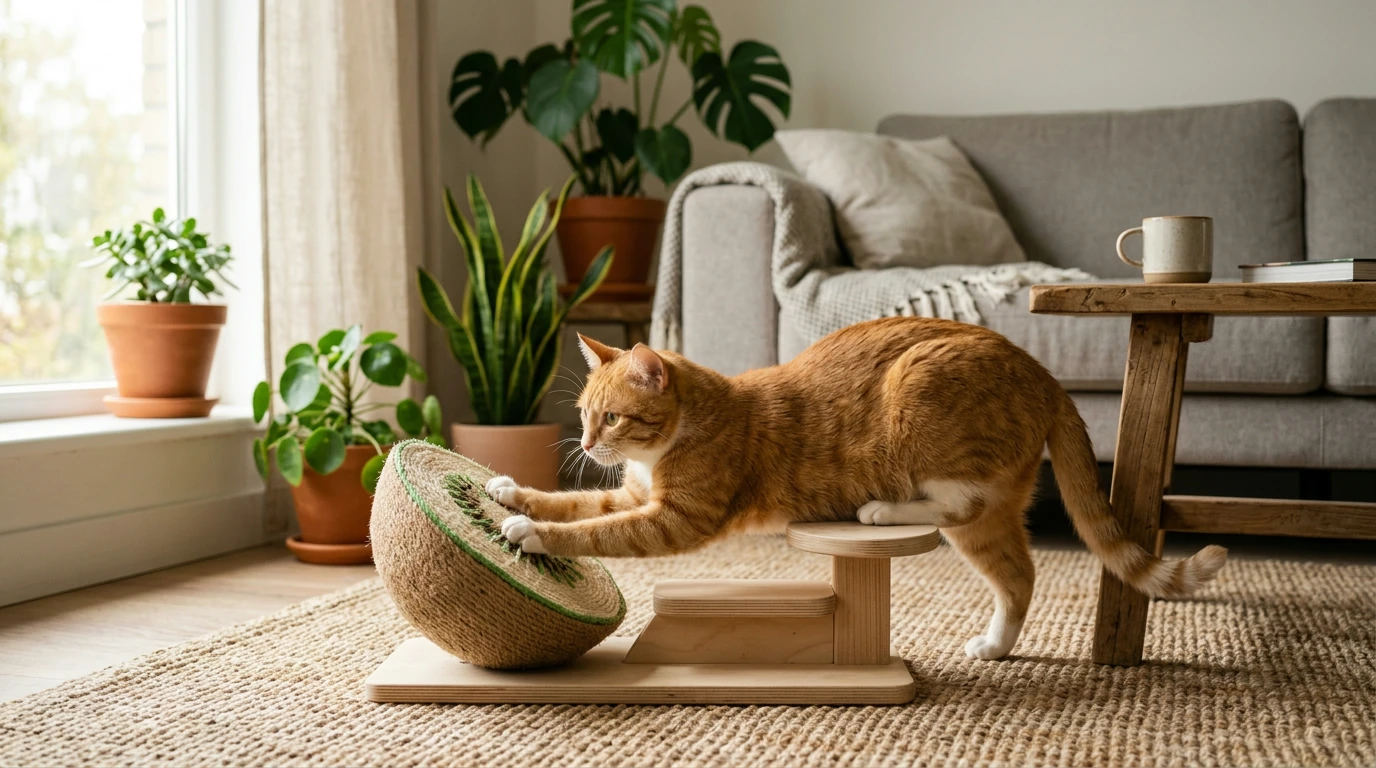
Sisal Fruit Cat Scratching Board with Climbing Frame: A Play-and-Scratch Spot for Everyday Cats
A scratching surface that also encourages climbing can help cats burn energy, stretch fully, and redirect clawing away from furniture. This fruit-shaped sisal scratching board with a climbing frame is designed as a compact activity zone that supports natural scratching behavior and light play in small spaces.
What This Scratching Board and Climbing Frame Is Designed to Do
Cats scratch for maintenance, communication, and comfort. A dedicated scratch-and-climb station gives them a clear “yes” spot that’s more rewarding than the side of a couch.
- Provide an appealing scratch target that supports healthy claw maintenance and routine stretching
- Offer a small climbing element for short bursts of activity and confidence-building
- Create a dedicated “cat zone” that can reduce boredom-related scratching around the home
- Fit easily in living rooms, bedrooms, or near windows without needing a full cat tree footprint
For cats that like a scratch session followed by a quick hop-up to look around, a combined setup can feel more complete than a scratch pad alone.
Why Cats Gravitate Toward Sisal and Textured Scratch Surfaces
Many cats prefer a scratch surface with grip and resistance. Sisal-style textures tend to provide that satisfying “catch” that encourages longer scratching sessions and more consistent use over time.
- Sisal-like textures provide resistance that many cats prefer compared with slick fabrics or thin carpet
- Scratching helps remove loose claw sheaths and supports normal claw function
- A stable surface encourages full-body stretches (shoulders, back, hips) during scratching sessions
- Placing a scratcher near existing “problem areas” can help reroute habits without confrontation
For deeper behavior guidance, the ASPCA’s scratching overview is a solid reference: https://www.aspca.org/pet-care/cat-care/common-cat-behavior-issues/scratching. International Cat Care also explains why providing appropriate scratch options is so important: https://icatcare.org/advice/scratching-behaviour/.
Climbing Frame Benefits in a Compact Format
Not every home has room for a tall cat tower, and not every cat needs one. A smaller climbing element can still add variety to a cat’s day, especially for indoor cats who benefit from more movement and more choices.
- Adds vertical interest without committing to a tall cat tower
- Encourages short climbs, stepping practice, and perch-style pauses
- Helps indoor cats increase daily movement, which can support weight management and mood
- Can be paired with a wand toy or treats to make the area instantly rewarding
For kittens, the “climb a little, scratch a little” routine often turns into a predictable self-soothing habit—especially when the station is placed in a calm, familiar corner.
Where to Place It for the Fastest Adoption
Placement often matters more than the scratcher itself. Cats tend to scratch where they already spend time, where they’re excited (like windows), or where they’re leaving a message (like near entrances or favorite furniture).
- Near a window or common lounging spot to connect scratching with an already-loved location
- Within a few feet of furniture currently being scratched to offer an easier “yes” option
- Away from loud appliances or heavy foot traffic if the cat startles easily
- On a flat, non-slippery floor surface; add a thin mat underneath if the floor is slick
| Location | Best for | Tip |
|---|---|---|
| Next to a sofa/armchair | Redirecting furniture scratching | Rub a little catnip on the scratch area for the first week |
| By a window | Boredom reduction and routine use | Pair with a small bed nearby to create a mini cat corner |
| Near the cat’s feeding area (not right beside bowls) | Building a daily habit | Keep a small treat jar nearby for quick rewards |
| In a quiet bedroom corner | Shy cats and nighttime energy | Use a calming pheromone spray nearby if needed |
How to Encourage Use Without Stress
The goal is to make the scratcher feel like the cat’s idea. Most cats will explore quickly if the station is positioned well and “pays off” with attention, play, or a tiny reward.
If scratching conflicts persist, behavior resources from veterinary programs can help refine your approach: https://www.vet.cornell.edu/departments-centers-and-institutes/cornell-feline-health-center/health-information.
Daily Care, Cleaning, and Keeping It Appealing
Who This Setup Suits Best
Product Snapshot
If you want a single piece that covers both daily scratching and a little climbing, the Sisal Fruit Cat Scratching Board with Climbing Frame is designed to work as a standalone enrichment spot or as an add-on near a favorite lounging area.
| Item | Details |
|---|---|
| Product | Sisal Fruit Cat Scratching Board with Climbing Frame |
| Price | $45.82 USD |
| Availability | In stock |
| Product page | View product |
More In-Stock Picks
- Triple-Sided Ultra-Fine Soft Bristle Toothbrush for Enhanced Oral Health
- Universal Car Steering Wheel Phone Mount for Safe Navigation
FAQ
How long does it take a cat to start using a new scratching board?
Many cats investigate right away, but consistent use often takes a few days. Place it near the current scratching spot, add a small amount of catnip, and reward any interaction to make the new option “stick.”
Is a scratching board with a climbing frame suitable for kittens?
Yes, as long as it’s stable and set on a non-slip surface. Supervise early sessions and keep the surrounding area clear so climbing practice stays safe and confidence-building.
How can furniture scratching be reduced once the scratcher is added?
Move the scratcher close to the targeted furniture, temporarily cover or block the scratched area, and consistently reward scratching on the board. Steady repetition works better than scolding or startle-based corrections.
Recommended for you

Was this article helpful?
Yes
No









Leave a comment