-
Shop
- Advanced Technologies
- AI Skills for Creators & Freelancers
- AI Client Management
- AI Ethics
- AI Mindset
- AI Tools & Prompts
- AI Writing & Content Creation
- Audio, Voice & Music
- Design & Visual Creation
- Email, Messaging & Communication
- Freelancing & Business
- Marketing, Ads & Conversion
- Productivity, Workflow & Automation
- SEO & Search Optimization
- Social Media Content & Growth
- Strategy, Planning & Analytics
- Video Creation & Editing
- AI Skills Mastery 2026 Collection
- Bathroom
- Best-Sellers
- Car Accessories
- Confidence
- Dating & Social Skills
- Digital Resources
- Easter Products
- Education & Learning
- Family & Parenting
- Fashion
- Fashion Accessories
- Furniture
- Gadgets
- Health & Beauty
- Health & Wellness
- Home & Garden
- Home Electronics
- Home Supplies
- Jewelry
- Kids & Babies
- Kitchen
- Lighting
- Patio, Lawn & Garden
- Personal Growth
- Pet Care
- Pet Supplies
- Pets
- Shoes
- Smart Home Living Guides
- Sport & Outdoors
- Stress Relief & Relaxation
- Super Deals
- TikTok Growth & Monetization Mastery
- Travel
- Travel & Adventure
- Wealth
- Wellness
Clean High Ceilings & Windows: 30ft Telescoping Kit
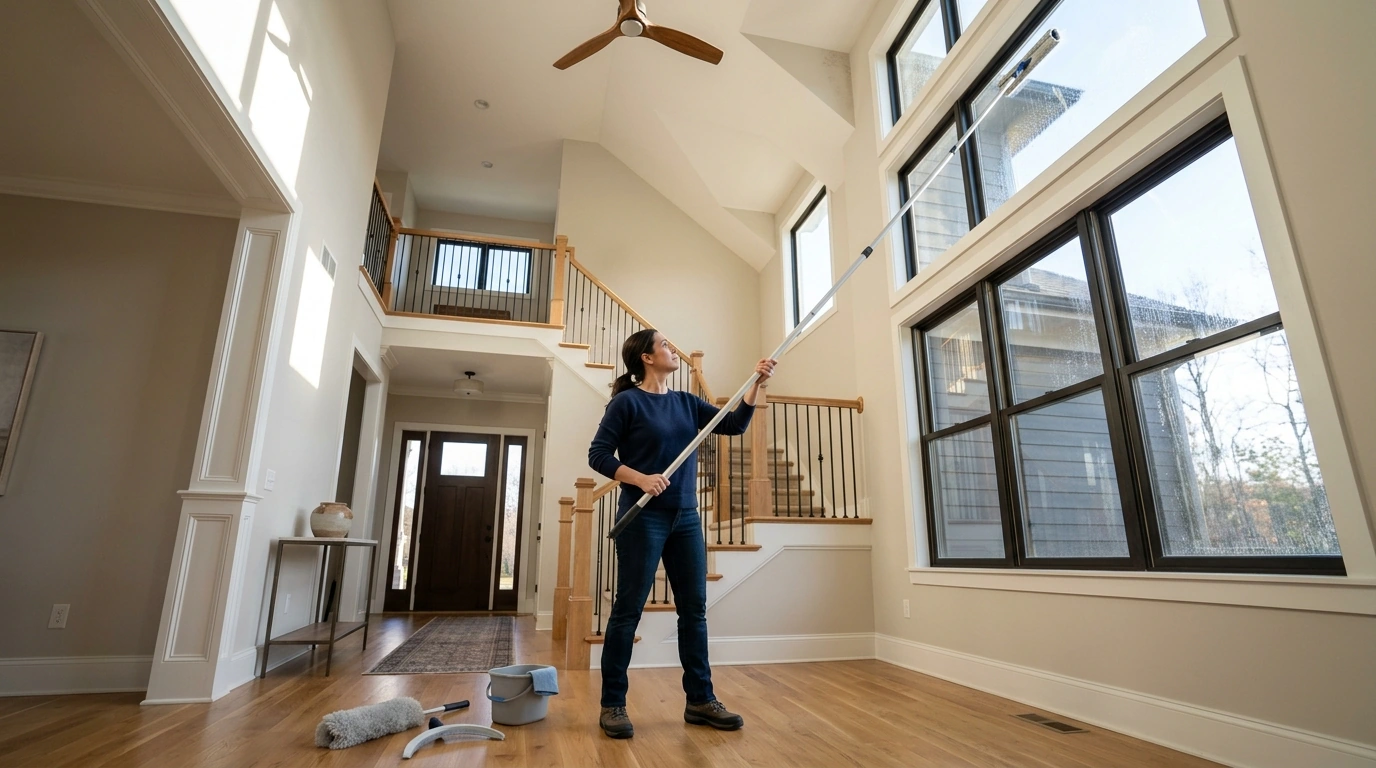
Clean High, Wide, and Hard-to-Reach Spaces Without Constant Ladder Moves
High ceilings, ceiling fans, skylights, and upper-story windows attract dust and grime that are tough to reach safely. A long-reach telescoping kit combines serious extension length with interchangeable heads so everyday jobs—cobweb removal, fan-blade dusting, and glass squeegeeing—can be handled from the floor with fewer ladder repositionings and faster cleanup. For more guidance, see 6 FT Telescopic Duster Handle Kit with 20 Heavy Duty Dusting Pads.
For tall foyers, vaulted living rooms, stairwells, and porch ceilings, a multi-attachment system also reduces the need to store separate tools for each task. One pole, one connection system, and the head you need for the job. For further reading, see 26ft Reach Water-Fed Pole Cleaning Kit – 5-20ft Telescoping Brush ….
What This Cleaning Kit Helps With
- Ceilings and corners: sweep away cobwebs and settled dust along edges, beams, and crown molding.
- Ceiling fans: remove dust buildup on blades without pushing debris onto furniture and floors.
- Windows and glass: reach tall panes and high transoms; pull water down with a squeegee for clearer results.
- Light fixtures and vents: extend reach to dust around high fixtures and air returns.
- Stairwells and vaulted rooms: maintain hard-to-access areas without overreaching.
What’s Included and How Each Piece Works
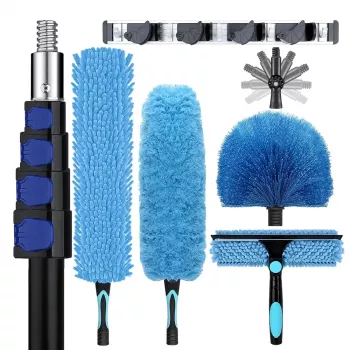
- Telescoping pole (up to 30 ft): built to extend for tall interiors and exterior glass when used from a stable surface.
- Ceiling duster head: designed for wide-area dusting and cobweb pickup along flat and angled surfaces.
- Fan blade cleaner: shaped to wrap around blades for more controlled dust removal than a flat duster.
- Window squeegee attachment: helps pull water and cleaner downward to reduce streaks on glass.
- Interchangeable system: swap heads based on the task to avoid carrying multiple separate tools.
Reach and Use Cases by Height
Not every space needs a full 30 feet of extension. For stability and control, extending only what’s necessary often delivers better results—especially when you’re working around trim, light fixtures, or delicate glass.
- Standard rooms: handle ceiling corners, fan blades, and top window frames from the floor.
- Two-story foyers: reach high ledges, chandeliers (dusting around, not disassembly), and upper trim with fewer ladder moves.
- Skylights and tall glass: clean high panes with less ladder repositioning; use a suitable glass cleaner and finish with the squeegee.
- Outdoor edges (from ground level): remove cobwebs along eaves and porch ceilings when conditions are calm and footing is stable.
Quick Job Guide for Common High-Reach Cleaning Tasks
| Task | Recommended Head | Best Technique | Helpful Tip |
|---|---|---|---|
| Ceiling corners & cobwebs | Ceiling duster | Light passes along edges; work top-to-bottom | Mist the duster lightly with water for stubborn webs |
| Ceiling fan blades | Fan blade cleaner | Slide onto blade; pull outward slowly | Turn fan off and let blades fully stop before cleaning |
| High windows | Window squeegee | Pull in straight vertical strokes; wipe blade between passes | Use a microfiber cloth to detail corners and edges |
| Tall trim & ledges | Ceiling duster | Gentle sweeping; avoid pushing debris onto walls | Place a drop cloth beneath the work area |
How to Use It Safely and Get Better Results
- Check clearance first: watch for overhead lights, hanging fixtures, and ceiling fans; ensure the pole can move freely.
- Stabilize the pole: keep hands spaced for control; avoid fully extending if a shorter length provides better stability.
- Work in sections: start at the highest points and move downward so dust doesn’t fall onto already-cleaned surfaces.
- Use the right cleaner: for glass, choose a non-abrasive cleaner; for dusty areas, dry dusting first typically prevents smears.
- Mind the environment: avoid outdoor use in strong wind; dust and squeegee control is easier in calm conditions.
- Maintain footing: wear flat, non-slip footwear and keep a stable stance; avoid overreaching or standing on unstable furniture.
For ladder-related safety guidance when a ladder is still required for certain hands-on tasks, review recommendations from NIOSH Ladder Safety. For general window-cleaning practices and streak reduction fundamentals, see resources from the International Window Cleaning Association.
Care, Storage, and Longevity
- After dusting: shake out dust outdoors or over a trash bag; wipe the pole sections to keep the telescoping action smooth.
- After window cleaning: rinse and dry the squeegee blade; store it straight to reduce warping.
- Periodic checks: confirm attachments are seated securely before each use; tighten connections as needed.
- Storage: retract the pole fully and store in a dry place to reduce wear and keep the extension mechanism clean.
Who This Kit Fits Best
- Homes with vaulted ceilings, tall entryways, or frequent cobweb buildup in corners and along beams.
- Households with multiple ceiling fans where blade dust accumulates quickly.
- Anyone maintaining high windows or transoms that are inconvenient to reach with standard tools.
- People looking to reduce ladder time for routine dusting and glass touch-ups (while still using ladders when needed for true hands-on tasks).
Featured In-Stock Picks
- 30ft Telescoping Ceiling Duster Kit with Fan Blade Cleaner & Window Squeegee — $118.47
- Triple-Sided Ultra-Fine Soft Bristle Toothbrush for Enhanced Oral Health — $1.52
- Universal Car Steering Wheel Phone Mount for Safe Navigation — $1.80
FAQ
Can ceiling fans be cleaned without making dust fall everywhere?
Yes. Use the fan blade cleaner to enclose the blade more than a flat duster, pull slowly, and place a drop cloth underneath to catch loose dust.
How can streaks be reduced when using the window squeegee on tall glass?
Use a suitable glass cleaner, pull in straight strokes, and wipe the squeegee edge with a cloth between passes. Finish corners and edges with a microfiber towel.
Is a 30-foot telescoping pole difficult to control at full extension?
It can feel less stable at maximum length. Extend only as much as needed, keep a wide stance, and use steady, gentle pressure rather than forcing the tool.
Recommended for you

Was this article helpful?
Yes
No









Leave a comment