-
Shop
- Advanced Technologies
- AI Skills for Creators & Freelancers
- AI Client Management
- AI Ethics
- AI Mindset
- AI Tools & Prompts
- AI Writing & Content Creation
- Audio, Voice & Music
- Design & Visual Creation
- Email, Messaging & Communication
- Freelancing & Business
- Marketing, Ads & Conversion
- Productivity, Workflow & Automation
- SEO & Search Optimization
- Social Media Content & Growth
- Strategy, Planning & Analytics
- Video Creation & Editing
- AI Skills Mastery 2026 Collection
- Bathroom
- Best-Sellers
- Car Accessories
- Confidence
- Dating & Social Skills
- Digital Resources
- Easter Products
- Education & Learning
- Family & Parenting
- Fashion
- Fashion Accessories
- Furniture
- Gadgets
- Health & Beauty
- Health & Wellness
- Home & Garden
- Home Electronics
- Home Supplies
- Jewelry
- Kids & Babies
- Kitchen
- Lighting
- Patio, Lawn & Garden
- Personal Growth
- Pet Care
- Pet Supplies
- Pets
- Shoes
- Smart Home Living Guides
- Sport & Outdoors
- Stress Relief & Relaxation
- Super Deals
- TikTok Growth & Monetization Mastery
- Travel
- Travel & Adventure
- Wealth
- Wellness
Check Engine Oil Like a Pro: Dipstick Reading & Top-Up
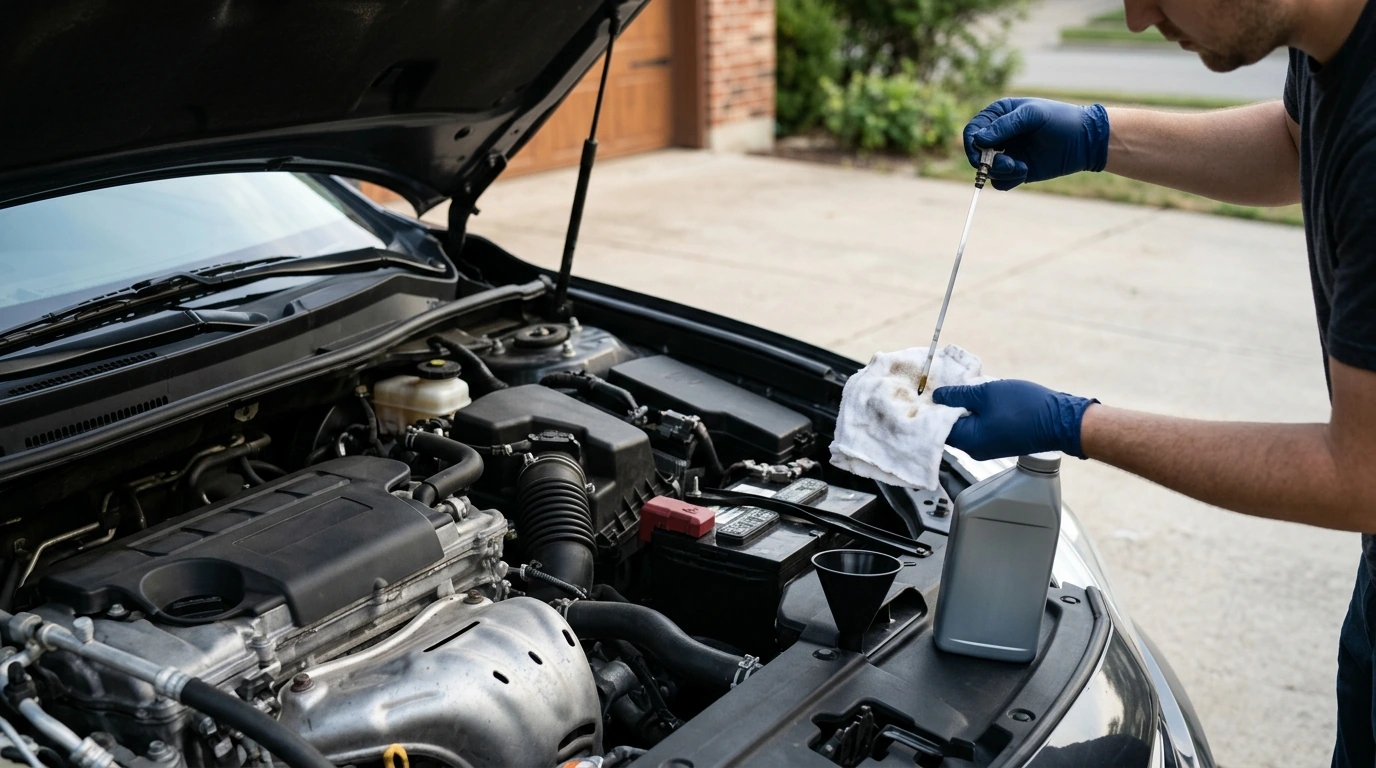
How to Check Your Car’s Oil Like a Pro: A Foolproof Guide to Oil Maintenance
Checking engine oil is one of the fastest ways to prevent expensive repairs and keep a car running smoothly. With a simple routine—right timing, a clean dipstick reading, and a quick check for color, smell, and level—it becomes easy to spot problems early and top up correctly.
Why oil checks matter (and what they can reveal)
Engine oil does much more than “sit in the pan.” It lubricates moving parts, helps carry heat away from friction points, and suspends tiny contaminants so they can be trapped by the oil filter. A quick dipstick check also helps you catch slow leaks or oil consumption before the level drops into the danger zone.
Oil can also tell a story about what’s happening inside the engine. A sudden gasoline smell, a milky look, or a gritty feel can be an early warning that something bigger is going on. Building the habit is the real win: a 60-second check can save hours of repair time and reduce the risk of overheating, timing chain wear, and premature engine wear.
For additional guidance, see AAA’s oil level check overview and the Car Care Council’s oil maintenance basics.
What you need before you pop the hood
- Clean paper towel or a lint-free rag (for wiping the dipstick)
- Disposable gloves (optional) to keep hands clean and improve grip
- A flashlight or phone light to read dipstick marks clearly
- The correct oil type/viscosity (only needed if topping up; confirm in the owner’s manual or oil cap)
- A small funnel to reduce spills when adding oil
If your glovebox kit needs an upgrade, keep it simple: a rag, a small funnel, and one spare quart that matches your required spec. Pairing that with a stable, hands-free way to use your phone light can make nighttime checks less frustrating—especially in tight engine bays.
When to check oil for the most accurate reading
- Check on level ground with the engine off.
- For many vehicles, waiting 5–10 minutes after shutdown gives oil time to drain back into the pan for a stable reading.
- If your owner’s manual specifies checking cold vs. warm, follow that guidance.
- Avoid checking immediately after a hard drive (high RPM, towing, long grades). Hot oil can cling to internal surfaces and skew the level.
- Set a routine: once a month, before a road trip, and any time a warning light appears.
If you don’t have your manual handy, the NHTSA owner’s manual resources can help you find manufacturer guidance.
Step-by-step: reading the dipstick like a pro
- Park on a flat surface, shut off the engine, set the parking brake, and open the hood securely.
- Locate the dipstick (often a bright handle labeled “Oil”). Pull it out and wipe it completely clean.
- Reinsert the dipstick fully until it’s seated, then pull it out again for the true reading.
- Read the oil level between the MIN/LOW and MAX/FULL marks (sometimes holes or cross-hatched areas).
- If the level is below MIN/LOW: add a small amount, wait a minute, and recheck. Avoid overfilling.
- If the level is above MAX/FULL: don’t drive aggressively. Overfill can cause foaming and pressure issues—confirm your reading and consider draining to the correct level.
- Check appearance and smell: normal oil ranges from amber to dark brown. Sudden changes are a clue worth following up.
Quick dipstick interpretation guide
| What you see | What it may mean | What to do next |
|---|---|---|
| Level below MIN/LOW | Low oil from leak or consumption | Add the correct oil in small increments; inspect for leaks; monitor level weekly |
| Level between MIN and MAX | Normal | No action needed; recheck monthly or per routine |
| Level above MAX/FULL | Overfilled or fuel dilution | Avoid hard driving; confirm reading; consider professional inspection/drain to spec |
| Milky or creamy color | Possible coolant mixing with oil | Do not ignore; arrange inspection promptly |
| Strong gasoline smell | Possible fuel dilution | Check for drivability issues; schedule diagnostic and oil change if needed |
| Gritty feel or metal sparkle | Possible abnormal wear/contamination | Limit driving and seek professional evaluation |
How to top up oil safely without overfilling
Want a step-by-step checklist you can keep open on your phone while working? How to Check Your Car’s Oil Like a Pro – A Foolproof Guide to Oil Maintenance is a handy reference for building a consistent routine.
Common mistakes that cause bad readings
A simple oil-maintenance rhythm that stays foolproof
A handy reference to keep in the glovebox
If you use your phone as a flashlight or quick reference while parked, Universal Car Steering Wheel Phone Mount for Safe Navigation can help keep the screen and light steady when you’re organizing your check (always use accessories only when safely parked).
FAQ
Should oil be checked when the engine is hot or cold?
Check on level ground with the engine off. Many vehicles read best after the engine has been off for about 5–10 minutes, but if your owner’s manual specifies checking cold vs. warm, follow that guidance.
What does milky oil on the dipstick mean?
Milky or creamy oil can indicate coolant contamination, though short-trip condensation can also cause light milky residue. If it persists or you notice coolant loss, overheating, or rough running, limit driving and schedule an inspection promptly.
How much oil should be added if it’s low?
Add small amounts—typically 0.25–0.5 quart at a time—then wait a minute and recheck the dipstick. The “MIN to MAX” range varies by vehicle, so topping up slowly helps avoid overfilling.
Recommended for you



Was this article helpful?
Yes
No









Leave a comment