-
Shop
- Advanced Technologies
- AI Skills for Creators & Freelancers
- AI Client Management
- AI Ethics
- AI Mindset
- AI Tools & Prompts
- AI Writing & Content Creation
- Audio, Voice & Music
- Design & Visual Creation
- Email, Messaging & Communication
- Freelancing & Business
- Marketing, Ads & Conversion
- Productivity, Workflow & Automation
- SEO & Search Optimization
- Social Media Content & Growth
- Strategy, Planning & Analytics
- Video Creation & Editing
- AI Skills Mastery 2026 Collection
- Bathroom
- Best-Sellers
- Car Accessories
- Confidence
- Dating & Social Skills
- Digital Resources
- Easter Products
- Education & Learning
- Family & Parenting
- Fashion
- Fashion Accessories
- Furniture
- Gadgets
- Health & Beauty
- Health & Wellness
- Home & Garden
- Home Electronics
- Home Supplies
- Jewelry
- Kids & Babies
- Kitchen
- Lighting
- Patio, Lawn & Garden
- Personal Growth
- Pet Care
- Pet Supplies
- Pets
- Shoes
- Smart Home Living Guides
- Sport & Outdoors
- Stress Relief & Relaxation
- Super Deals
- TikTok Growth & Monetization Mastery
- Travel
- Travel & Adventure
- Wealth
- Wellness
Catalytic Converter Theft: Why It Happens & How to Stop It
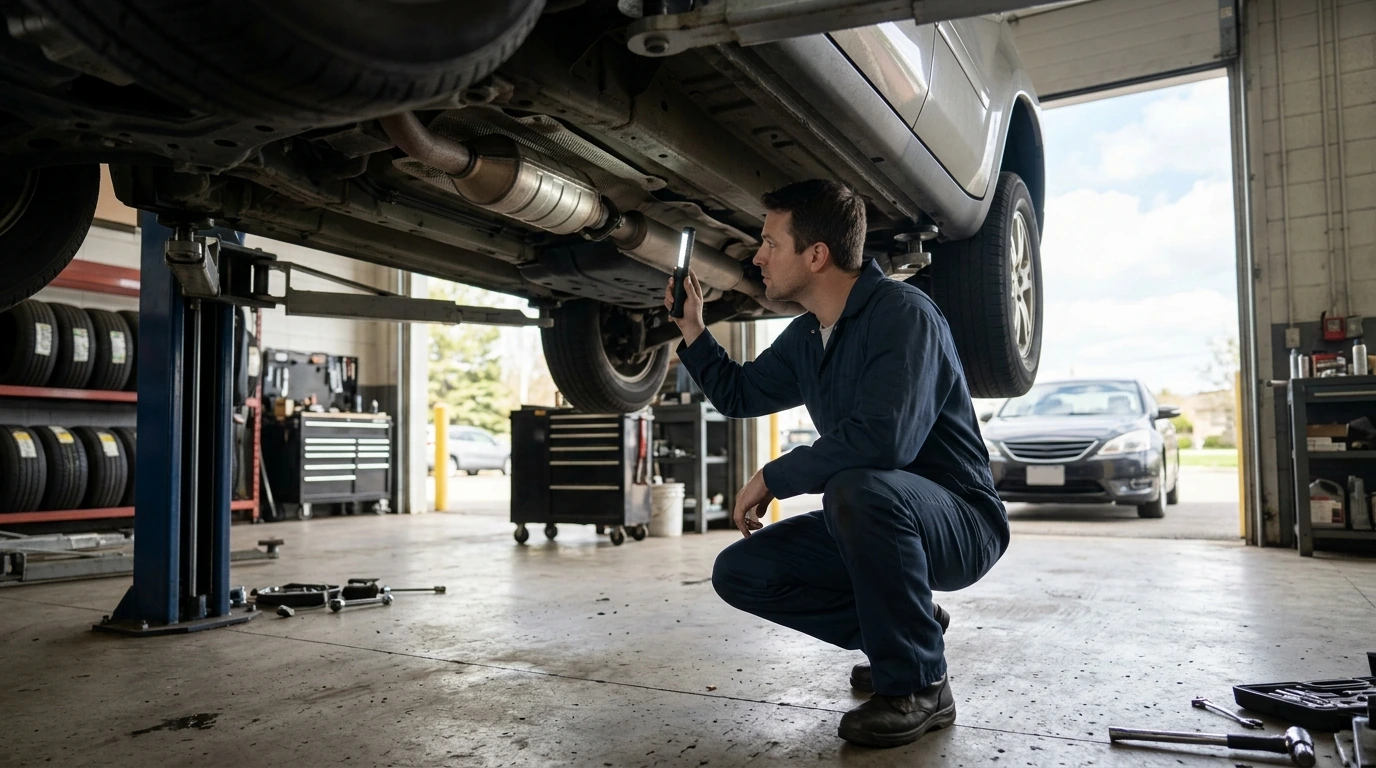
Why Catalytic Converters Get Stolen So Often
Catalytic converter theft feels sudden: you start your car, it roars like a race car, and within minutes you’re dealing with a repair nobody budgeted for. The reason it keeps happening is straightforward: the part is valuable, it’s exposed under the vehicle, and it can be removed fast. Below, our team breaks down what the converter does, why thieves want it, what theft typically looks like, and what you can do—right now—to lower your risk.
What a Catalytic Converter Is, in Plain Terms
Your catalytic converter is part of the exhaust system. Its job is to reduce harmful pollutants before they leave the tailpipe. Inside the metal shell is a honeycomb-like structure coated with tiny amounts of precious metals that help trigger chemical reactions that “clean up” exhaust gases.
When it’s working, you don’t interact with it day-to-day—but it plays a big role in emissions compliance. When it’s missing, your vehicle is usually extremely loud, may turn on the check engine light, and can fail an emissions inspection depending on where you live.
Why Catalytic Converters Are Stolen
Converter theft isn’t random; it’s a “value and speed” crime. Thieves target converters because:
- They contain precious metals (commonly platinum, palladium, and rhodium) that can be sold into recycling streams.
- They’re easy to reach on many vehicles with enough ground clearance for someone to slide underneath.
- They’re fast to remove using a battery-powered reciprocating saw to cut exhaust piping in minutes.
- They’re hard to trace once separated from the vehicle unless they’ve been marked and documented.
- They can be resold through the wrong channels when buyers don’t verify documentation.
- Some vehicles are “known targets” because thieves learn where the converter sits and which designs are quickest to cut.
| Factor | Why it matters | What it means for owners |
|---|---|---|
| Precious metals inside | Recyclers pay for recoverable metals | Converter value can attract repeat theft attempts |
| Location under the vehicle | No locked compartment or alarmed enclosure by default | Parking choices and deterrents matter |
| Fast removal | A saw can cut exhaust pipe quickly | Short “time-to-theft” raises risk in open lots |
| Hard to identify once removed | Limited traceability without marking/records | Marking and documentation can help recovery |
| High demand in scrap channels | Metal recovery remains profitable | Reporting suspicious buyers supports enforcement |
What Converter Theft Usually Looks and Sounds Like
The most common clue is the sound. If your vehicle suddenly starts up with a deafening roar (often compared to a motorcycle), the exhaust path may be open because the converter and a section of pipe are gone.
- Underbody signs: fresh cut marks on exhaust piping, a section of exhaust hanging lower than normal, or damaged wiring near oxygen sensors.
- Dashboard clues: a check engine light can appear due to oxygen sensor readings or an exhaust leak.
- After-theft risks: driving without a converter may violate local laws, fail emissions inspection, and can direct hot exhaust in unsafe ways if anything is left loose.
Which Vehicles Tend to Be Targeted (and Why)
Any vehicle can be hit, but risk climbs when theft is convenient and unseen. Common patterns include:
- Higher ground clearance: many SUVs, trucks, and vans are easier to access quickly.
- Hybrids: some models are targeted because thieves expect higher precious-metal content (this varies by year and design).
- Older vehicles: layouts may be simpler to cut, and older fasteners can make “cut and grab” the easiest approach.
- Fleet and apartment parking: predictable locations and long dwell times let thieves work a pattern.
Practical Prevention Steps That Reduce Risk
No single step is perfect, but layering deterrents changes the math for thieves—more time, more noise, more visibility.
If Theft Happens: A Calm Checklist for the Next 24 Hours
For Neighborhoods, HOAs, and Communities
Resources We Recommend (Trusted Sources)
- United States Environmental Protection Agency (EPA)
- National Insurance Crime Bureau (NICB)
- California Air Resources Board (CARB)
Helpful Items From Our Store
- Why Catalytic Converters Are Stolen – Easy-to-Understand eBook Explaining What Is a Catalytic Converter and Why Is It Stolen for Car Owners & Communities (a clear, non-technical explainer you can share with family members, teen drivers, and neighborhood groups)
- Universal Car Steering Wheel Phone Mount for Safe Navigation (useful when you need hands-free navigation to well-lit parking areas, police stations, or repair shops without fumbling for your phone)
FAQ
Can a car be driven if the catalytic converter is stolen?
It will usually run, but it will be extremely loud and may trigger warning lights; if any exhaust is hanging or dragging, don’t drive it. Laws and emissions rules vary, so towing is often the safest choice—especially in areas with inspections.
Why are some vehicles targeted more than others?
Vehicles with higher ground clearance and easy underbody access are faster to hit, and some models are targeted because thieves expect higher-value converters. Predictable parking patterns—apartments, fleets, and long overnight parking—also increase risk.
Do catalytic converter shields and VIN etching really help?
Yes, because they change the thief’s cost-benefit equation: shields add time and noise, and etching improves traceability. They don’t guarantee prevention, but combining hardware with smart parking and lighting is significantly stronger than any single step.
Recommended for you



Was this article helpful?
Yes
No









Leave a comment