-
Shop
- Advanced Technologies
- AI Skills for Creators & Freelancers
- AI Client Management
- AI Ethics
- AI Mindset
- AI Tools & Prompts
- AI Writing & Content Creation
- Audio, Voice & Music
- Design & Visual Creation
- Email, Messaging & Communication
- Freelancing & Business
- Marketing, Ads & Conversion
- Productivity, Workflow & Automation
- SEO & Search Optimization
- Social Media Content & Growth
- Strategy, Planning & Analytics
- Video Creation & Editing
- AI Skills Mastery 2026 Collection
- Bathroom
- Best-Sellers
- Car Accessories
- Confidence
- Dating & Social Skills
- Digital Resources
- Easter Products
- Education & Learning
- Family & Parenting
- Fashion
- Fashion Accessories
- Furniture
- Gadgets
- Health & Beauty
- Health & Wellness
- Home & Garden
- Home Electronics
- Home Supplies
- Jewelry
- Kids & Babies
- Kitchen
- Lighting
- Patio, Lawn & Garden
- Personal Growth
- Pet Care
- Pet Supplies
- Pets
- Shoes
- Smart Home Living Guides
- Sport & Outdoors
- Stress Relief & Relaxation
- Super Deals
- TikTok Growth & Monetization Mastery
- Travel
- Travel & Adventure
- Wealth
- Wellness
Build a Budget Capsule Wardrobe With AI Outfit Ideas
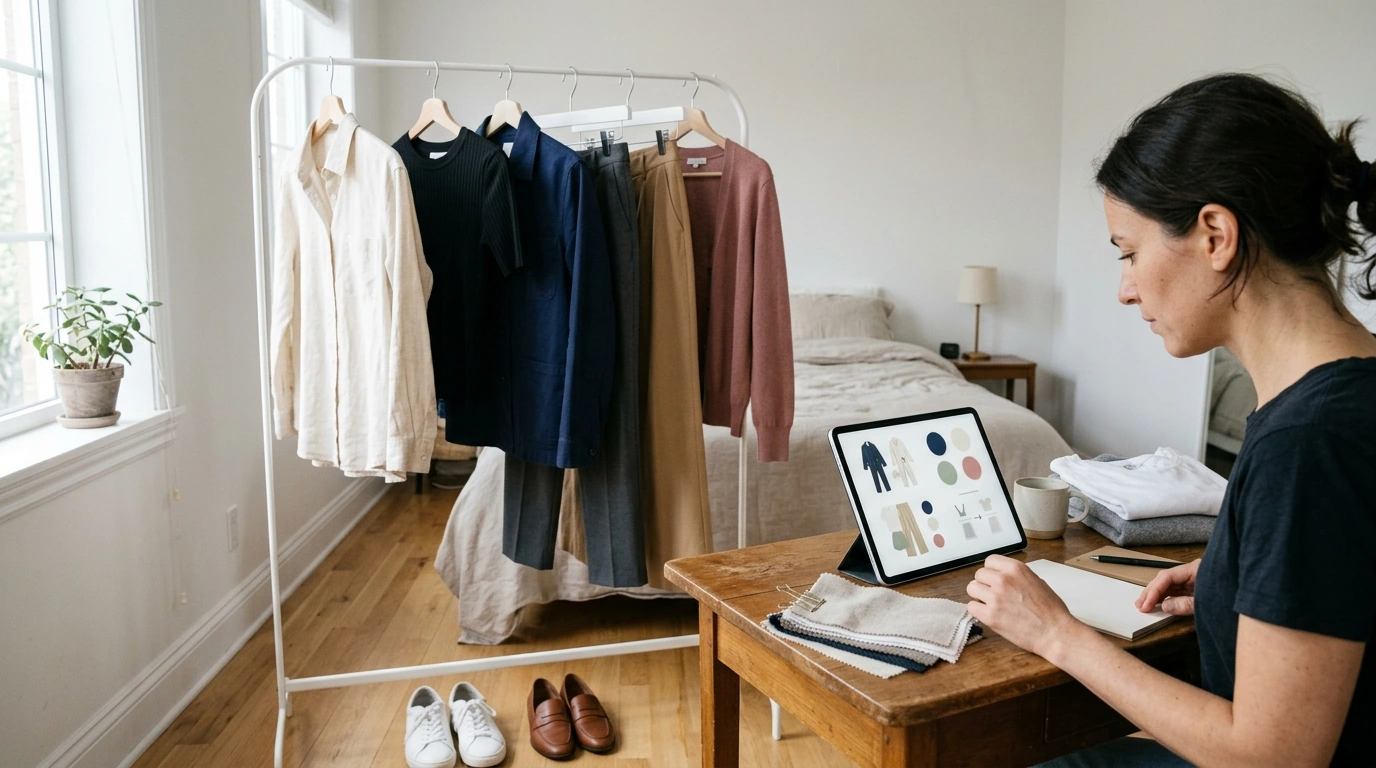
Smart Style on Any Budget: Using AI to Build Outfits You’ll Actually Wear
Great style doesn’t require endless shopping or guesswork. With the right inputs, AI can help narrow options to clothes that match budget, lifestyle, and personal taste—then turn those picks into repeatable outfits. The goal isn’t to “buy a new you.” It’s to build a small system: a clear palette, a few reliable silhouettes, and a short list of gaps worth spending on.
If you want a structured way to do that, Smart Style on Any Budget – AI Fashion Guide breaks the process into simple steps so outfit planning stays realistic and wearable.
What AI can realistically do for personal style
AI works best as a planning and narrowing tool—helpful for cutting through noise, but not a substitute for how clothes feel on your body. Used well, it can:
- Translate preferences (colors, fits, aesthetics) into shoppable outfit ideas that look cohesive.
- Work within a spending limit by prioritizing versatile basics first, then adding statement pieces.
- Spot gaps in a wardrobe (missing layers, shoes, outerwear) based on the outfits you actually need.
- Suggest substitutions when an item is out of stock or too expensive (similar silhouette, color, fabric).
- Reduce impulse buys by comparing potential purchases against a simple outfit plan.
When evaluating any AI-driven recommendation, it helps to keep basic transparency and risk-awareness in mind—especially if you’re using tools that summarize product claims or suggest “best” options. Consumer protection guidance like the FTC’s Truth in Advertising resources is a useful reminder to verify details and read return policies.
A simple setup: the information that makes AI recommendations useful
The quality of recommendations rises sharply when inputs are specific. Before you ask for outfits, gather a quick “style brief”:
- Budget: set a monthly or seasonal cap and a per-item ceiling (tops, bottoms, shoes, outerwear).
- Lifestyle: work dress code, climate, commuting, events, and how often laundry happens.
- Fit preferences: relaxed vs. tailored, rise and inseam, neckline comfort, sleeve length, shoe width.
- Color direction: 2–3 neutrals + 1–2 accent colors to keep outfits mix-and-match.
- Style references: 5–10 saved outfit photos with notes on what’s working (shape, vibe, fabric).
A small detail that saves money: write down “non-negotiables” (for example, no dry clean, no itchy wool, must work with walking). That single line prevents a lot of almost-right purchases.
The budget-first method: build a capsule before chasing trends
When money is limited, the fastest path to looking put-together is building around anchors that repeat. Trends become easier (and cheaper) once the foundation is stable.
- Start with anchors: one great pair of everyday shoes, one jacket/coat, and two bottoms that match most tops.
- Choose a repeatable silhouette: straight-leg + fitted top; wide-leg + cropped layer; or slim pant + relaxed button-down.
- Limit prints early: add them only after solid basics exist in preferred fabrics.
- Use a cost-per-wear checkpoint: prioritize pieces that can create at least 10 outfits.
- Generate outfit formulas: formulas beat one-off “looks” because they keep future purchases coherent.
For footwear, consider a pair that supports daily wear and bridges casual-to-smart outfits. For example, Armani Exchange Men’s Sneakers can function as a clean everyday shoe option that pairs with denim, chinos, and many casual work outfits, depending on dress code.
How AI turns your inputs into shoppable outfits
Think of AI as a wardrobe editor. It organizes what you own, tests combinations, then suggests only what fills the biggest gaps.
Example prompts that keep recommendations on-budget and wearable
| Goal | What to provide | What to ask for |
|---|---|---|
| Work outfits under a strict cap | Dress code, climate, budget per item, 5 owned items | “Create 10 work outfits using these items; list 3 gap pieces under $X each.” |
| Rebuilding a wardrobe after weight/fit changes | New fit preferences, comfort constraints, colors to avoid | “Suggest silhouettes and 5 staple items that flatter and are easy to tailor; include budget tiers.” |
| Event outfit without overspending | Event type, venue, formality, weather, shoe comfort needs | “Give 3 outfit options using items I might already own + 1 buy-under-$X piece.” |
| Avoiding impulse buys | A photo/link of the tempting item, closet palette, lifestyle needs | “Does this fit my palette and outfit formulas? Provide 2 cheaper substitutes and 3 outfits.” |
A practical shopping plan that prevents regret
For a broader perspective on responsible AI use (including reliability and safeguards), references like the NIST AI Risk Management Framework and the OECD AI Principles are useful touchpoints for thinking clearly about where AI is helpful—and where it shouldn’t be blindly trusted.
How the Smart Style on Any Budget AI Fashion Guide ebook supports the process
If you’ve ever felt stuck between “cheap and boring” and “stylish but expensive,” a framework helps more than another shopping spree. Smart Style on Any Budget – AI Fashion Guide is designed to make outfit planning repeatable:
Getting started in one hour
FAQ
Can AI recommend outfits that actually fit a strict budget?
Yes—when the limits are explicit. Set a total cap plus a per-item maximum, then ask for price tiers and substitutes so the recommendations stay flexible without expanding into a full new wardrobe.
What information should be shared to get accurate clothing suggestions?
Share fit preferences or measurements, climate, lifestyle and dress code, a simple color palette, comfort constraints, and a few reference looks. Adding notes or photos of items you already own makes the suggestions much more realistic.
Will AI replace a stylist for personal fashion?
AI can speed up planning, generate cohesive outfit formulas, and reduce decision fatigue, but it can’t feel fabric or judge confidence. Final choices still benefit from human judgment—especially for comfort, fit checks, and tailoring needs.
Recommended for you


Was this article helpful?
Yes
No









Leave a comment