-
Shop
- Advanced Technologies
- AI Skills for Creators & Freelancers
- AI Client Management
- AI Ethics
- AI Mindset
- AI Tools & Prompts
- AI Writing & Content Creation
- Audio, Voice & Music
- Design & Visual Creation
- Email, Messaging & Communication
- Freelancing & Business
- Marketing, Ads & Conversion
- Productivity, Workflow & Automation
- SEO & Search Optimization
- Social Media Content & Growth
- Strategy, Planning & Analytics
- Video Creation & Editing
- AI Skills Mastery 2026 Collection
- Bathroom
- Best-Sellers
- Car Accessories
- Confidence
- Dating & Social Skills
- Digital Resources
- Easter Products
- Education & Learning
- Family & Parenting
- Fashion
- Fashion Accessories
- Furniture
- Gadgets
- Health & Beauty
- Health & Wellness
- Home & Garden
- Home Electronics
- Home Supplies
- Jewelry
- Kids & Babies
- Kitchen
- Lighting
- Patio, Lawn & Garden
- Personal Growth
- Pet Care
- Pet Supplies
- Pets
- Shoes
- Smart Home Living Guides
- Sport & Outdoors
- Stress Relief & Relaxation
- Super Deals
- TikTok Growth & Monetization Mastery
- Travel
- Travel & Adventure
- Wealth
- Wellness
Build a Clear Terrarium: Steps, Plants & Design Ideas
The Art of Building Terrariums: A Step-by-Step Guide with Creative Ideas (Digital Download)
Terrariums combine plant care, design, and a bit of ecology in a compact display that fits on a desk, shelf, or windowsill. This guide breaks down the essentials—choosing the right container, building stable layers, selecting plants that thrive together, and adding creative touches—so a terrarium stays clear, balanced, and easy to maintain. For more guidance, see How to Make a Terrarium: A Step-By-Step Guide.
What Makes a Terrarium Work
A terrarium is a miniature habitat, and long-term success comes down to a few controllable variables: light, moisture, airflow, and plant choice. When those parts work together, the container stays attractive instead of turning into a foggy jar or a mushy pot. For further reading, see How to Design a Closed-System Terrarium | Mississippi State ….
- Closed terrariums retain humidity and are best for moisture-loving plants (think mosses and small tropicals).
- Open terrariums breathe and dry faster, making them better for arid plants or setups that need airflow.
- Stability comes from compatibility: pair plants with similar needs and keep scale in mind so nothing outgrows the scene.
- Aim for controlled moisture: damp, not wet; bright, not scorching; tidy, not sterile.
For deeper fundamentals and examples of successful setups, the Royal Horticultural Society’s terrarium guidance is a reliable reference point.
Tools and Materials Checklist
Terrarium building is easier when everything is within reach. A narrow opening is workable, but it’s much more comfortable with long tools and a plan for layers.
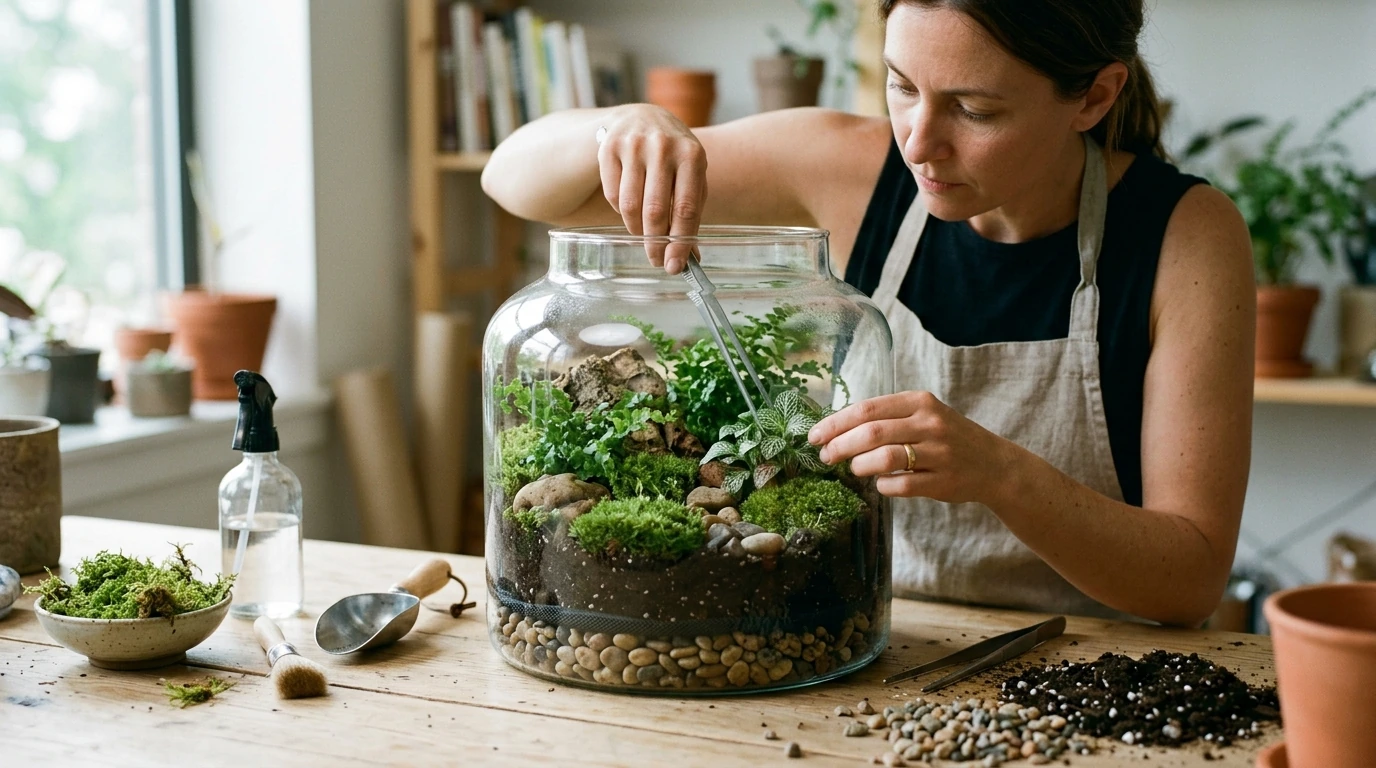
- Container: glass jar, cloche, bottle, bowl, geometric case, or a recycled vessel with a wide enough opening for planting.
- Drainage layer: small gravel, lava rock, or expanded clay pebbles to separate excess water from roots.
- Optional barrier: mesh or a thin layer of sphagnum to keep soil from drifting into the drainage layer.
- Substrate: indoor potting mix for most closed terrariums; cactus/succulent mix for open, arid builds.
- Hardscape: stones, driftwood, cork bark, or decorative gravel for structure and focal points.
- Plants: small, slow growers; avoid fast growers that quickly outgrow the container.
- Tools: long tweezers, spoon/scoop, chopstick for tamping, spray bottle, soft brush for cleanup.
- Finishing touches: sheet moss, leaf litter, mini stones, and a microfiber cloth to polish the glass.
For a ready-to-follow build checklist and layout references, use The Art of Building Terrariums | Step-by-Step Guide with Creative Terrarium Building Ideas | Digital Download. For detailed cleanup in tight corners, a small, ultra-soft brush can help—some makers even repurpose a gentle brush like the Triple-Sided Ultra-Fine Soft Bristle Toothbrush for Enhanced Oral Health for dusting soil off leaves and seams without scratching glass.
Step-by-Step: Build a Terrarium That Stays Clear and Healthy
Quick guide: closed vs. open terrariums
| Type | Best for | Watering rhythm | Light | Common pitfalls |
|---|---|---|---|---|
| Closed | Mosses, ferns, fittonia, small tropicals | Mist lightly; aim for moist soil, not puddles | Bright, indirect | Too much water → constant condensation, mold |
| Open | Succulents, cacti, airier mini landscapes | Water sparingly; allow soil to dry between | Brighter light tolerated | Overwatering → root rot; low light → stretching |
Plant Pairings That Play Nicely Together
For plant-by-plant care basics and growth expectations, consult a reputable database like the Missouri Botanical Garden Plant Finder.
Creative Terrarium Building Ideas
If you like documenting builds or recording progress over the first two weeks (fogging changes, growth direction, moisture patterns), setting up a stable viewing angle can help—some builders use a small mount like the Universal Car Steering Wheel Phone Mount for Safe Navigation as a quick clamp-style stand on a work surface.
Care and Troubleshooting
- Condensation control (closed): brief daily venting can fix heavy fog. Persistent droplets often mean too much water or too little warmth.
- Watering rule: add less than you think—especially in closed systems where excess water is hard to remove.
- Mold management: remove affected leaves, vent briefly, reduce moisture, and avoid burying stems too deeply. For general hygiene practices, see the University of Maryland Extension resources on plant disease prevention.
- Algae: reduce light intensity (no direct sun), wipe glass, and keep the surface from staying constantly wet.
- Leggy growth: increase indirect light, move closer to a bright window, and rotate the container for even growth.
- Pruning: trim regularly to maintain scale; remove clippings immediately to prevent decay.
- Long-term refresh: every few months, tidy moss edges, top up dressing, and confirm the drainage layer isn’t flooding.
Digital Download: What to Expect and How to Use It
Get the guide here: The Art of Building Terrariums | Step-by-Step Guide with Creative Terrarium Building Ideas | Digital Download.
FAQ
Why is my closed terrarium foggy all the time?
Light condensation can be normal, but constant heavy fog and dripping usually means there’s too much water. Vent the lid briefly, move it out of direct sun, and let the soil dry slightly so plants aren’t sitting in soggy conditions.
Do terrariums need charcoal?
Charcoal is optional: it can help absorb odors in some setups, but it won’t solve overwatering or poor airflow. A true drainage layer, clean planting practices, and correct moisture levels matter more for long-term clarity.
What are the easiest plants for a first terrarium?
For a simple closed terrarium, fittonia paired with sheet moss is forgiving and enjoys steady humidity. For an open terrarium, haworthia varieties in cactus mix handle brighter light and drier cycles well.
Recommended for you


Was this article helpful?
Yes
No









Leave a comment