-
Shop
- Advanced Technologies
- AI Skills for Creators & Freelancers
- AI Client Management
- AI Ethics
- AI Mindset
- AI Tools & Prompts
- AI Writing & Content Creation
- Audio, Voice & Music
- Design & Visual Creation
- Email, Messaging & Communication
- Freelancing & Business
- Marketing, Ads & Conversion
- Productivity, Workflow & Automation
- SEO & Search Optimization
- Social Media Content & Growth
- Strategy, Planning & Analytics
- Video Creation & Editing
- AI Skills Mastery 2026 Collection
- Bathroom
- Best-Sellers
- Car Accessories
- Confidence
- Dating & Social Skills
- Digital Resources
- Easter Products
- Education & Learning
- Family & Parenting
- Fashion
- Fashion Accessories
- Furniture
- Gadgets
- Health & Beauty
- Health & Wellness
- Home & Garden
- Home Electronics
- Home Supplies
- Jewelry
- Kids & Babies
- Kitchen
- Lighting
- Patio, Lawn & Garden
- Personal Growth
- Pet Care
- Pet Supplies
- Pets
- Shoes
- Smart Home Living Guides
- Sport & Outdoors
- Stress Relief & Relaxation
- Super Deals
- TikTok Growth & Monetization Mastery
- Travel
- Travel & Adventure
- Wealth
- Wellness
Breathing Exercises for Anxiety: Fast Calm in 60 Seconds
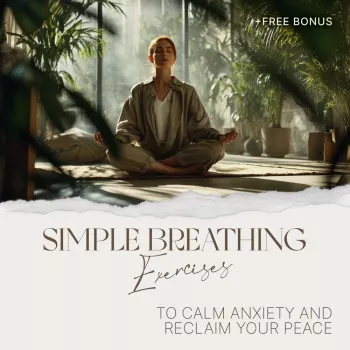
Simple Breathing Exercises to Calm Anxiety and Reclaim Your Peace
When anxiety spikes, breathing often turns fast and shallow—right when the body most needs steady signals of safety. A few gentle, structured breathing patterns can help slow the stress response, ease the urge to panic, and bring attention back to what’s happening right now. The goal isn’t “perfect calm.” It’s having a reliable reset you can use when anxiety shows up as a tight chest, rapid heartbeat, dizziness, or looping worry.
How anxiety changes breathing (and why slowing it helps)
Anxiety can reshape breathing in ways that accidentally intensify symptoms. Common patterns include rapid upper-chest breaths, frequent sighing, breath-holding, and over-breathing (hyperventilation). Over-breathing may lower carbon dioxide levels and contribute to tingling, lightheadedness, or feeling unreal—sensations that can feel scary and keep the cycle going.
“Calm breathing” aims for a slower pace, a softer inhale, and a longer exhale. Keeping the shoulders down and relaxing the jaw helps cue the nervous system that you’re not in immediate danger. If the first attempts feel restless or “wrong,” that’s normal—your body may resist slowing down at first. Start small, keep it gentle, and build consistency.
Safety note: If breathing exercises worsen dizziness or discomfort, shorten the practice, breathe through your nose, and return to natural breathing. If symptoms are persistent or severe, seek medical guidance. For more background on relaxation methods, visit NCCIH’s relaxation techniques overview.
A quick reset: 60-second exhale-led breathing
This is a fast, low-effort technique that emphasizes a longer exhale—often the quickest way to reduce intensity without forcing huge breaths.
How to do it
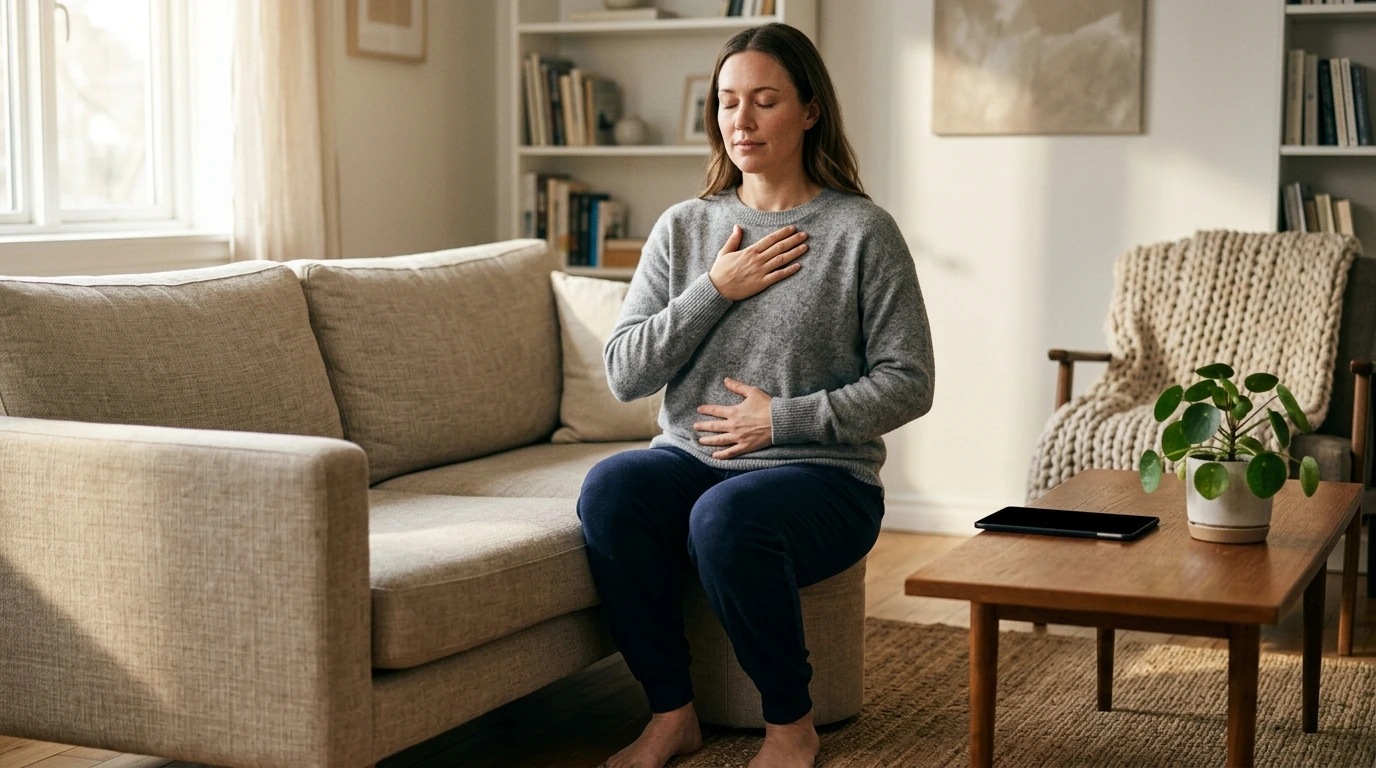
- Posture: Sit upright with feet grounded, or lie down. Place one hand on your belly and one on your chest.
- Pattern: Inhale gently through the nose for 3 seconds, then exhale through the nose or pursed lips for 5–6 seconds.
- Repeat: Do 6–8 cycles. Aim for a smooth, quiet breath rather than a deep breath.
- If panic is high: Reduce the inhale to 2 seconds and keep the exhale comfortable (4–5 seconds) to avoid “air hunger.”
Simple breathing exercises to keep on standby
Different moments call for different tools. Keep two favorites and rotate based on how your body feels.
Box breathing (steadying)
Inhale for 4, hold for 4, exhale for 4, hold for 4. Do 3–5 rounds. If breath holds increase tension, skip the holds and simply breathe 4-in/4-out.
4-7-8 breathing (downshifting)
Inhale for 4, hold for 7, exhale for 8. Do 2–4 rounds. Keep the inhale light and don’t force the exhale to be longer than comfortable.
Coherent breathing (balancing)
Breathe at a steady rhythm of about 5–6 breaths per minute, such as inhale 5 and exhale 5, for 3–5 minutes. This can feel especially supportive when you want to settle without doing anything intense.
Physiological sigh (rapid release)
Take two short inhales through the nose (the second inhale “tops off”), then one long, slow exhale. Repeat 2–3 times, then return to normal breathing. This can quickly lower the urge to gasp or brace.
Humming exhale (soothing)
Choose the right technique for the moment
| Situation | Best option | How long | Helpful cue |
|---|---|---|---|
| Sudden anxiety spike | 3-in / 6-out | 60–90 seconds | “Soft inhale, longer exhale.” |
| On the edge of panic | Physiological sigh | 2–3 rounds | “Top up gently, then release slowly.” |
| Racing thoughts | Box breathing (no strain) | 3–5 rounds | “Even sides of the box.” |
| Tension + tight jaw | Humming exhale | 1–3 minutes | “Let the vibration relax the face.” |
| Bedtime winding down | Coherent breathing (5/5) | 3–5 minutes | “Smooth and quiet.” |
If dizziness or tingling appears, avoid very deep breaths. Keep breaths smaller and slower through the nose, and extend the exhale gently. For additional clinical-style examples, see the Cleveland Clinic’s breathing exercise guide.
A calm checklist for stressful moments
Making it easier to practice (so it works when it counts)
It also helps to track what works: one method for panic, another for sleep, another for work stress. If you want a quick primer on how stress affects the body, the American Psychological Association’s overview is a useful reference.
A ready-to-use digital guide for breathing and calm routines
If it’s hard to remember counts and steps when anxiety is loud, a structured guide can make the process simpler. Simple Breathing Exercises to Calm Anxiety and Reclaim Your Peace (digital download) is designed for fast reference with step-by-step techniques, a quick calm checklist, and easy practice plans for stressful days.
For routine-based support, pairing breathing practice with everyday habits can help. Some people like linking a 60-second exhale-led set to their morning and evening hygiene routine; a gentle tool like the Triple-Sided Ultra-Fine Soft Bristle Toothbrush can serve as a simple cue to pause and breathe before moving on.
If anxiety tends to spike while commuting or waiting in the car, keeping your phone visible for a timed breathing set can reduce fumbling and distraction. The Universal Car Steering Wheel Phone Mount can help you follow a short breathing count while safely parked.
FAQ
How long do breathing exercises take to reduce anxiety?
Many people notice a shift within 60–180 seconds, especially with longer exhales. Stronger, more reliable relief often builds with daily practice over several weeks.
What if slow breathing makes anxiety feel worse?
Make the breath smaller and gentler, shorten or remove breath holds, and breathe through your nose. If dizziness increases, stop the exercise and return to normal breathing; consult a clinician if symptoms persist.
Can breathing exercises stop a panic attack?
They may not “stop” it instantly, but they often reduce intensity and help the wave pass by lowering arousal. Pair breathing with grounding and reassurance, and seek professional support for frequent or severe panic.
Recommended for you


Was this article helpful?
Yes
No









Leave a comment