-
Shop
- Advanced Technologies
- AI Skills for Creators & Freelancers
- AI Client Management
- AI Ethics
- AI Mindset
- AI Tools & Prompts
- AI Writing & Content Creation
- Audio, Voice & Music
- Design & Visual Creation
- Email, Messaging & Communication
- Freelancing & Business
- Marketing, Ads & Conversion
- Productivity, Workflow & Automation
- SEO & Search Optimization
- Social Media Content & Growth
- Strategy, Planning & Analytics
- Video Creation & Editing
- AI Skills Mastery 2026 Collection
- Bathroom
- Best-Sellers
- Car Accessories
- Confidence
- Dating & Social Skills
- Digital Resources
- Easter Products
- Education & Learning
- Family & Parenting
- Fashion
- Fashion Accessories
- Furniture
- Gadgets
- Health & Beauty
- Health & Wellness
- Home & Garden
- Home Electronics
- Home Supplies
- Jewelry
- Kids & Babies
- Kitchen
- Lighting
- Patio, Lawn & Garden
- Personal Growth
- Pet Care
- Pet Supplies
- Pets
- Shoes
- Smart Home Living Guides
- Sport & Outdoors
- Stress Relief & Relaxation
- Super Deals
- TikTok Growth & Monetization Mastery
- Travel
- Travel & Adventure
- Wealth
- Wellness
Aromatherapy Checklist for Calm, Mood, Sleep & Energy
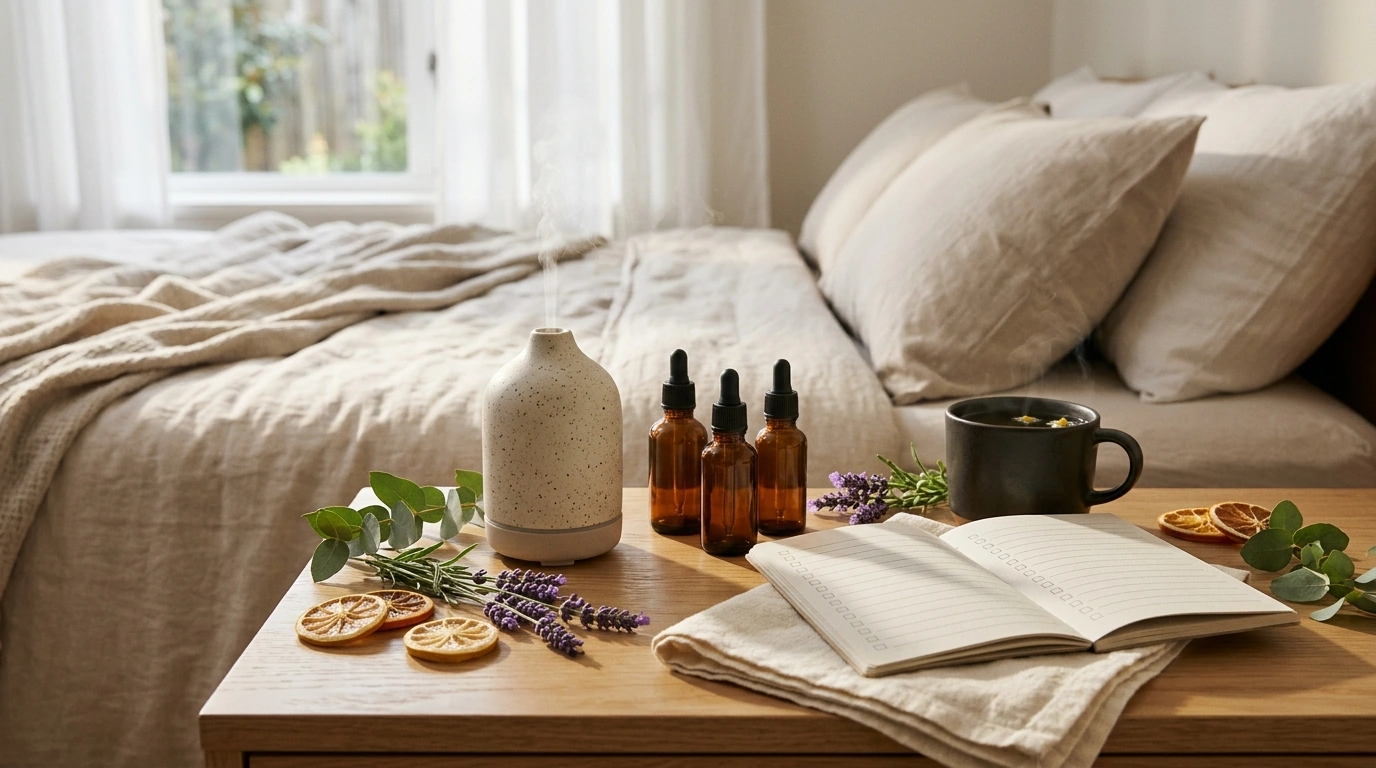
Aromatherapy Magic: A Feel-Good Checklist for Mood, Calm, Sleep, and Steady Energy
Aromatherapy can be a simple, sensory way to support daily self-care—especially when choices feel overwhelming. A checklist approach makes it easier to match a scent direction and a method (diffuser, inhale, bath, or roll-on) to the moment: a stressful afternoon, a low-energy morning, or a bedtime routine that needs a gentler landing. If you’re curious about what aromatherapy can (and can’t) do, the NCCIH overview on aromatherapy is a helpful, evidence-focused starting point.
What a “feel-good checklist” does (and what it doesn’t)
- Turns broad goals (relaxation, focus, sleep support) into small, repeatable steps you can actually do on a busy day.
- Helps you track what feels supportive over time: scent direction, intensity, method, and timing.
- Keeps routines realistic—short options for weekdays and longer rituals for weekends.
- Supports well-being, but isn’t a substitute for medical care, diagnosis, or treatment.
The biggest benefit of a checklist is decision relief: instead of asking, “What should I use?” you ask, “What do I need right now—and what’s the lightest, easiest method that could help?”
The core methods: choose the lightest option that works
- Diffusion: Great for shared spaces. Start with short sessions (especially in smaller rooms) and keep ventilation in mind.
- Direct inhalation: A quick reset with minimal setup—use a tissue, a personal inhaler, or gentle wafting (rather than deep, forceful breaths).
- Topical use: Use only with proper dilution in a carrier oil. Patch test if you’re unsure how your skin reacts.
- Bath or shower: For baths, avoid adding undiluted essential oils directly to water; use a safer dispersal method. For showers, aroma can be introduced via steam-friendly approaches that don’t put undiluted oil on skin.
- Environment matters: Pets, children, asthma, and migraines can change what’s appropriate. When in doubt, go milder, use less time, or skip.
For safety best practices (including dilution and general precautions), the NAHA safety guidance is a reliable reference.
Quick-reference checklist: match the moment to a scent family
Instead of chasing the “perfect” oil, start with a scent family that fits your goal. That keeps the process simple and makes it easier to notice what truly helps.
- For calm: Lavender-like florals, gentle woods, and soft herbals.
- For mood-lifting: Bright citrus notes or light floral-citrus blends.
- For focus: Crisp herbals or clean-fresh aroma profiles.
- For sleep: Simple, low intensity, and consistent night to night.
- For steady energy: Uplifting aromas rather than harsh intensity—pair with hydration and light movement.
Feel-Good Aromatherapy Checklist (choose one goal and one method)
| How it feels right now | Goal for the next 10–30 minutes | Scent direction to try | Best method | Notes to track |
|---|---|---|---|---|
| Overstimulated or tense | Downshift and soften | Floral / soft herbal | Diffuser (short session) or 3 slow inhales | Intensity (1–5), breathing pace, shoulder tension |
| Low mood, heavy day | Lift and brighten | Citrus / light floral-citrus | Inhalation or shower steam | Mood before/after, time of day |
| Racing mind | Ground and focus | Herbal / clean-fresh | Inhalation or diluted topical on wrists | Distraction level, task started within 5 minutes? |
| Bedtime but not sleepy | Signal “sleep time” | Gentle floral / soft wood | Diffuser timed off or pillow-area routine (non-contact) | Sleep latency, nighttime waking |
| Afternoon slump | Steady energy | Citrus / minty-fresh (if tolerated) | Inhalation + water + 2-minute walk | Energy rating, jitters vs steady |
Mini-rituals that take under five minutes
A simple way to personalize: track what works
Safety basics for essential oils
A ready-to-use checklist download for daily self-care
If you like the idea of a decision-light routine, a printable format can make it easier to stick with morning, midday, and evening options—while keeping notes on what actually helps over time. The Aromatherapy Magic: The Ultimate Feel-Good Checklist (digital download) is designed for quick daily use: pick a goal, choose a gentle method, and track results without overcomplicating the moment.
Pair the checklist with basics that make aromatherapy feel steadier (not “hit or miss”): hydration, a brief stretch or walk, and consistent sleep cues. For a simple upgrade to the daily routine that supports an overall self-care rhythm, consider adding a practical essential like the Triple-Sided Ultra-Fine Soft Bristle Toothbrush for Enhanced Oral Health—small habits tend to stack best when they’re easy.
FAQ
Which essential oils are best for relaxation and sleep support?
Many people prefer lavender-like florals, soft woods, and gentle herbals for relaxation and bedtime routines. Keep the intensity low at night, use good ventilation, and dilute properly for any skin application; avoid ingestion.
How long should a diffuser run for a mood or relaxation boost?
Short, timed sessions often work well—about 10 to 30 minutes, then take a break. In small rooms or for sensitive individuals, start shorter and track how you feel before extending the time.
Can aromatherapy help with energy without making someone feel jittery?
It can be supportive in a gentle way by using uplifting citrus or fresh aromas rather than overpowering intensity. Pair it with water and a brief walk, and stop or dial it down if you notice headaches or overstimulation.
Recommended for you



Was this article helpful?
Yes
No









Leave a comment