-
Shop
- Advanced Technologies
- AI Skills for Creators & Freelancers
- AI Client Management
- AI Ethics
- AI Mindset
- AI Tools & Prompts
- AI Writing & Content Creation
- Audio, Voice & Music
- Design & Visual Creation
- Email, Messaging & Communication
- Freelancing & Business
- Marketing, Ads & Conversion
- Productivity, Workflow & Automation
- SEO & Search Optimization
- Social Media Content & Growth
- Strategy, Planning & Analytics
- Video Creation & Editing
- AI Skills Mastery 2026 Collection
- Bathroom
- Best-Sellers
- Car Accessories
- Confidence
- Dating & Social Skills
- Digital Resources
- Easter Products
- Education & Learning
- Family & Parenting
- Fashion
- Fashion Accessories
- Furniture
- Gadgets
- Health & Beauty
- Health & Wellness
- Home & Garden
- Home Electronics
- Home Supplies
- Jewelry
- Kids & Babies
- Kitchen
- Lighting
- Patio, Lawn & Garden
- Personal Growth
- Pet Care
- Pet Supplies
- Pets
- Shoes
- Smart Home Living Guides
- Sport & Outdoors
- Stress Relief & Relaxation
- Super Deals
- TikTok Growth & Monetization Mastery
- Travel
- Travel & Adventure
- Wealth
- Wellness
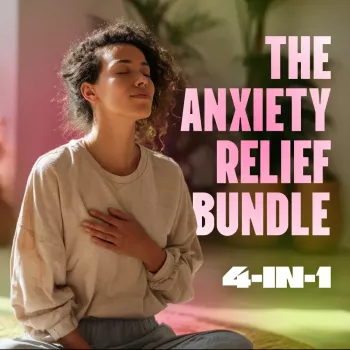
Anxiety Relief Bundle: 4-in-1 Daily Reset for Calm

The Anxiety Relief Bundle: A Path to Calm — A 4-in-1 Toolkit for Daily Reset
A calmer day often starts with a small, repeatable plan. The The Anxiety Relief Bundle: A Path to Calm brings together guided mindfulness exercises, positive thinking prompts, a printable checklist, and a course-style outline so routines feel doable—whether the goal is easing racing thoughts, improving focus, or building steadier coping habits.
Instead of relying on willpower in the moment, this bundle helps create a “default route” for stressful days: notice what’s happening, steady the body, reframe the thought, and take one small next step. For general background on how anxiety can show up, the American Psychological Association’s anxiety overview is a helpful reference.
What’s Included in the 4-in-1 Bundle
Think of this as a compact toolkit that works for both quick resets and longer skill-building. Each part is useful on its own, but the real advantage is how the pieces connect—so you’re not starting from scratch every time anxiety spikes.
- Mindfulness exercises designed for quick grounding and longer practice sessions
- Positive thinking tools to challenge spirals and build healthier inner dialogue
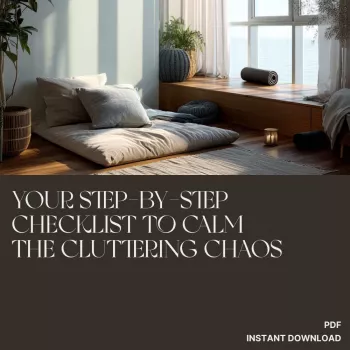
- A printable checklist that turns “try to calm down” into clear, repeatable steps
- A course outline that organizes the tools into a structured learning path with milestones
- Best used as a daily support system alongside healthy sleep, movement, and professional care when needed
For many people, mindfulness and meditation feel more accessible when they’re broken into practical steps. The National Center for Complementary and Integrative Health summarizes what research suggests about benefits and safety.
A Simple 7-Day Starter Routine (Adjustable to Any Schedule)
Starting small matters. The goal for week one isn’t “never feel anxious”—it’s building a rhythm you can repeat even on busy days. If you only have 5 minutes, do the 5-minute version. If you have 20, expand it.
- Day 1: Baseline check-in—rate anxiety intensity, identify top triggers, choose a realistic daily practice time
- Day 2: Breath + body scan—practice noticing sensations without “fixing” them; log what changes after 5–10 minutes
- Day 3: Thought labeling—name the worry theme (health, work, relationships) and separate thoughts from facts
- Day 4: Positive reframe drill—write one balanced alternative thought for a recurring worry
- Day 5: Exposure micro-step—choose one tiny action that gently approaches an avoided situation
- Day 6: Nervous system reset—pair mindfulness with a calming action (walk, stretch, hydration, sunlight)
- Day 7: Review—use the checklist to spot which tools worked fastest and which built longer-term relief
Example Weekly Plan (Pick One Tool Per Day)
| Day | Tool Focus | Time Needed | Goal |
|---|---|---|---|
| 1 | Check-in + checklist setup | 10 min | Clarity and structure |
| 2 | Breathing / grounding | 5–10 min | Reduce physical tension |
| 3 | Mindful awareness + labeling | 10 min | Stop spirals sooner |
| 4 | Positive thinking prompt | 10–15 min | Build balanced self-talk |
| 5 | Small brave step | 10–20 min | Increase confidence |
| 6 | Reset routine (mindfulness + movement) | 15–25 min | Stabilize mood |
| 7 | Progress review + next-week plan | 10–15 min | Consistency |
Mindfulness Exercises That Make Calm Feel More Accessible
Mindfulness isn’t about forcing your mind to go blank. It’s about training attention to return—again and again—without treating every thought like an emergency. When practiced consistently, even short exercises can reduce the “snowball effect” where one worry triggers ten more.
- Grounding (5-4-3-2-1): quickly reconnects attention to the present using the senses
- Box breathing: supports slower, steadier breathing patterns during stress spikes
- Body scan: identifies where anxiety sits physically and releases tension gradually
- Noting practice: silently label thoughts (“planning,” “worrying,” “remembering”) to reduce over-identification
- Tips for consistency: start with 3–5 minutes, practice at the same cue (after coffee, before bed), keep the goal “show up,” not “feel perfect”
If you want a physical “anchor” habit to pair with a daily reset, small care routines can help signal safety to the nervous system. Something as simple as a two-minute hygiene reset using a triple-sided ultra-fine soft bristle toothbrush can become a steady cue: brush, breathe, and begin again.
Positive Thinking Without Forced Positivity
Positive thinking works best when it stays believable. The aim isn’t to deny reality; it’s to move from catastrophic certainty to balanced perspective—then pair that perspective with a practical next step.
Printable Checklist: Turn Coping Skills into a Repeatable Routine
For “on-the-go” stress, reducing small friction points can help. If navigation stress is a common trigger, a steering wheel phone mount can make directions easier to follow hands-free (when used safely and legally), supporting a calmer commute routine.
Course Outline: Build Skills in an Order That Sticks
Who This Bundle Helps Most (and When to Seek Extra Support)
If you want a general overview of anxiety disorders and signs that additional help may be needed, the NHS guide to anxiety disorders is a clear starting point.
Shop Support Tools
- The Anxiety Relief Bundle: A Path to Calm | 4-in-1 Bundle | Mindfulness Exercises, Positive Thinking, Printable Checklist & Course Outline
- Triple-Sided Ultra-Fine Soft Bristle Toothbrush for Enhanced Oral Health
- Universal Car Steering Wheel Phone Mount for Safe Navigation
FAQ
How quickly can mindfulness exercises reduce anxiety symptoms?
Some people feel a noticeable shift in a few minutes, especially with grounding or slower breathing. Longer-term benefits—like fewer spirals and faster recovery—typically build over weeks of consistent practice.
Does positive thinking work if the worries feel realistic?
Yes, when it’s balanced rather than dismissive. Try listing evidence for and against the worry, then choose one practical next step that improves the situation or prepares you.
Is this bundle suitable for panic attacks?
Grounding and breathing tools can be supportive during panic, especially as early-intervention steps. If panic is frequent, severe, or feels medically unsafe, professional care is recommended, and urgent symptoms should be treated as an emergency.
Recommended for you

Was this article helpful?
Yes
No









Leave a comment