-
Shop
- Advanced Technologies
- AI Skills for Creators & Freelancers
- AI Client Management
- AI Ethics
- AI Mindset
- AI Tools & Prompts
- AI Writing & Content Creation
- Audio, Voice & Music
- Design & Visual Creation
- Email, Messaging & Communication
- Freelancing & Business
- Marketing, Ads & Conversion
- Productivity, Workflow & Automation
- SEO & Search Optimization
- Social Media Content & Growth
- Strategy, Planning & Analytics
- Video Creation & Editing
- AI Skills Mastery 2026 Collection
- Bathroom
- Best-Sellers
- Car Accessories
- Confidence
- Dating & Social Skills
- Digital Resources
- Easter Products
- Education & Learning
- Family & Parenting
- Fashion
- Fashion Accessories
- Furniture
- Gadgets
- Health & Beauty
- Health & Wellness
- Home & Garden
- Home Electronics
- Home Supplies
- Jewelry
- Kids & Babies
- Kitchen
- Lighting
- Patio, Lawn & Garden
- Personal Growth
- Pet Care
- Pet Supplies
- Pets
- Shoes
- Smart Home Living Guides
- Sport & Outdoors
- Stress Relief & Relaxation
- Super Deals
- TikTok Growth & Monetization Mastery
- Travel
- Travel & Adventure
- Wealth
- Wellness
AI Workflow to Stop Freelance Burnout (Keep Your Voice)
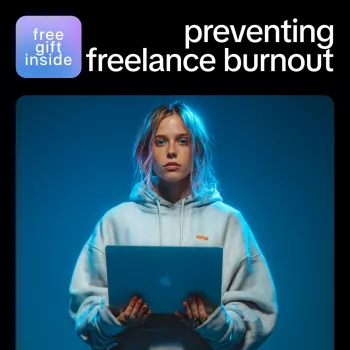
AI to the Rescue: A Practical Plan to Prevent Freelance Burnout Without Losing Creative Balance
Freelance burnout often shows up as a loop of late nights, scattered priorities, and constant context switching—followed by guilt when creativity stalls. A sustainable fix usually isn’t “work harder,” but “work differently”: protect deep work, reduce decision fatigue, and build repeatable systems. This guide maps a realistic AI-supported workflow that helps freelancers reclaim time, keep quality high, and stay human in the process.
The hidden burnout triggers in freelance life
Burnout rarely comes from one “big” problem. It’s usually the compound interest of small frictions that never get paid down:
- Perpetual availability: blurred boundaries between client time and personal time.
- Context switching: juggling proposals, admin, delivery, revisions, and marketing in the same day.
- Under-scoping and scope creep: unclear deliverables, endless revisions, and reactive timelines.
- Decision fatigue: constant micro-decisions (what to do next, how to reply, what to prioritize).
- Creative drain: too much output without recovery, plus pressure to “always be on.”
It also helps to remember that burnout is recognized as an occupational phenomenon by the World Health Organization. Translation: the problem isn’t a personal failure—it’s a work-system issue that can be redesigned.
A simple burnout early-warning check
Before changing your workflow, run a quick diagnostic for 10 days:
- Energy trend: track daily energy (1–5). A steady decline signals recovery debt.
- Workload reality: compare planned hours vs. actual. A consistent gap indicates overcommitment or interruptions.
- Cognitive load: note how often tasks are restarted. Frequent restarts point to poor batching or too many channels.
- Emotional cues: irritability, avoidance of inbox, and dread before sessions are signals—not character flaws.
- Quality drift: more rework and missed details often appear before total burnout.
Burnout signals and quick AI-supported responses
| Signal | What it usually means | Fast adjustment (with AI support) |
|---|---|---|
| Inbox dread and slow replies | Too many open loops | Use AI to draft concise replies and create a follow-up list with due dates |
| Working late “to catch up” | Over-scheduling + underestimating | Ask AI to timebox tasks and suggest a realistic daily plan with buffers |
| Revision cycles keep growing | Scope unclear or client expectations shifting | Generate a revised scope summary and a change-order message for approval |
| No space for deep work | Meetings/admin scattered throughout the day | Create batch blocks and have AI produce a meeting agenda + action items template |
| Creativity feels flat | No recovery + too much output | Use AI for first-draft variations so creative energy is saved for final judgment |
The rescue framework: Protect, Automate, Simplify, Recover
Think of your workload as a studio pipeline. If the pipeline is leaky, talent gets wasted on busywork.
If stress is already impacting sleep, focus, or your body, it may help to review the American Psychological Association’s overview of stress effects and consider adjusting workload expectations accordingly.
Workflow upgrades where AI helps most (without compromising quality)
For a ready-to-apply set of templates, scripts, and guardrails, the AI to the Rescue: Preventing Freelance Burnout (digital download eBook) is built to move from “overwhelmed” to “operating system” without losing your creative edge.
Time management that protects creativity
A small physical tweak can reinforce those boundaries: if you find yourself answering client messages while driving or bouncing between errands, a dedicated mount like the Universal Car Steering Wheel Phone Mount for Safe Navigation can help you keep navigation visible while keeping “reply mode” out of reach until your planned message window.
Creative balance: using AI without losing your voice
Protecting creativity also means protecting your body: regular movement and reset rituals reduce the “wired but tired” feeling that makes every decision harder. Even something simple—like getting outside for a short walk in comfortable shoes such as Armani Exchange Men’s Sneakers—can serve as a reliable off-switch between client mode and personal time.
A 7-day reset plan for overloaded weeks
If work stress is becoming chronic, the NIOSH (CDC) guidance on stress at work is a useful reminder that system-level changes—workload, role clarity, recovery—matter as much as personal resilience.
What to look for in an AI productivity guide for freelancers
For freelancers who want a structured system they can start using immediately, AI to the Rescue: Preventing Freelance Burnout focuses on repeatable workflows, client-safe scripts, and quality guardrails—so the time you get back doesn’t come at the cost of your standards.
And if you’re tightening routines in small ways, even a tiny habit anchor like the Triple-Sided Ultra-Fine Soft Bristle Toothbrush can help reinforce an “end of day” reset that separates work from recovery.
FAQ
Can AI really reduce freelance burnout without hurting quality?
Yes—burnout often comes from admin load, constant switching, and decision fatigue, and AI can reduce those by drafting, summarizing, and structuring. Quality stays high when you keep human judgment for strategy, final voice, and client nuance, and you use checklists to review outputs consistently.
What tasks should freelancers avoid delegating to AI?
Avoid delegating pricing strategy, sensitive client information, final approvals, or any contract/legal language without qualified review. Use AI for drafts and organization, then apply professional standards and client context before anything becomes official.
How do you set boundaries with clients when you’re already overwhelmed?
Acknowledge the message, propose a revised timeline, and clearly confirm scope plus revision limits—then offer options (faster delivery with reduced scope, or full scope with a later date). AI can help draft calm, concise messages and generate a change-order note that makes the agreement explicit.
Recommended for you


Was this article helpful?
Yes
No









Leave a comment