-
Shop
- Advanced Technologies
- AI Skills for Creators & Freelancers
- AI Client Management
- AI Ethics
- AI Mindset
- AI Tools & Prompts
- AI Writing & Content Creation
- Audio, Voice & Music
- Design & Visual Creation
- Email, Messaging & Communication
- Freelancing & Business
- Marketing, Ads & Conversion
- Productivity, Workflow & Automation
- SEO & Search Optimization
- Social Media Content & Growth
- Strategy, Planning & Analytics
- Video Creation & Editing
- AI Skills Mastery 2026 Collection
- Bathroom
- Best-Sellers
- Car Accessories
- Confidence
- Dating & Social Skills
- Digital Resources
- Easter Products
- Education & Learning
- Family & Parenting
- Fashion
- Fashion Accessories
- Furniture
- Gadgets
- Health & Beauty
- Health & Wellness
- Home & Garden
- Home Electronics
- Home Supplies
- Jewelry
- Kids & Babies
- Kitchen
- Lighting
- Patio, Lawn & Garden
- Personal Growth
- Pet Care
- Pet Supplies
- Pets
- Shoes
- Smart Home Living Guides
- Sport & Outdoors
- Stress Relief & Relaxation
- Super Deals
- TikTok Growth & Monetization Mastery
- Travel
- Travel & Adventure
- Wealth
- Wellness
AI-Guided Meditation: Simple Tips for Beginners & Creators
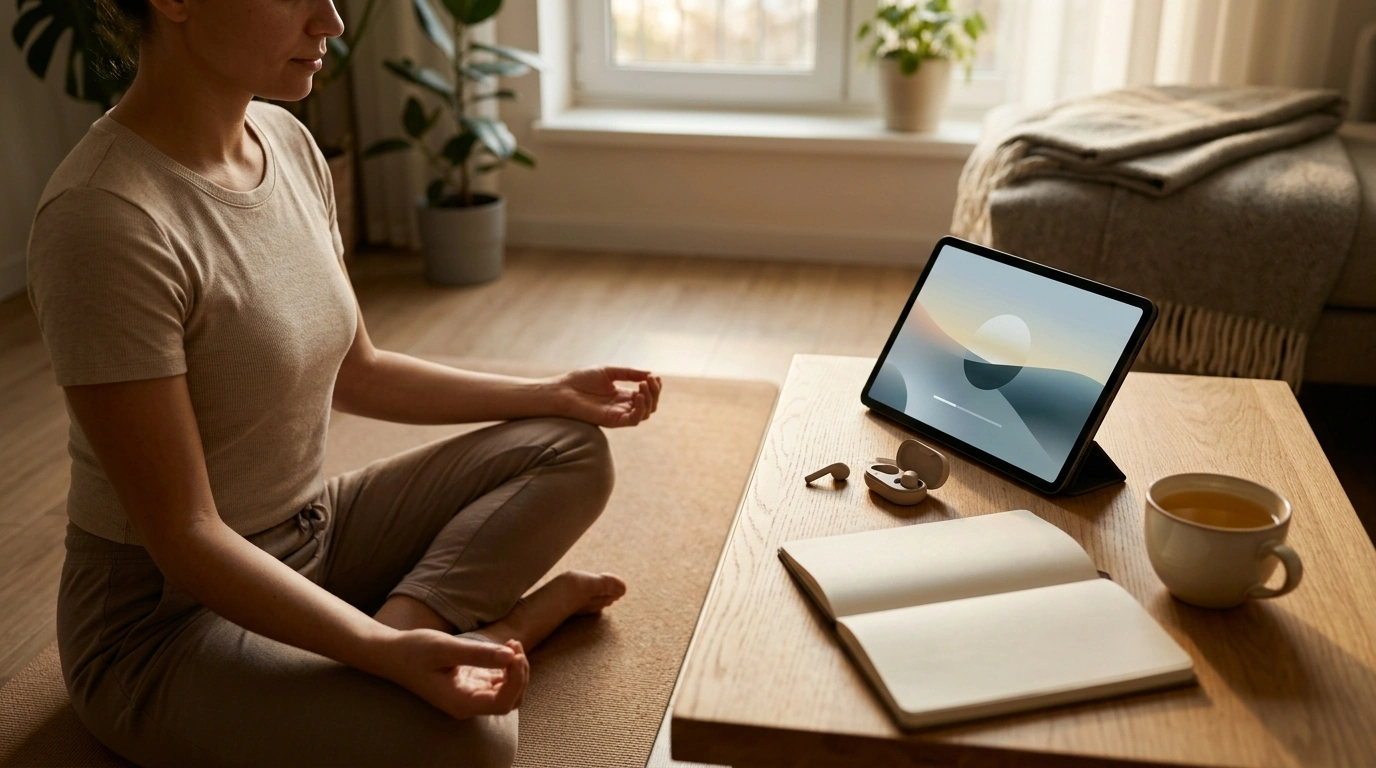
AI-Guided Meditation Tips for Mindful Beginners and Creators
AI-guided meditation can make practice feel less fuzzy and more doable—especially on days when motivation is low or the mind is busy. Used well, it supports a steady routine for mindful beginners and gives creators a repeatable way to draft guided sessions with consistent pacing, tone, and structure. The most helpful approach is simple: start with a clear intention, keep personalization light, and reuse a reliable framework so each session feels grounded rather than improvised.
Meditation is widely used as a supportive wellness practice, and reputable organizations note it may help with stress and mindfulness skills when practiced regularly. For a clear overview, see the National Center for Complementary and Integrative Health (NCCIH) — Meditation and the American Psychological Association — Mindfulness meditation.
What AI-guided meditation can do well
When a meditation goal is vague—“sleep better,” “calm down,” “reset my mood”—it’s easy to stall. A digital guide can help translate that goal into a session with a beginning, middle, and end, so you’re not guessing what to do next.
- Turn a broad intention (sleep, focus, emotional regulation) into a structured flow with clear transitions.
- Offer variety without restarting from zero: body scans, breath counting, loving-kindness, visualization, mindful walking, and short check-ins.
- Help beginners stay on track with gentle timing cues, shorter options, and plain language.
- Support creators by generating multiple versions of the same concept (different lengths, tones, and themes) for testing and refinement.
Set a clear intention before generating a session
The quality of any guided session improves when the intention is specific and realistic. One primary outcome keeps the script clean, and a timebox prevents the session from feeling like it drifts.
- Choose one primary outcome: unwind, focus, sleep, self-compassion, confidence, gratitude, or emotional regulation.
- Pick a timebox that matches real life: 3–5 minutes for consistency, 8–12 minutes for depth, 15–20 minutes for a fuller arc.
- Select a style: secular mindfulness, nature-based imagery, mantra-style repetition, or gentle coaching language.
- Decide guidance level: continuous narration vs. periodic check-ins with silence.
A useful rule: if the session is for sleep, reduce “mental work” (analysis, reflection questions, or complex imagery). If it’s for a midday reset, keep it practical and body-based so you can return to tasks quickly.
Personalize without overcomplicating it
Personalization works best when it’s incremental. Start with a stable baseline script, then adjust only one variable at a time so you can tell what actually helped.
- Begin with one dependable baseline, then change one element (length, tone, breath pacing, imagery, or theme).
- Use neutral, supportive language that leaves room for whatever is present—no forced positivity required.
- Match pacing to the situation: slower for sleep, moderate for stress relief, slightly brighter for morning focus.
- If meditation feels activating, switch to grounding: contact points, temperature, sounds in the room, or a shorter practice.
Simple personalization menu for AI-guided sessions
| Element to personalize | Options to choose from | Best for |
|---|---|---|
| Length | 3, 5, 10, 15, 20 minutes | Consistency, energy level, available time |
| Tone | Warm, minimal, clinical-neutral, poetic | Preference and comfort |
| Anchor | Breath, body sensations, sound, visual focus | Different attention styles |
| Guidance density | Frequent cues, moderate cues, long silences | Beginners vs. experienced meditators |
| Theme | Sleep, stress reset, focus, self-compassion, gratitude | Matching the moment |
| Closing | Reflection question, intention statement, gentle transition | Carrying calm into the next task |
A repeatable session structure that works (even for 5 minutes)
Consistency comes from having a familiar shape. This structure is short enough for busy days and complete enough to feel satisfying.
- Arrival (30–60 seconds): find a posture, soften the gaze or close the eyes, and take one longer exhale to signal a shift.
- Anchor (2–3 minutes): feel the breath or body sensations; when attention wanders, return gently without scolding.
- Open awareness (1–2 minutes): allow sounds, thoughts, and feelings to appear and pass without fixing them.
- Closing (30–60 seconds): name one quality to carry forward—steadiness, patience, clarity—and transition slowly.
For creators, this is also a reliable template for drafting multiple tracks that feel cohesive as a series.
Tips for creators: producing guided meditations that feel human
Listeners relax when the voice and pacing feel natural. Scripts that look good on a page can feel rushed when spoken, so “speakability” matters as much as content.
Safety and comfort guidelines
Using a digital guide to stay consistent
A practical digital resource for mindful beginners and creators
For a structured, reusable approach, the AI Guided Meditation Tips digital guide is built around adaptable session flows and easy customization options. It’s useful for beginners who want clear steps and for creators who want consistent frameworks for drafting new guided tracks.
To support a calmer routine beyond the meditation itself, a couple of simple, everyday add-ons can help reduce friction: a universal car steering wheel phone mount for hands-free listening during parked breaks or decompression time, and a triple-sided ultra-fine soft bristle toothbrush to pair a short wind-down meditation with a consistent bedtime routine.
FAQ
How long should an AI-guided meditation be for a beginner?
Three to five minutes is long enough to build consistency without feeling overwhelming. Once that feels comfortable, moving up to 8–12 minutes adds depth while staying realistic. Short sessions still count because repetition is what builds the habit.
Can AI-generated guided meditations help with sleep?
They can support a calming routine by using slower pacing, softer attention anchors, and gentle body scans that encourage relaxation. Keep expectations practical and focus on creating a predictable wind-down pattern. For persistent insomnia or severe sleep disruption, consider professional support.
What should be avoided in a guided meditation script?
Avoid forceful commands, overstimulating prompts, intense or unsettling imagery, long complex sentences, and claims of guaranteed results. Permission-based language and optional grounding cues help listeners feel safe and in control.
Recommended for you


Was this article helpful?
Yes
No









Leave a comment