-
Shop
- Advanced Technologies
- AI Skills for Creators & Freelancers
- AI Client Management
- AI Ethics
- AI Mindset
- AI Tools & Prompts
- AI Writing & Content Creation
- Audio, Voice & Music
- Design & Visual Creation
- Email, Messaging & Communication
- Freelancing & Business
- Marketing, Ads & Conversion
- Productivity, Workflow & Automation
- SEO & Search Optimization
- Social Media Content & Growth
- Strategy, Planning & Analytics
- Video Creation & Editing
- AI Skills Mastery 2026 Collection
- Bathroom
- Best-Sellers
- Car Accessories
- Confidence
- Dating & Social Skills
- Digital Resources
- Easter Products
- Education & Learning
- Family & Parenting
- Fashion
- Fashion Accessories
- Furniture
- Gadgets
- Health & Beauty
- Health & Wellness
- Home & Garden
- Home Electronics
- Home Supplies
- Jewelry
- Kids & Babies
- Kitchen
- Lighting
- Patio, Lawn & Garden
- Personal Growth
- Pet Care
- Pet Supplies
- Pets
- Shoes
- Smart Home Living Guides
- Sport & Outdoors
- Stress Relief & Relaxation
- Super Deals
- TikTok Growth & Monetization Mastery
- Travel
- Travel & Adventure
- Wealth
- Wellness
AI Fashion Trend Forecasting Tools: Workflow to Plan Lines
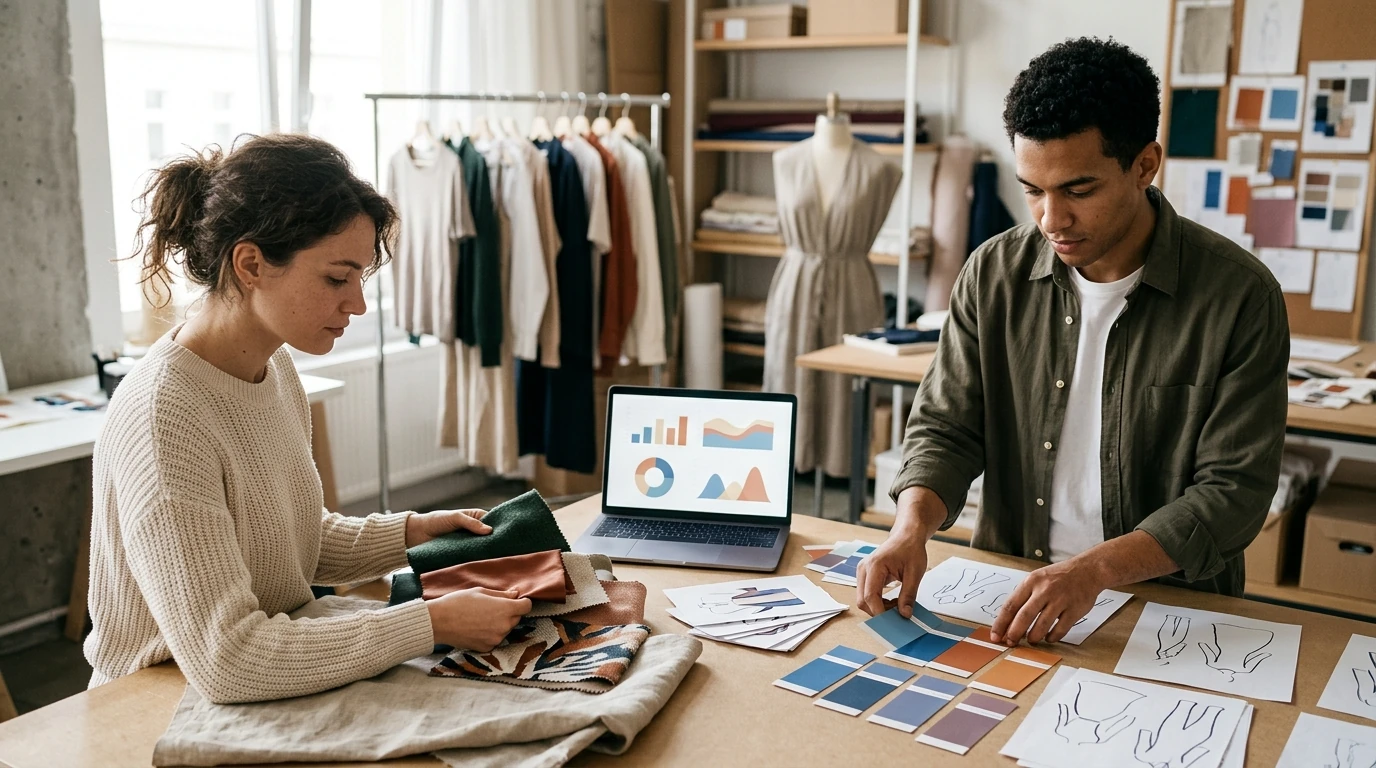
AI Tools for Fashion Trend Forecasting: From Signals to Collection Plans
Trend forecasting no longer relies on a single report or gut feel. With the right AI tools and a clear workflow, fashion teams can spot emerging signals early, validate demand, and translate insights into color, silhouette, fabric, and assortment decisions. This guide breaks down a practical, repeatable process—from data inputs to collection planning—so forecasts become faster, more consistent, and easier to act on. For more guidance, see 12 Best AI Tools for Fashion Brands in 2026 (Complete Guide).
What AI trend forecasting does (and doesn’t) do
AI trend forecasting helps teams make sense of an overwhelming stream of information by converting large, messy inputs—search, social, runway, e-commerce performance, and reviews—into patterns that can be compared across time periods and markets. Instead of scanning thousands of posts or product grids manually, teams can track attribute-level movement (for example: “butter yellow,” “barrel leg,” “satin maxi,” “crochet set”) and see which signals are actually gaining momentum. For further reading, see AI fashion trend forecasting: the ultimate guide for brands.
Where it’s strongest is early momentum detection: rising colors, prints, materials, and styling combinations that show up in niche communities before they register in mainstream sell-through. That said, AI supports decisions rather than replacing them. Brand fit, pricing architecture, and customer lifestyle context still require human judgment. Forecasting tools also work best when the business defines what counts as a “trend,” how it will be measured, and what action should follow once certain thresholds are met.
Core inputs that improve forecast quality
Forecast quality depends less on one “perfect” dataset and more on triangulating signals that reflect real consumer behavior and market constraints.
- Consumer demand signals: on-site search terms, wishlists, add-to-cart rates, email clicks, and return reasons.
- Market signals: best-seller lists, category growth, discount depth, and replenishment frequency across competitors.
- Culture signals: influencer posts, creator styling clusters, music/film moments, and event calendars that shift aesthetics.
- Product feedback: reviews and customer service logs highlighting fit, comfort, and fabric preferences that drive repeat purchase.
- Runway/editorial: directional themes and shape language used as qualitative framing—not the only source of truth.
For broader macro context, keep an eye on industry reporting such as McKinsey & Company — The State of Fashion and technology coverage from Business of Fashion. For quick reality checks on search interest, Google Trends can help confirm whether a term is expanding beyond a small bubble.
A practical workflow: detect → validate → translate → plan
A repeatable workflow keeps forecasting from becoming a slideshow that doesn’t change decisions. The goal is to move from signal to SKU choices with clear gates.
- Detect: Track a small set of trend “entities” (colors, silhouettes, fabrics, motifs, styling terms) and monitor velocity plus geographic spread.
- Validate: Compare signals across at least two sources (for example: social growth plus e-commerce search growth), then check seasonality and price-tier alignment.
- Translate: Convert trends into specific design briefs—palette, key items, fabric list, trim details, and styling notes.
- Plan: Map trends to assortment roles (hero, support, experimental), allocate buys, and align to production lead times.
- Review: After launch, measure accuracy using sell-through, margin, returns, and customer sentiment to refine inputs and thresholds.
From trend signal to assortment decision
| Stage | AI-supported output | Human decision | Typical KPI |
|---|---|---|---|
| Detect | Rising entities and clusters | Pick watchlist trends | Velocity / mentions / search lift |
| Validate | Cross-source correlation | Decide seasonal relevance | Consistency across channels |
| Translate | Design prompts & attribute suggestions | Approve brand-fit direction | Brief clarity / sampling speed |
| Plan | Demand scenarios & size curves | Assortment and buy depth | Sell-through / markdown risk |
| Review | Post-launch insight summaries | Update rules and thresholds | Margin, returns, repeat rate |
Common tool categories and where each fits
Different tools solve different parts of the workflow. A strong stack typically combines at least two categories, plus a way to document decisions so the organization learns over time.
Making forecasts usable for designers and merchandisers
Pitfalls to avoid
Using the eBook as a repeatable forecasting playbook
If you want a structured, step-by-step system that’s easy to roll out, the AI Tools for Fashion Trend Forecasting Guide | Ultimate eBook for Predicting Styles & Planning Fashion Collections is designed to help teams move from signal detection to collection planning without losing consistency.
And when trend insights translate into specific product styling directions, merchandising can benefit from anchoring stories with real items—like footwear statements that align to a look. For example, Armani Exchange Men’s Sneakers can serve as a tangible reference point when building modern casual outfits around evolving silhouette and proportion trends.
FAQ
How far ahead can AI reliably forecast fashion trends?
AI is typically most reliable for short-term demand shifts over weeks (where search, clicks, and sell-through move quickly), while seasonal direction over months depends more on category lead times and how stable the aesthetic signal is. Faster categories like tees and accessories can pivot sooner than outerwear or tailored pieces with longer development cycles.
What data is needed to start if a brand has limited analytics?
Start with public signals (social, search, and retail visibility) and add a minimal internal set such as top sellers, return reasons, and on-site search logs. Even a small, consistent dataset becomes powerful when tracked weekly with the same definitions and thresholds.
Can AI help plan a collection without copying competitors?
Yes—use AI to detect macro signals and attribute movement, then filter what you act on through brand codes, unique materials, and original styling rules. The value is in translation (turning signals into on-brand briefs), not duplication of what other retailers already sell.
Recommended for you


Was this article helpful?
Yes
No









Leave a comment