-
Shop
- Advanced Technologies
- AI Skills for Creators & Freelancers
- AI Client Management
- AI Ethics
- AI Mindset
- AI Tools & Prompts
- AI Writing & Content Creation
- Audio, Voice & Music
- Design & Visual Creation
- Email, Messaging & Communication
- Freelancing & Business
- Marketing, Ads & Conversion
- Productivity, Workflow & Automation
- SEO & Search Optimization
- Social Media Content & Growth
- Strategy, Planning & Analytics
- Video Creation & Editing
- AI Skills Mastery 2026 Collection
- Bathroom
- Best-Sellers
- Car Accessories
- Confidence
- Dating & Social Skills
- Digital Resources
- Easter Products
- Education & Learning
- Family & Parenting
- Fashion
- Fashion Accessories
- Furniture
- Gadgets
- Health & Beauty
- Health & Wellness
- Home & Garden
- Home Electronics
- Home Supplies
- Jewelry
- Kids & Babies
- Kitchen
- Lighting
- Patio, Lawn & Garden
- Personal Growth
- Pet Care
- Pet Supplies
- Pets
- Shoes
- Smart Home Living Guides
- Sport & Outdoors
- Stress Relief & Relaxation
- Super Deals
- TikTok Growth & Monetization Mastery
- Travel
- Travel & Adventure
- Wealth
- Wellness
Adjustable Potty Ladder Seat: Non-Slip Toddler Training
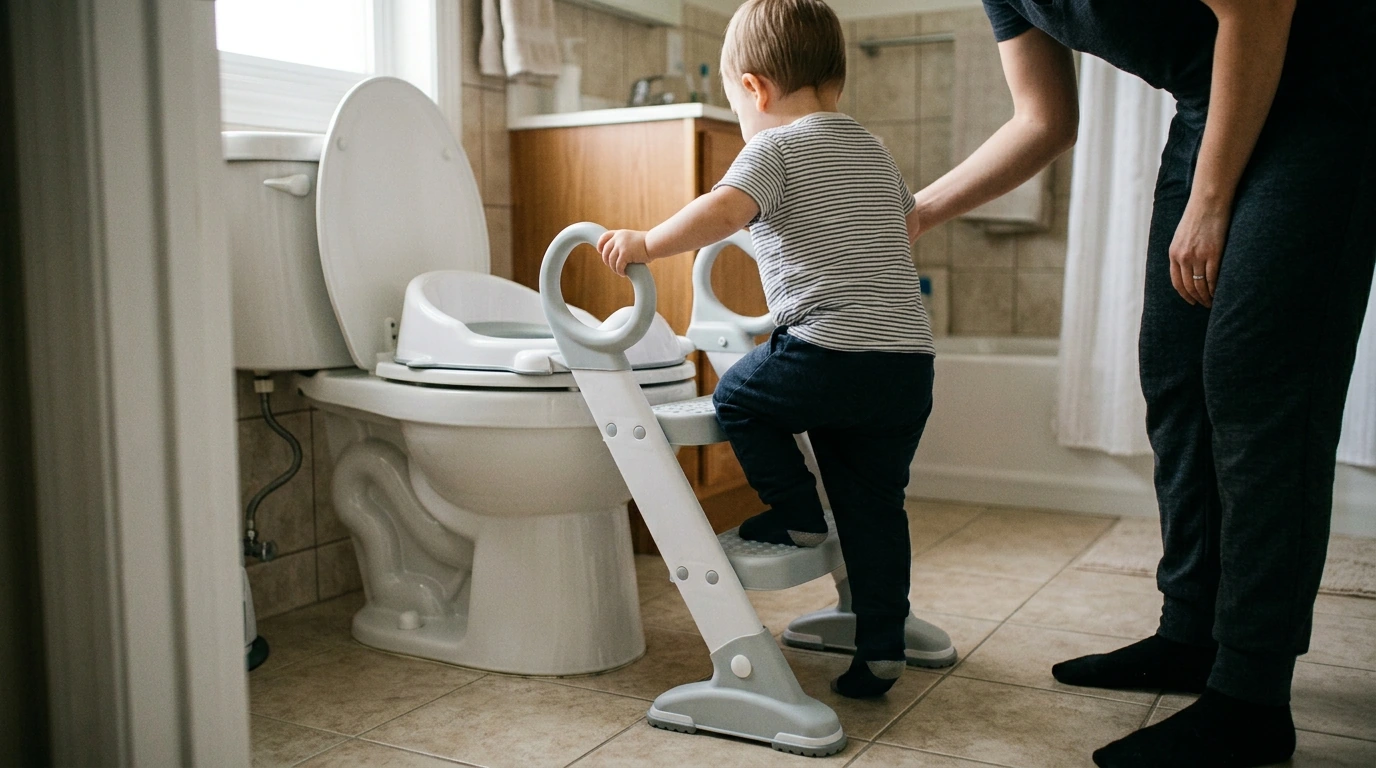
Potty Training Seat with Step Stool Ladder for Toddlers: Adjustable, Non-Slip Support for Independent Bathroom Trips
A potty training seat with a built-in step stool ladder helps toddlers climb up and sit securely on an adult toilet with less wobble and fewer lift-and-place moments for caregivers. The most useful designs focus on stability, adjustable height for growing kids, comfortable seating, and quick cleanup—while also fitting common toilet shapes without constant shifting.
Most pediatric guidance emphasizes readiness, patience, and routine. For practical training tips and readiness signs, see resources from HealthyChildren.org (American Academy of Pediatrics) and the Mayo Clinic.
Why a ladder-style potty seat can make training easier
A standard toilet can feel tall and unstable to a toddler. Ladder-style potty seats add a predictable “path” up and down, which often lowers resistance and keeps the focus on the routine rather than the climb.
- Encourages independence: Toddlers can climb up and sit down with less assistance, reducing power struggles and building confidence.
- Reduces anxiety around big toilets: A smaller seat insert plus stable steps makes the toilet feel less intimidating.
- Supports a consistent sequence: The repeated “up, sit, wipe, down” pattern is easier to learn when the setup stays the same.
- Can save space: Especially in smaller bathrooms, a folding ladder seat can be less bulky than a separate floor potty and step stool.
Key features to look for in an adjustable, non-slip design
The difference between “used once” and “used daily” is usually stability. A wobble-free setup helps kids relax their body enough to actually go.
- Adjustable step height: The best position lets your child plant both feet securely with a slight bend in the knees. As kids grow, a step that adjusts keeps the posture comfortable and balanced.
- Non-slip bases and step treads: Rubberized feet and textured steps reduce sliding on tile, vinyl, or sealed wood.
- Seat stability and handholds: A snug fit on the toilet and side handles limit side-to-side movement during climbing and turning around.
- Comfort details: Smooth, easy-clean surfaces and rounded edges matter for longer sits. A splash guard can also reduce mess for boys.
- Fast transitions: Lightweight frames and foldable profiles make it easier to tidy the bathroom and keep the floor clear.
Fit and compatibility with your toilet and bathroom layout
Even a well-designed ladder seat can feel unstable if it doesn’t match your toilet’s shape or if the bathroom is tight. A quick check before ordering can prevent the most common issues: gaps, shifting, and awkward ladder angles.
Quick compatibility checklist
| What to check | Why it matters | What to do if it’s not ideal |
|---|---|---|
| Round vs. elongated bowl | A poor match can cause gaps or wobble | Confirm adjustable contact points or choose a model rated for both |
| Toilet height (standard vs. comfort) | Step reach affects confidence and safety | Prioritize adjustable steps and sturdy handrails |
| Available floor space in front of toilet | Ladder angle needs room for stable stance | Choose a folding or slimmer-frame option |
| Slippery floor (tile/vinyl) | Shifting can interrupt training and create fear | Look for non-slip feet; add a non-slip mat |
- Toilet shape: Many ladder seats work with round and elongated bowls, but fit varies—measure bowl length and pay attention to where the seat insert contacts the rim.
- Toilet height: Standard-height toilets are typically easiest. Comfort-height toilets may require more step height and more secure handholds for safe climbing.
- Bathroom clearance: Check that the ladder can sit at a stable angle and that doors or vanity cabinets won’t bump it.
- Floor traction: If the bathroom frequently gets wet, consider a washable non-slip mat under the ladder feet.
Safe setup: getting a stable, wobble-free feel
A stable feel is what allows a toddler to climb without hesitation. Take a few minutes to dial in the setup before the first “real” attempt.
Daily routine tips that build confidence
Cleaning and upkeep for a hygienic bathroom
Hand hygiene matters during training. Adding a kid-friendly brush near the sink can reinforce the “potty, flush, wash” habit. Consider the Triple-Sided Ultra-Fine Soft Bristle Toothbrush for Enhanced Oral Health as a simple bathroom add-on for daily routines.
A practical option: Potty Training Seat with Step Stool Ladder for Toddlers, Adjustable & Non-Slip
For families who want to train directly on the adult toilet, a combined seat insert and ladder can streamline the process and reduce carrying a separate potty around the house. The Potty Training Seat with Step Stool Ladder for Toddlers, Adjustable & Non-Slip is designed to support independent climbing and sitting with adjustable, non-slip elements aimed at improving stability during the wobbliest learning phase.
At-a-glance details
| Item | Details |
|---|---|
| Product | Potty Training Seat with Step Stool Ladder for Toddlers, Adjustable & Non-Slip |
| Price | 43.67 USD |
| Availability | In stock |
FAQ
Will a ladder-style potty training seat fit both round and elongated toilets?
Many ladder-style seats are designed to work with both, but the fit depends on the contact points and your bowl length. Measure your toilet and, once installed, test for any gaps or wobble before letting your child climb independently.
What step height is best for a toddler on a potty ladder seat?
The best step height lets your toddler place both feet securely with a slight bend in the knees and a steady posture while sitting. Adjustable steps help as your child grows, and taller “comfort-height” toilets often need more reach and sturdier handholds.
How can slipping be prevented on tile floors?
Choose a model with non-slip rubber feet and textured step treads, and keep the floor dry so the base can grip. If the bathroom is frequently wet, add a non-slip mat and practice slow climbs with “two hands on handles.”
Recommended for you


Was this article helpful?
Yes
No









Leave a comment